“There are few authentic prophetic voices among us, guiding truth-seekers along the right path. Among them is Fr. Gordon MacRae, a mighty voice in the prison tradition of John the Baptist, Maximilian Kolbe, Alfred Delp, SJ, and Dietrich Bonhoeffer.”
— Deacon David Jones
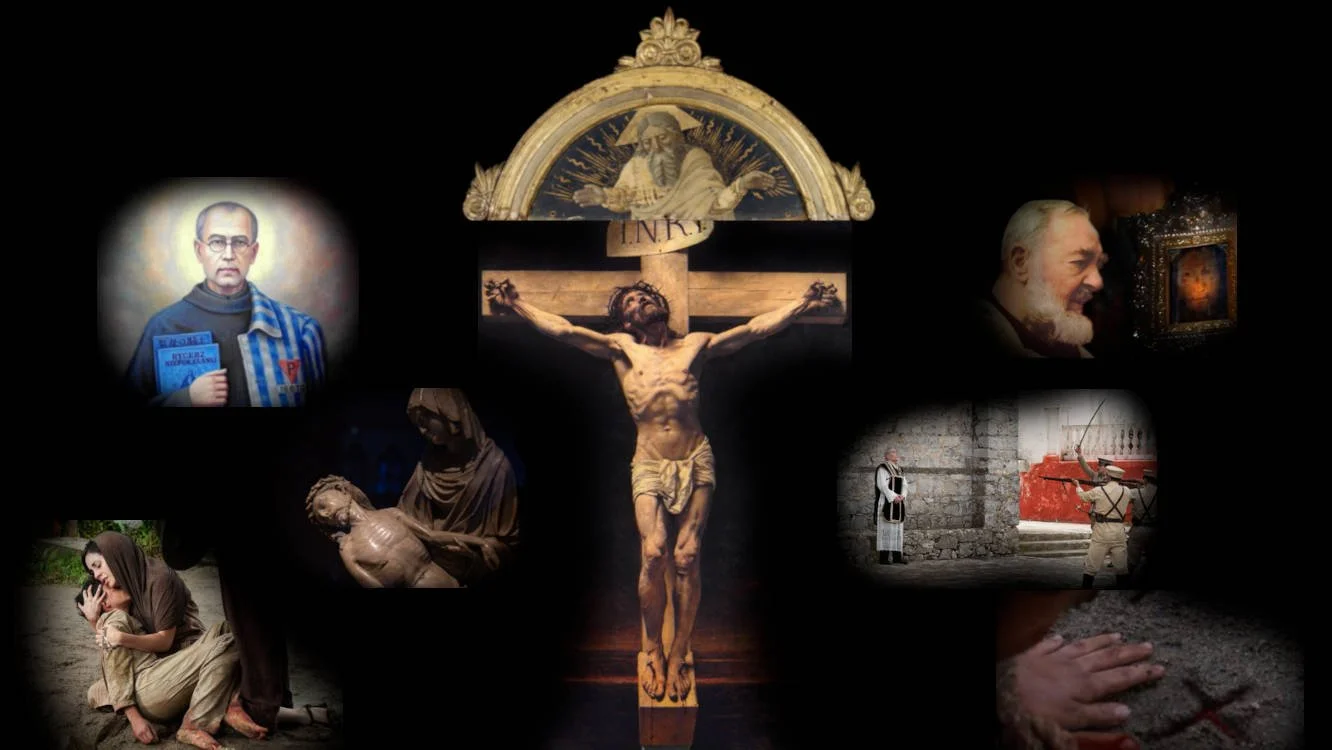
The Darkness of the Cross Enlightened on the Road to Emmaus
At Gethsemane Jesus of Nazareth agreed to bear the Cross to his own Crucifixion so that following him to Heaven’s Gate would not be a burden of impossibility for us.
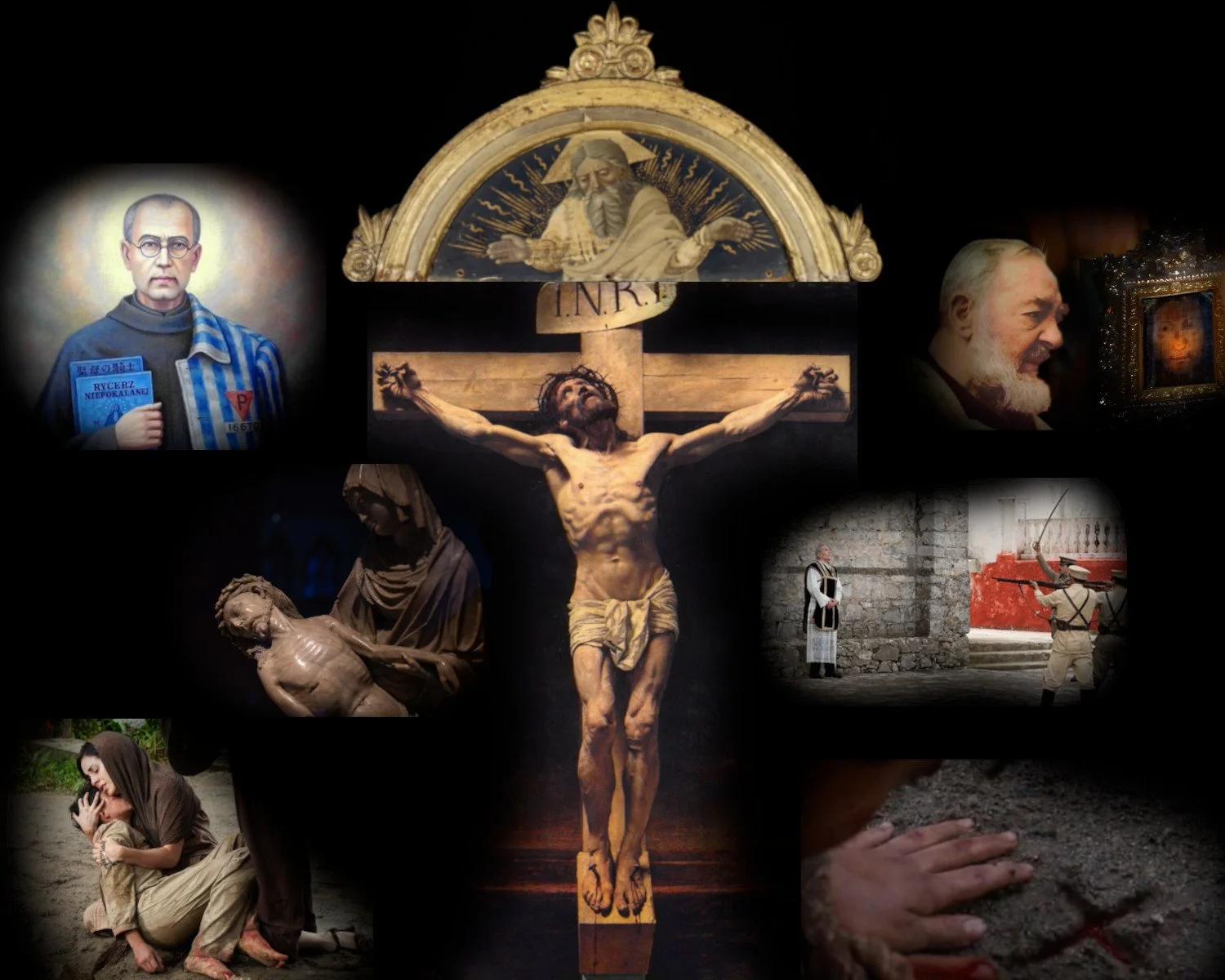
At Gethsemane Jesus of Nazareth agreed to bear the Cross to his own Crucifixion so that following him to Heaven’s Gate would not be a burden of impossibility for us.
Holy Week 2026 by Father Gordon MacRae
In all of human history, no method of execution has been devised more heinously, or delivered with more cruelty than crucifixion. In the Old Testament — no stranger to the cruel acts of men — crucifixion did not exist. It was first introduced to human history in the Sixth Century BC by the Persians, the ancestral empire of present-day Iran. I recently wrote of Iran and its place in history in “Iran, by Another Name, Was Once the Savior of Israel.”
My visual introduction to crucifixion was not so much biblical, but cinematic. Over many years I had pondered in depth its biblical presentation, but it was only when I watched the 2004 film, The Passion of the Christ directed by Mel Gibson, that I experienced and absorbed its visual impact. The brutality of the film was criticized for its excessive violence, but there was no such thing as a “gentle” crucifixion.
The Passion of the Christ contains all the elements ascribed to the event in the four Gospel accounts of the Crucifixion of Jesus in Sacred Scripture. I have read and studied those accounts many times, but I could watch that film only once and never again. It left me in a state of profound sorrow. That sorrow caused me to rethink some of the peripheral, but mysterious events that Sacred Scripture lends to the Crucifixion scene. One of them is the following excerpt from Psalm 22 attributed to King David. He never experienced crucifixion, but in Psalm 22 he wrote of it in the first person and in vivid prose 1,000 years before Jesus of Nazareth experienced it:
“My God, my God, why have you forsaken me? Why are you so far from helping me, from the words of my cry?
“O my God, I cry out by day, but you answer not, and by night, but I find no rest.
“Yet you are holy, enthroned upon the praises of Israel. In you our fathers trusted; they trusted and you delivered them. To you they cried and they were saved. In you they trusted, and were not disappointed.
“But I am worm and no man; scorned by men and despised by the people. All who see me scoff at me. They mock me with parted lips; they wag their heads. ‘He trusted in the Lord, let him deliver him. Let him rescue him if he delights in him.’
“I am poured out like water, and all my bones are wracked; my heart is like wax, it is melted within my breast. My strength is dried up like a potsherd, and my tongue cleaves to my jaws. You have laid me in the dust of death.
“Indeed, many dogs surround me; a pack of evildoers closes in upon me. They have pierced my hands and my feet. I can count all my bones; they stare and gloat over me. They divide my garments amongst them. For my clothing they cast lots.”
— Excerpted from Psalm 22, a Psalm of King David, circa 1000 BC
Most observant Jews would likely have recognized “My God, my God, why have you forsaken me?” as the opening line of Psalm 22. Mysteriously, those present for the Crucifixion of Jesus failed to do so. The Gospel quotes them as saying, “He is calling upon Elijah.” It was a distortion of the mixed Hebrew and Aramaic in the plea of Jesus from the Cross: “Eloi, Eloi, lema sabachthani.” In a magisterial treatise, Jesus of Nazareth: Part 2 Holy Week, Pope Benedict XVI wrote “Psalm 22 is Israel’s great cry of anguish, in the midst of its sufferings, addressed to the apparently silent God …. Now we hear the great anguish of the one suffering on account of God’s seeming absence.” Many of us have been here when simply calling out or pleading with God is not enough. In extreme anguish, prayer inevitably becomes a loud cry. Jesus prays this loud cry on behalf of all of us: “My God, my God, why have you forsaken me?”
What is remarkable about the four Gospel accounts of the Crucifixion is the multitude of Old Testament allusions and quotations they contain. In them, the Word of God and the events of the Gospel are deeply interwoven into the Passion Narrative. Two of these allusions, Psalm 22 and Isaiah 53, the “Suffering Servant” motif, shed light on the entire Passion event.
Isaiah begins with a direct reference to this saving act of God in a prophesy written hundreds of years before its fulfillment: “Behold, a virgin shall conceive and bear a son, and shall call his name ‘Emmanuel’” — a name which means “God with us.”
All of Sacred Scripture makes clear one consistent truth. If God is with us, we are not always with God. This becomes especially evident in the Passion Narrative of the Gospels, the arrest, interrogation, trial, scourging, and Crucifixion of Jesus. No one who followed him to this end, and who came to believe that he is the Messiah, the Christ of God, could ever have imagined that he would face humiliation, torture, Crucifixion and death. When it came, despite all promises to the contrary, most of his disciples shrank from their own promises and fled. None of us can stand in judgment of them. I wrote of one of history’s most vivid examples in “The Apostle Falls: Simon Peter Denies Christ.”
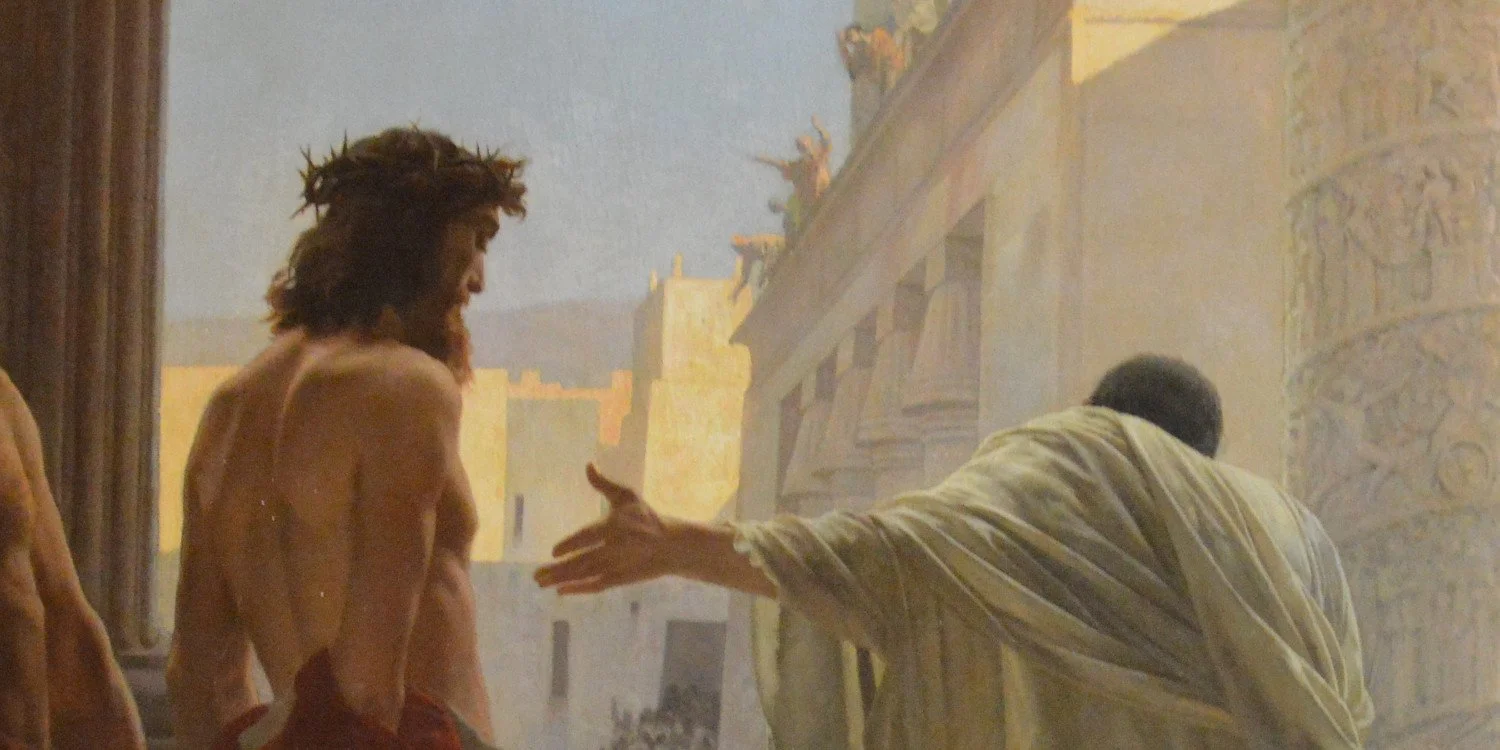
He Suffered under Pontius Pilate
But prior to all that, Jesus was interrogated by Pontius Pilate, the Roman military governor or procurator of the imperial province of Judea from 26 to 36 AD. The Jewish historian, Flavius Josephus, portrayed Pilate as a harsh administrator who failed to understand the religious convictions and national pride of the Jews. Pilate is known mainly for his connection with the trial and execution of Jesus. His culpability in the outcome has been the subject of debate ever since, and this conflicting view was implied even by Pope Benedict XVI, who wrote:
“After the interrogation, Pilate knew for certain what in principle he had already known beforehand: this Jesus was no political rebel; his message and his activity posed no threat for the Roman rulers. Whether Jesus had offended against the Torah was of no concern to Pilate as a Roman.”
— Jesus of Nazareth: Holy Week, p195
The Gospels of John and Mark present the custom of choosing a prisoner to be released on the Passover. The Gospels present a juxtaposition of the theological significance of choosing Jesus or Barabbas for release. John refers to Barabbas simply as a robber (18:40). In the political context of the time the Greek word that John used has also acquired the meaning of “terrorist,” or “rebel.” This is clear from Mark’s account: “And among the rebels in prison who had committed murder in the insurrection, there was a man called Barabbas” (Mark 15:7). It was clear that Pilate preferred to release Jesus, yet the crowd had different categories. Pilate came to understand their strong preference to release Barabbas, who had acquired the personna of a swashbuckling rebel.
The governor of Judea had complete judicial authority over all who were not Roman citizens, but many cases, especially those relating to religious matters, were decided by the Sanhedrin, the Jewish supreme council. According to the Gospel accounts, after the Sanhedrin found Jesus guilty of blasphemy it committed him to the Roman court because it lacked the authority to impose a death sentence. Pilate refused to approve their judgment without further investigation but the Sanhedrin threatened Pilate. When Pilate asked them, “Shall I crucify your king?” “The Chief Priests Answered, ‘We Have No King but Caesar’”
The Jewish priests then made other charges against Jesus, accusing him of blasphemy by calling himself a king (which he never actually did) and a son of God. Pilate appears to have been impressed with the dignity and honesty of Jesus, and tried to save him (John 18:38-39, 19:12-15). But fear of an uprising in Jerusalem and a resulting report to Roman authorities forced Pilate to accede to the Sanhedrin’s demand after the chief priests declared that freeing Jesus would mean that Pilate “is no friend of Caesar.” The false claim that Jesus was “King of the Jews,” was perceived as a threat to the Roman empire. It ended up on the inscription bearing the official nature of his offense to be affixed to his Cross.
Jesus was thus to be crucified and was handed over by Pilate for scourging, a brutal aspect of the punishment that often left the accused dead even before being crucified. Some have suggested that the scourging was intensified by Pilate to sway Jewish leaders away from crucifixion if the scourging was brutal enough. The guards saw to it that it was, but to no avail. It is very likely that Jesus carried only the crossbeam to which his hands were affixed first by ropes and then nails were added upon the height of Mount Calvary. His scourging had left his skin shredded so Simon of Cyrene was recruited to help carry the crossbeam. Only a few faithful women, including his Mother, his Mother’s sister, and Mary Magdalene remained with the beloved disciple John.
Each of the four Gospels presents a parallax view, the same scene but from a different perspective. In the Gospel according to John, the dying Jesus addressed his Mother: “Woman, behold your son” and to John, “Behold your Mother” (John 19:27). The Gospel instructs us that “from that hour the disciple took her into his own home.” Faithful Catholics have done the same ever since. Mary occupies a very special place in this scene and in our hearts.
As for Pontius Pilate, he was recalled to Rome in AD 36. According to the Roman historian, Eusebius, Pilate later committed suicide. Other traditions, however, report that Pilate secretly became a Christian and was condemned to death by the Roman Senate. Perhaps for this reason, Pilate is strangely revered by Coptic Christians as a martyr. They observe his feastday on June 25.
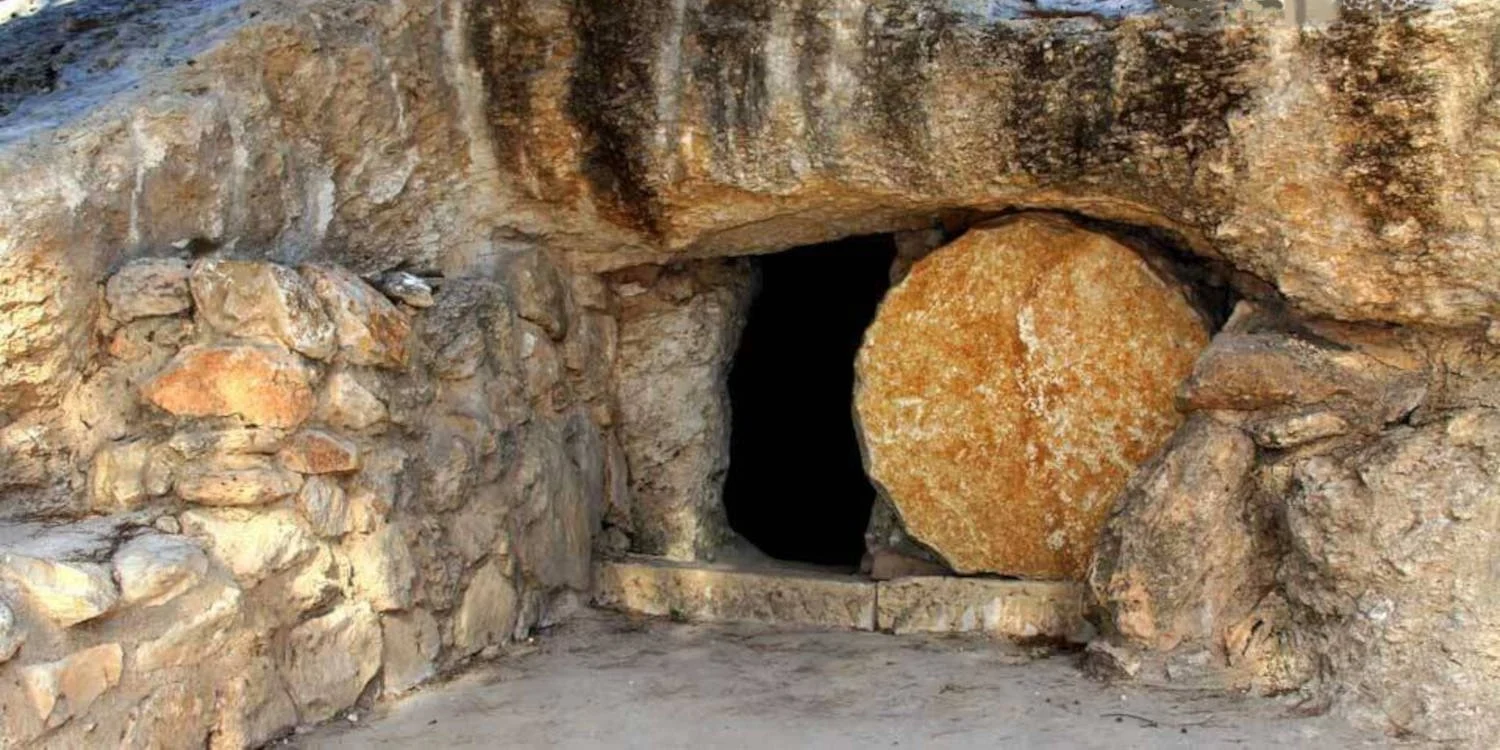
“Why Do You Seek the Living among the Dead?” (Luke 24:5)
The Resurrection of Jesus is the crowning event of the Passion Narratives of all four Gospels. Joseph of Arimathea, a member of the Sanhedrin who “was looking for the Kingdom of God” risked his standing in the Sanhedrin by asking Pilate for the body of Jesus, which was granted. Joseph interred the body in his own tomb hewn from rock (Luke 24:51). Some women went to the tomb as the Sabath was beginning. They saw the body of Jesus there then left to observe the Sabath.
On the next day, the first day of the week, these same women, now identified as Mary Magdalene, Joanna and Mary, mother of James, returned with spices to prepare the body according to the ritual law. They found the stone sealing the tomb to have been rolled away and two men in dazzling apparel frightened them asking,”Why do you seek the living among the dead?” When they told this to the disciples, they were not believed, but Peter ran to the tomb and found it just as they had said.
Later that same day, two of his disciples — one identified as Cleopas — were venturing about seven miles from Jerusalem along the road to Emmaus. They were speaking with great sorrow and trauma about the events of this and previous days. I have been where they were on that day. I do not mean that I have been on the road to Emmaus, except perhaps figuratively. I have been at a place at which all that I had ever worked for and hoped for just collapsed in irreparable ruin, and there was no justice in it. Reading about this encounter on the road to Emmaus, their deep sorrow and loss resonates with me on a personal level.
Then they encounter the Risen Christ along that road, but “Their eyes were kept from recognizing him.” (Luke 24:16) The visitor asked what their animated conversation was all about. The one named Cleopas was incredulous: “Are you the only visitor to Jerusalem who does not know the things that have happened there in these days?” “What things?” asked the stranger. Then came the outpouring of their grief:
“The things concerning Jesus of Nazareth who was a prophet might in word and deed before God and all the people, and how our chief priests and rulers delivered him up to be condemned to death, and crucified him. We had hoped that he was the one to redeem Israel. And besides all this, it is now the third day since this has happened. Now some women of our company have just amazed us. They were at the tomb early in the morning, but they did not find his body. They came back saying that they had even seen a vision of angels who said that he is alive. Some of those who were with us went to the tomb and found it just as the women said, but him they did not see.”
(To be continued.)
+ + +
Note from Father Gordon MacRae: Thank you for reading and sharing this post, which will now be added to both Our Holy Week Retreat and to our Collection called The Bible Speaks. You may also like these related posts leading up to the top of Mount Calvary:
Satan at the Last Supper: Hours of Darkness and Light
Waking Up in the Garden of Gethsemane


The Eucharistic Adoration Chapel established by Saint Maximilian Kolbe was inaugurated at the outbreak of World War II. It was restored as a Chapel of Adoration in September, 2018, the commemoration of the date that the war began. It is now part of the World Center of Prayer for Peace. The live internet feed of the Adoration Chapel at Niepokalanow — sponsored by EWTN — was established just a few weeks before we discovered it and began to include in at Beyond These Stone Walls. Click “Watch on YouTube” in the lower left corner to see how many people around the world are present there with you. The number appears below the symbol for EWTN.
Click or tap here to proceed to the Adoration Chapel.
The following is a translation from the Polish in the image above: “Eighth Star in the Crown of Mary Queen of Peace” “Chapel of Perpetual Adoration of the Blessed Sacrament at Niepokalanow. World Center of Prayer for Peace.” “On September 1, 2018, the World Center of Prayer for Peace in Niepokalanow was opened. It would be difficult to find a more expressive reference to the need for constant prayer for peace than the anniversary of the outbreak of World War II.”
For the Catholic theology behind this image, visit my post, “The Ark of the Covenant and the Mother of God.”
Our Holy Week Retreat for Beyond These Stone Walls
Each Holy Week since 2010 Fr Gordon MacRae has composed a special post based on the Scriptural events of the Way of the Cross. They now comprise a Holy Week retreat.
Each Holy Week since 2010 Fr Gordon MacRae has composed a special post based on the Scriptural events of the Way of the Cross. They now comprise a Holy Week retreat.
Holy Week for Beyond These Stone Walls
As many of our readers know, this blog began in controversy in 2009. Born out of a challenge from the late Cardinal Avery Dulles to rise above suffering and consider instead its legacy. Many posts in my long Prison Journal since 2010 have been about the injustices that I and other priests have faced. But in the weeks before his death in December 2008, Cardinal Dulles sent a series of letters to me in prison. He challenged me to dig deeper into my own passion narrative. Cardinal Dulles wrote:
“Someone might want to add a new chapter to the volume of Christian literature from those unjustly in prison. In the tradition of Dietrich Bonhoeffer, Fr Alfred Delp, Fr Walter Ciszek, and Saint Paul, your writing, which is clear, eloquent and spiritually sound, will be a monument to your trials.”
And so in preparation for Holy Week in 2010, I began to make a concerted effort to set aside my own unjust plight to write a post about the Passion of the Christ. I compose a new Holy Week post every year since to present a different scene in the Way of the Cross. For me, this has become a sacred obligation as a priest to take part in my own unique way in the events that led to Calvary and beyond. And, yes, there IS a beyond.
Many readers, especially those who have also suffered in ways large or small, have found these posts to be inspiring. No one has been more surprised by this than me. So we have collected our Holy Week posts in the order in which they appear in the Gospel narrative to become an invitation for a personal retreat. We invite you to make these posts a part of your Holy Week and Easter observance.
If any of them touches your heart and soul in some way, or gives you a deeper understanding of the Scriptures, then please also share a link to them with others. I hear from many newer readers who first came to this blog in just that way, and then found in these pages spiritual consolation and a path to peace.
We will add a new post on Wednesday of Holy Week this year and will make the title linked here, active at that time.
The Passion of the Christ in an Age of Outrage (2020)
Overshadowing Holy Week with forced pandemic restrictions and political outrage recalls the Bar Kochba revolt of AD 132 against the Roman occupation of Jerusalem.
Satan at the Last Supper: Hours of Darkness and Light (2020)
The central figures present before the Sacrament for the Life of the World are Jesus on the eve of sacrifice and Satan on the eve of battle to restore the darkness.
Waking Up in the Garden of Gethsemane (2019)
The Agony in the Garden, the First Sorrowful Mystery, is a painful scene in the Passion of the Christ, but in each of the Synoptic Gospels the Apostles slept through it.
The Apostle Falls: Simon Peter Denies Christ (2024)
The fall of Simon Peter was a scandal of biblical proportions. His three-time denial of Jesus is recounted in every Gospel, but all is not as it first seems to be.
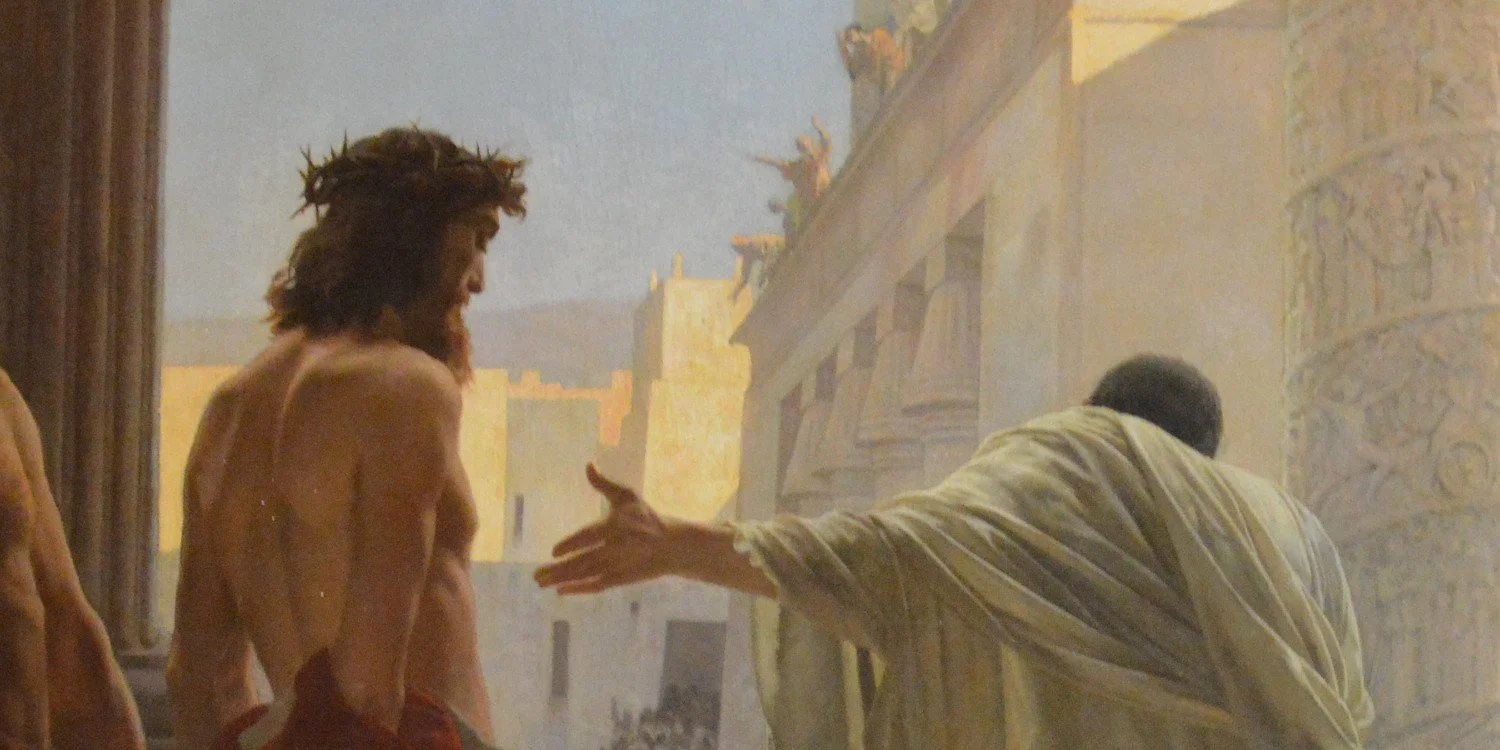
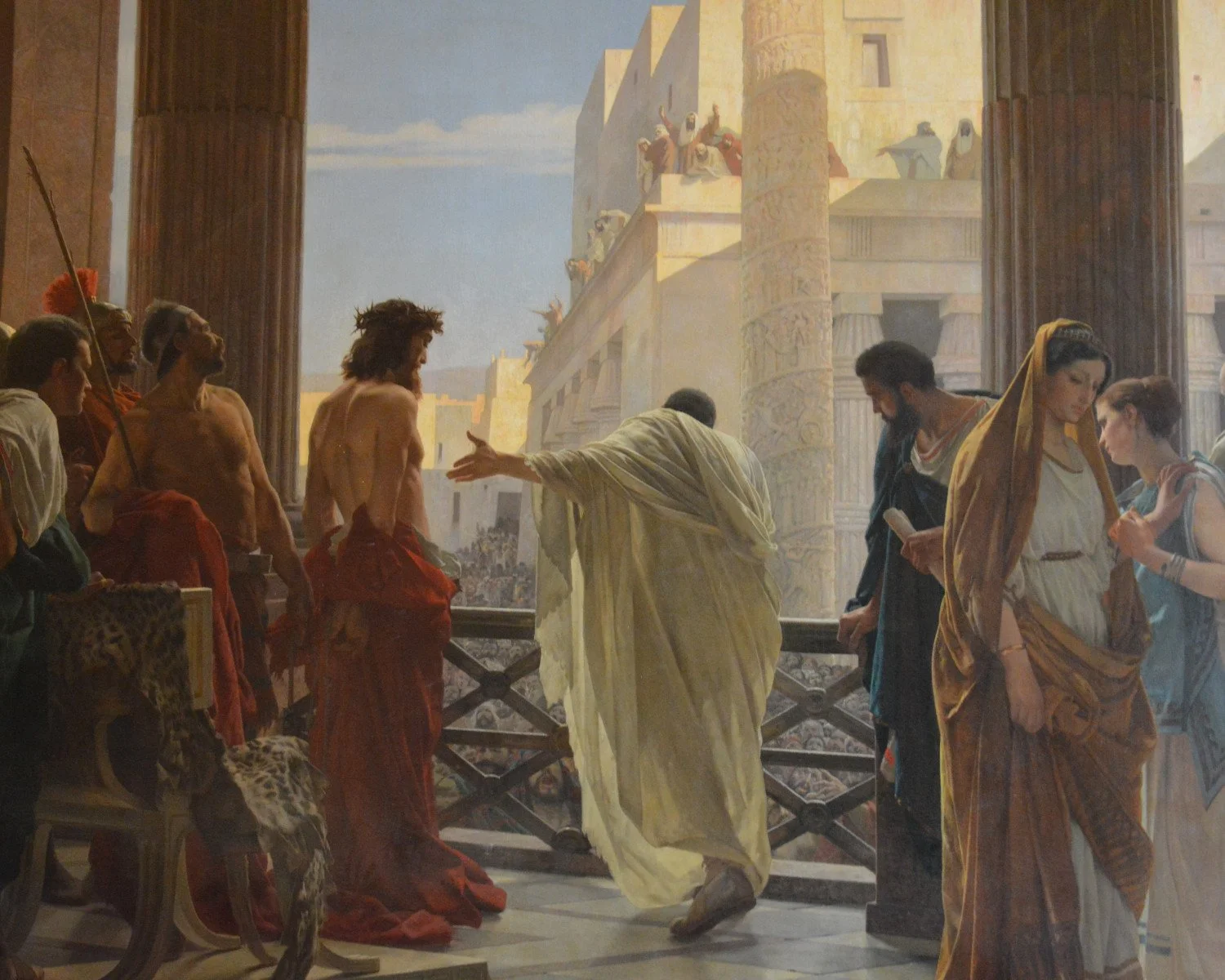
Behold the Man, as Pilate Washes His Hands (2014)
‘Ecce Homo,’ an 1871 painting of Christ before Pilate by Antonio Ciseri, depicts a moment woven into Salvation History and into our very souls. ‘Shall I crucify your king?’
The Chief Priests Answered, ‘We Have No King but Caesar’ (2017)
The Passion of the Christ has historical meaning on its face, but a far deeper story lies beneath where the threads of faith and history connect to awaken the soul.
Simon of Cyrene Compelled to Carry the Cross (2023)
Simon of Cyrene was just a man on his way to Jerusalem but the scourging of Jesus was so severe that Roman soldiers feared he may not live to carry his cross alone.
Dismas, the Good Thief Crucified Next to Christ the King (2025)
With Jesus before him, Pilate asked the chief priests, ‘Shall I crucify your king?’ They replied ‘We have no king but Caesar.’ Only a criminal saw Christ the King.
To the Spirits in Prison: When Jesus Descended into Hell (2022)
The Apostles Creed is the oldest statement of Catholic belief and apostolic witness. Its Fifth Article, what happened to Jesus between the Cross and the Resurrection, is a mystery to be unveiled.
Mary Magdalene: Faith, Courage, and an Empty Tomb (2015)
History unjustly sullied her name without evidence, but Mary Magdalene emerges from the Gospel a faithful, courageous, and noble woman, an Apostle to the Apostles.
The Darkness of the Cross Enlightened on the Road to Emmaus (2026)
At Gethsemane Jesus of Nazareth agreed to bear the Cross to his own Crucifixion so that following him to Heaven’s Gate would not be a burden of impossibility for us.

Before the gates there sat, On either side a formidable Shape
One of Gustave Dore’s illustrations of the epic poem Paradise Lost by John Milton (Courtesy of University at Buffalo)

The Eucharistic Adoration Chapel established by Saint Maximilian Kolbe was inaugurated at the outbreak of World War II. It was restored as a Chapel of Adoration in September, 2018, the commemoration of the date that the war began. It is now part of the World Center of Prayer for Peace. The live internet feed of the Adoration Chapel at Niepokalanow — sponsored by EWTN — was established just a few weeks before we discovered it and began to include in at Beyond These Stone Walls. Click “Watch on YouTube” in the lower left corner to see how many people around the world are present there with you. The number appears below the symbol for EWTN.
Click or tap here to proceed to the Adoration Chapel.
The following is a translation from the Polish in the image above: “Eighth Star in the Crown of Mary Queen of Peace” “Chapel of Perpetual Adoration of the Blessed Sacrament at Niepokalanow. World Center of Prayer for Peace.” “On September 1, 2018, the World Center of Prayer for Peace in Niepokalanow was opened. It would be difficult to find a more expressive reference to the need for constant prayer for peace than the anniversary of the outbreak of World War II.”
For the Catholic theology behind this image, visit my post, “The Ark of the Covenant and the Mother of God.”

The Annunciation: When the Dawn from On High Broke Upon Us
The Gospel of Saint Luke opens with a news flash from the Archangel Gabriel for Zechariah the priest, and Mary — Theotokos — the new Ark of the Covenant.
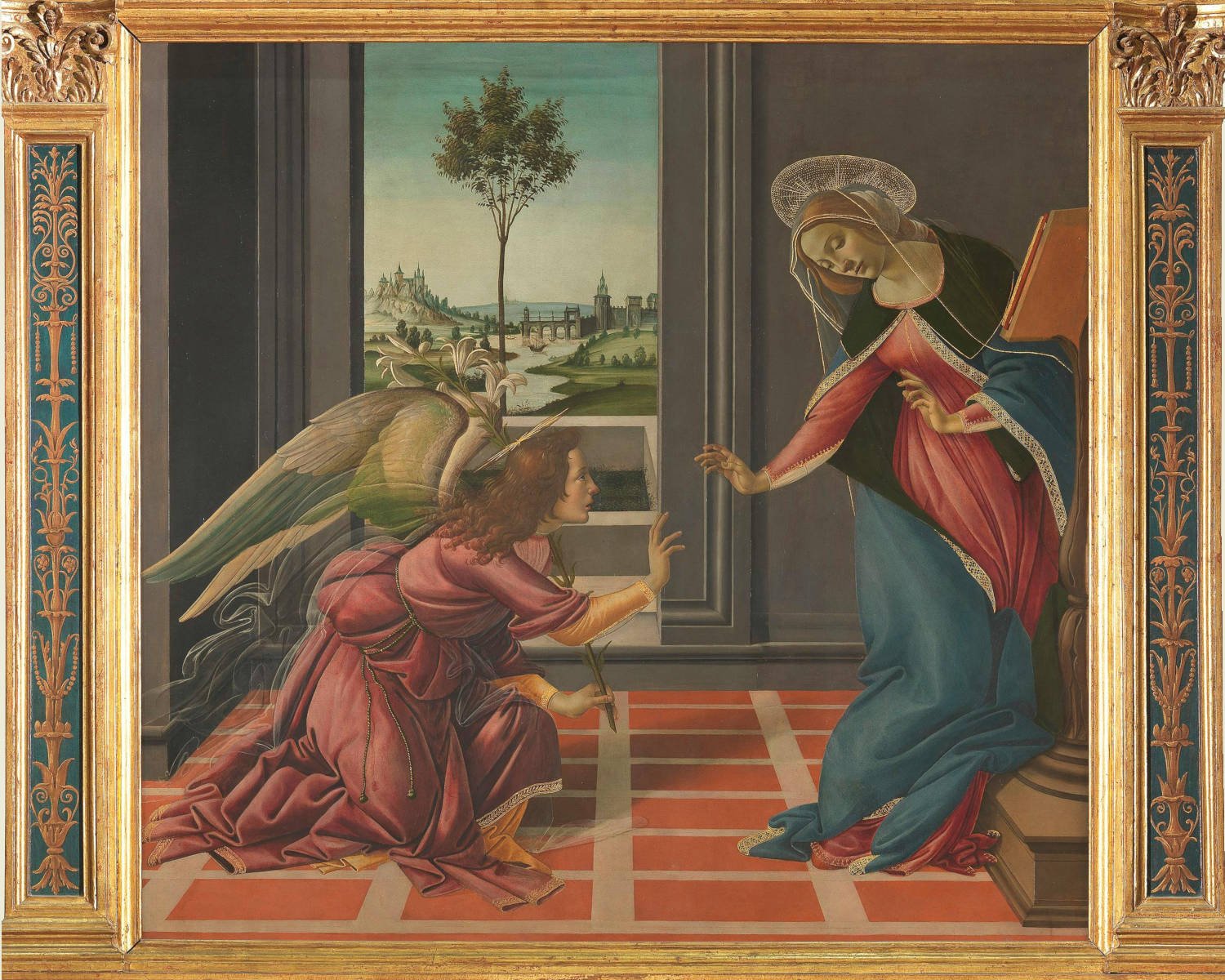
The Gospel of Saint Luke opens with a news flash from the Archangel Gabriel for Zechariah the priest, and Mary — Theotokos — the new Ark of the Covenant.
March 25, Solemnity of the Annunciation
On the 25th day of March, the Church remembers the Annunciation of the Angel Gabriel to Mary marking a pivotal event in Salvation History. The account is conveyed to us in the first chapter of the Gospel According to Saint Luke, a Gentile physician and a companion of the Apostle Paul. Several of the Fathers of the Early Church attribute the Third Gospel to Saint Luke and affirm his authorship of it. I once wrote of this unique Gospel in “Saint Luke the Evangelist, Dear and Glorious Physician.”
This Gospel reveals many facets of the life and mission of Jesus, but foremost among them is its universal message of Salvation. Luke, despite being a Gentile, anchors his Gospel in the traditions of the earlier Covenant, the Old Testament, portraying Jesus as the Savior and Redeemer of God’s Old Covenant people. He thus presents Jesus in history as one foretold by the Prophets (Isaiah 11:10-12, 49:6, and Ezekiel 39:25-29). Luke thus depicts Jesus as the Royal Messiah in the line and legacy of King David to reunite the scattered tribes of Israel and gather them into one nation. Given that he is the only Gentile Evangelist, that is an amazing feat through which Luke has prepared an artistic and spiritual masterpiece.
Saint Luke alone among the Evangelists recounts for us the Parable of the Good Samaritan (10:25-37), the Parable of the Prodigal Son (15:11-32), the Magnificat of Mary (1:46-55), the Benedictus of Zechariah (1:68-79), the Nunc Dimittis of Simeon (2:29-35), the Angelic Gloria (2:14) sung by the Angels on Christmas Night and in our liturgy to this day. And Luke is the sole source of the account that begins our story of Salvation: the Archangel Gabriel’s Annunciation to Mary.
No one really knows when or why tradition first places the Birth of Christ on December 25th, but the custom is ancient and it has a lot to do with the Annunciation, which also ties it into the events of Holy Week.
The first recorded mention of December 25 as the date of observance of the Feast of the Nativity was in a Roman document called the Philocalian Calendar dated as early as 336 A.D. Popular observance of the December 25 date of the Nativity, however, was at least a century older.
One obscure theory points to an early Roman Empire legend that great men are fated to die on the same date they were conceived. One tradition traced the date of Passover at or near March 25 in the year Jesus of Nazareth was crucified. If thus among some Romans it became popular belief that he was conceived on that date, then nine months to the day later would be December 25. However, it is impossible today to discern which came first, our belief in the December 25 date for the Birth of Jesus, or our belief in the March 25 date of his Crucifixion and therefore the Annunciation.

Spiritual Battle on a Cosmic Scale
The angels of TV-land usually worked out solutions to the drama of being human within each episode’s allotted sixty minutes. That’s not so with the angels of Scripture. Most came not with a quick fix to human madness, but with a message for coping, for giving hope, for assuring a believer, or, in the case of the Angel of the Annunciation, for announcing some really big news on a cosmic scale — like Salvation! What the angels of Scripture do and say has deep theological symbolism and significance, and in trying times interest in angels seems to thrive. The Archangel Gabriel dominates the Nativity Story of Saint Luke’s Gospel, but who is he and what is the meaning of his message?
We first meet Gabriel five centuries before the Birth of Christ in the Book of Daniel. The Hebrew name, “Gabri’El” has two meanings: “God is my strength,” and “God is my warrior.” As revealed in “Angelic Justice: Saint Michael the Archangel and the Scales of Hesed,” the Hebrew name Micha-El means “Who is like God?” The symbolic meaning of these names is portrayed vividly as Gabriel relates to Daniel the cosmic struggle in which he and Michael are engaged:
“Fear not, Daniel, for from the first day that you set your mind to understand, and humbled yourself before God, your words have been heard, and I have come because of your words. The prince of the kingdom of Persia withstood me twenty-one days, but Michael, one of the chief princes, came to help me. So I left him there with the prince of the kingdom of Persia, and came to make you understand what is to befall your people in the latter days . . . But I will tell you what is inscribed in the Book of Truth: there is none who contends at my side against these except Michael.”
— Daniel 10:12-14, 21
In the Talmud, the body of rabbinic teaching, Gabriel is understood to be one of the three angels who appeared to Abraham to begin Salvation History, and later led Abraham out of the fire into which Nimrod cast him. The Talmud also attributes to Gabriel the rescue of Lot from Sodom. In Christian apocalyptic tradition, Gabriel is the “Prince of Fire,” who will prevail in battle over Leviathan at the end of days. Centuries after the Canon of Old and New Testament Scripture was defined, Gabriel appears also in the Qu’ran as a noble messenger.
In Jewish folklore, Gabriel was in the role of best man at the marriage of Adam and Eve in the Garden of Eden. I found that a strange idea at first, but then it dawned on me: Who else were they going to ask? In later rabbinic Judaism, Gabriel watches over man at night during sleep, so he is invoked in the bedside “Shema” which observant Jews must recite at bedtime in a benediction called the Keri’at Shema al ha_Mitah:
“In the name of the God of Israel, may Michael be on my right hand, Gabriel on my left hand, Uriel before me, behind me Raphael, and above my head, the Divine Presence. Blessed is he who places webs of sleep upon my eyes and brings slumber to my eyelids. May it be your will to lay me down and awaken me in peace. Blessed are You, God, who illuminates the entire world with his glory.”
In an older issue of Word Among Us, Louise Perrotta described Gabriel’s central message to Daniel:
“History is not a haphazard series of events. Whatever the dark headlines — terrorist attacks, natural disasters, economic upheavals — we’re in the hands of a loving and all-powerful God. Earthly regimes will rise and fall, and good people will suffer. But . . . at an hour no one knows, God will bring evil to an end and establish His eternal kingdom.”
The way He accomplishes that is personified in the unusual graphic atop this section portraying Mary bearing the Christ Child in cosmic harmony with the Angelic realm.
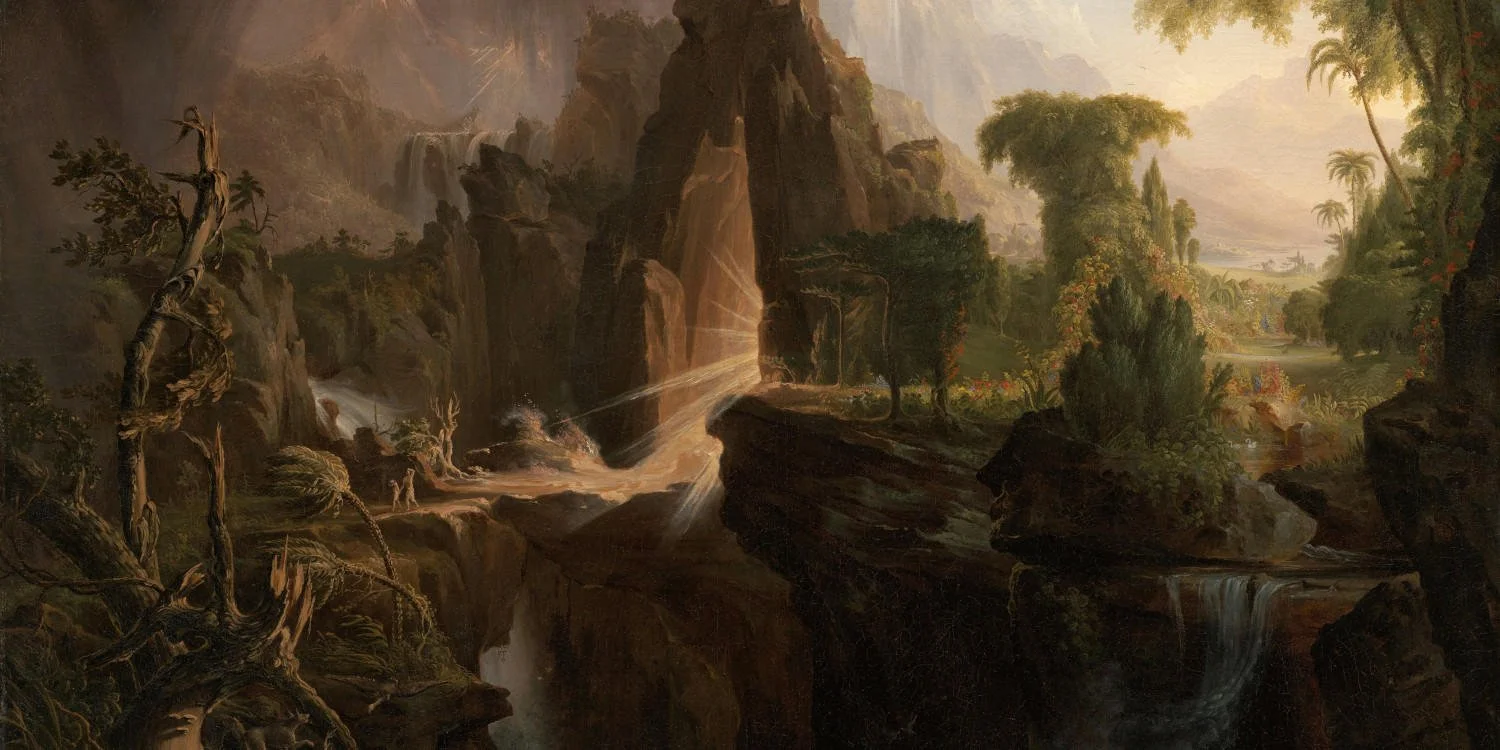
East of Eden; East of God
The Book of Tobit identifies the Archangel Raphael as one of seven angels who stand in the Presence of God. Scripture and the Hebrew Apocryphal books identify four by name: Michael, Gabriel, Raphael, and Uriel. The other three are not named for us. In rabbinic tradition, these four named angels stand at the Celestial Throne of God at the four compass points, and Gabriel stands to God’s left. From our perspective, this places Gabriel to the East of God, a position of great theological significance for the fall and redemption of man.
In a previous post I described the symbolism of “East of Eden,” a title made famous by the great American writer, John Steinbeck, who was awarded the Nobel Prize in Literature for it in 1962. I don’t mean to brag (well, maybe a little!) but a now-retired English professor at a very prestigious U.S. academy who knew Steinbeck left a comment on my post comparing it to Steinbeck’s work. This has absolutely nothing to do with the Archangel Gabriel, but I’ve been waiting for a subtle chance to mention it again! (ahem!) But seriously, in the Genesis account of the fall of man, Adam and Eve were cast out of Eden to the East (Genesis 3:24). It was both a punishment and a deterrent when they disobeyed God by eating from the Tree of Knowledge of Good and Evil:
“Behold, the man has become like one of us, knowing good from evil; and now, lest he put out his hand and take also from the Tree of Life, and eat, and live forever,’ therefore the Lord God sent him forth from the Garden of Eden to till the ground from which he was taken. He drove the man out, and to the east of the Garden of Eden he placed a Cherubim, and a flaming sword which turned every which way, to guard the way to the Tree of Life.”
— Genesis 3: 22-24
A generation later, after the murder of his brother Abel, Cain too “went away from the presence of the Lord and dwelt in the land of Nod, East of Eden.” (Genesis 4:16). The land of Nod seems to take its name from the Hebrew “nad” which means “to wander,” and Cain described his fate in just that way: “from thy face I shall be hidden; I shall be a fugitive and a wanderer on the earth” (Genesis 4:14). The entire subsequent history of Israel is the history of that wandering East of Eden. I wonder if it is also just coincidence that the Gospel of Saint Matthew, the only source of the story of the Magi, has the Magi seeing the Star of Bethlehem “in the east” and following it out of the east.
In rabbinic lore, Gabriel stands in the Presence of God to the left of God’s throne, a position of great significance for his role in the Annunciation to Mary. Gabriel thus stands in God’s Presence to the East, and from that perspective in St. Luke’s Nativity Story, Gabriel brings tidings of comfort and joy to a waiting world in spiritual exile East of Eden.
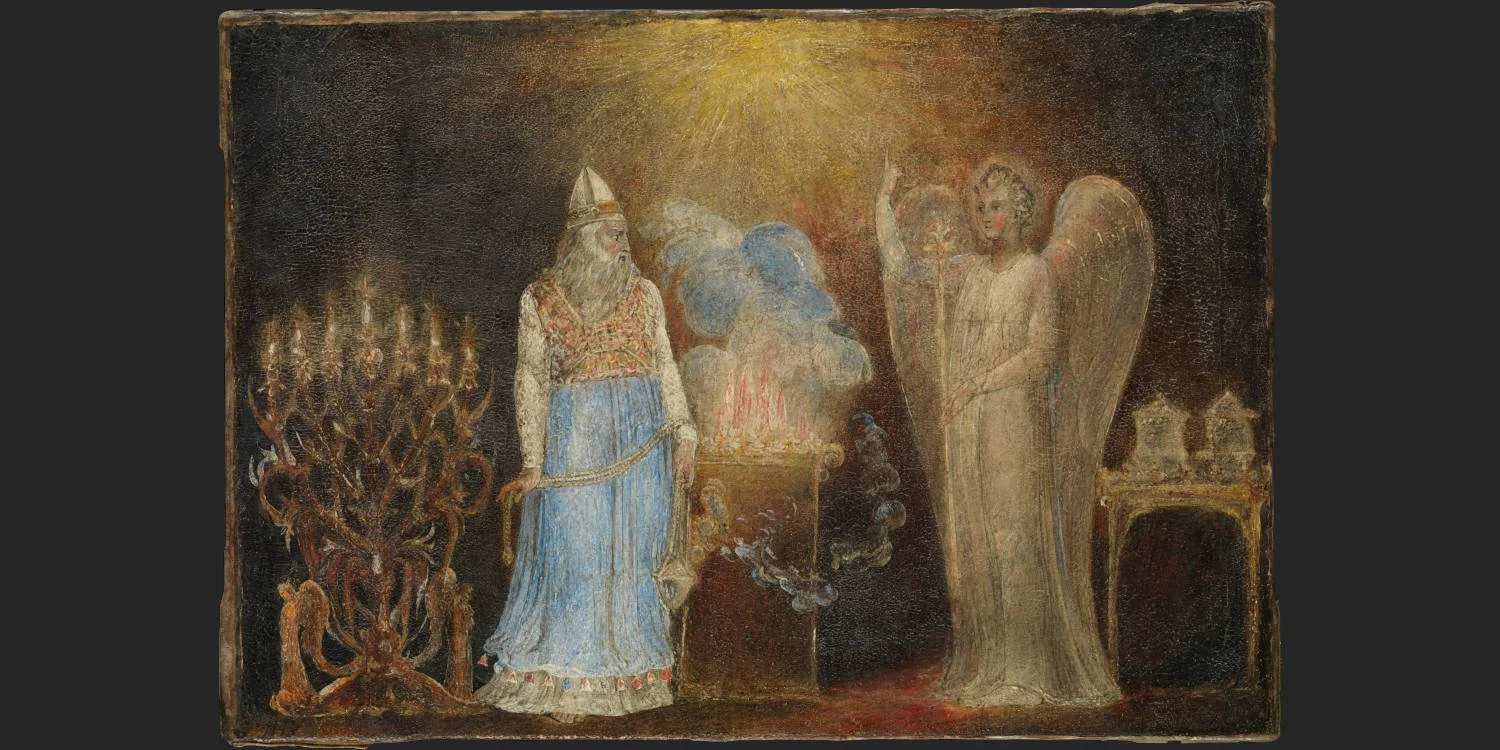
Gabriel Appears to Zechariah
The Archangel’s first appearance is to Zechariah, the husband of Mary’s cousin, Elizabeth. Zechariah is told that he and his wife are about to become the parents of the one who would become John the Baptist. The announcement does not sink in easily because, like Abraham and Sarah at the beginning of Salvation History, Zechariah and Elizabeth were rather on in years. Zechariah is about to burn incense in the Temple of Sacrifice, as close to the Holy of Holies as a human being can get, when the Archangel Gabriel appears with news:
“Fear fell upon him. But the angel said to him, ‘Do not be afraid, Zechariah, for your prayer is heard, and your wife, Elizabeth will bear you a son, and you shall call his name John . . . and he will be filled with the Holy Spirit even from his mother’s womb, and he will turn many of the sons of Israel to the Lord their God and will go before him in the spirit and power of Elijah . . .’”
— Luke 1:12-15
This news isn’t easily accepted by Zechariah, a man of deep spiritual awareness revered for his access to the Holy of Holies and his connection to God. Zechariah doubts the message, and questions the messenger. It would be a mistake to read the Archangel Gabriel’s response in a casual tone. Hear it with thunder in the background and the Temple’s stone floor trembling slightly under Zechariah’s feet:
“I am Gabriel who stand in the Presence of God . . . and behold, you will be silent and unable to speak until the day that these things come to pass.”
I’ve always felt great sympathy for Zechariah. I imagined him having to make an urgent visit to the Temple men’s room after this, followed by the shock of being unable to intone the Temple prayers.
Zechariah was accustomed to great deference from people of faith, and now he is scared speechless. I, too, would have asked for proof. For a cynic, and especially a sometimes arrogant one, good news is not easily taken at face value.
Then six months later “Gabriel was sent from God to a city of Galilee named Nazareth, to a virgin betrothed to a man whose name was Joseph, of the House of David, and the virgin’s name was Mary.” (Luke 1: 26-27). This encounter was far different from the previous one, and it opens with what has become one of the most common prayers of popular devotion.
Gabriel said, “Hail Mary, full of grace, the Lord is with thee.” His words became the Scriptural basis for the doctrine of the Immaculate Conception, that and centuries of “sensus fidelium,” the consensus of the faithful who revere her as “Theotokos,” the God-Bearer. Mary, like Zechariah, also questions Gabriel about the astonishing news. “How can this be since I have not known man?” There is none of the thunderous rebuke given to Zechariah, however. Saint Luke intends to place Gabriel in the presence of his greater, a position from which even the Archangel demonstrates great reverence and deference.
It has been a point of contention with non-Catholics and dissenters for centuries, but the matter seems so clear. There’s a difference between worship and reverence, and what the Church bears for Mary is the deepest form of reverence. It’s a reverence that came naturally even to the Archangel Gabriel who sees himself as being in her presence rather than the other way around. God and God alone is worshiped, but the reverence bestowed upon Mary was found in only one other place on Earth. That place was the Ark of the Covenant, in Hebrew, the “Aron Al-Berith,” the Holy of Holies which housed the Tablets of the Old Covenant. I wrote of Mary’s identification with the most sacred artifact in all of Israel in “The Ark of the Covenant and the Mother of God.”
But the story of Gabriel’s Annunciation to Mary draws on elements from the Second Book of Samuel. These elements are drawn by Saint Luke as he describes Mary’s haste to visit her cousin Elizabeth in the hill country of Judea. In 2 Samuel 6:2, David visits this very same place to retrieve the Ark of the Covenant. Upon Mary’s entry into Elizabeth’s room in Saint Luke’s account, the unborn John the Baptist leaps in Elizabeth’s womb. This is reminiscent of David leaping before the Ark of the Covenant in 2 Samuel 6:16.
For readers “with eyes to see and ears to hear,” Saint Luke presents an account of God entering into human history in terms quite familiar to the old friends of God. God himself expressed in the Genesis account of the fall of man that man has attempted to “become like one of us” through disobedience. Now the reverse has occurred. God has become one of us to lead us out of the East, and off the path to eternal darkness and death.
The Church honors with the deepest reverence Mary, Theotokos, the Bearer of God and the new Ark of the Covenant. Mary, whose response to the Archangel Gabriel was simple assent:
“Let it be done to me according to your word.”
“Then the Dawn from On High broke upon us, to shine on those who dwell in darkness and the shadow of death, and to guide our feet on the way to peace.”
— Luke 1:78-79
+ + +
Note from Father Gordon MacRae: Thank you for reading and sharing this post. It is also added to our collection of Scripture posts, The Bible Speaks.
You may also like these related posts:
Saint Luke the Evangelist, Dear and Glorious Physician
The Ark of the Covenant and the Mother of God
Holy Week begins this year on Palm Sunday, March 29. We have collected a list of seven Holy Week posts from Beyond These Stone Walls. Together, they form a sort of personal Holy Week Retreat. We invite you to take part in it by visiting or revisiting each of its linked posts throughout the course of this coming week. You may access here Our Beyond These Stone Walls Holy Week Retreat.

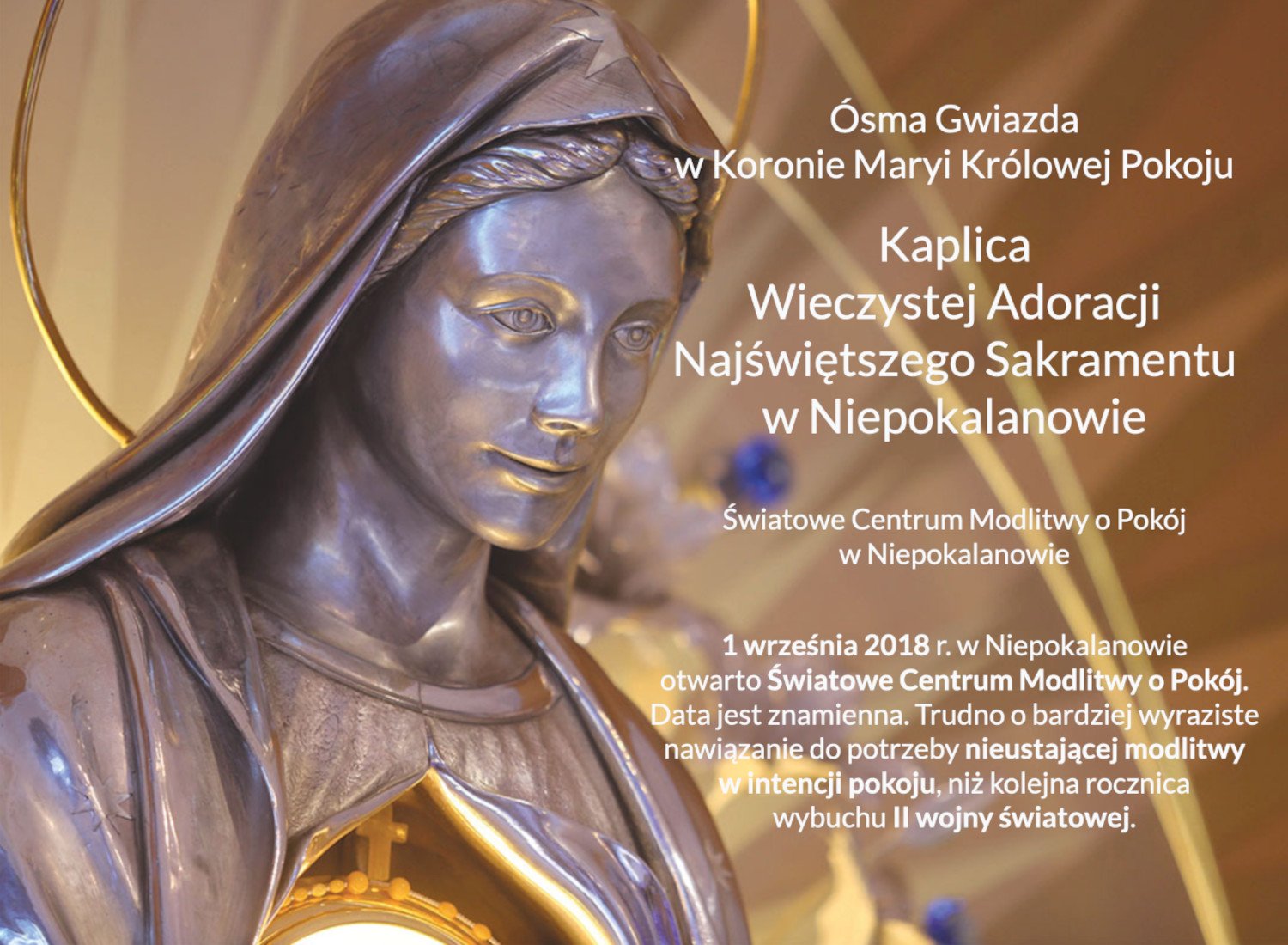

The Eucharistic Adoration Chapel established by Saint Maximilian Kolbe was inaugurated at the outbreak of World War II. It was restored as a Chapel of Adoration in September, 2018, the commemoration of the date that the war began. It is now part of the World Center of Prayer for Peace. The live internet feed of the Adoration Chapel at Niepokalanow — sponsored by EWTN — was established just a few weeks before we discovered it and began to include in at Beyond These Stone Walls. Click “Watch on YouTube” in the lower left corner to see how many people around the world are present there with you. The number appears below the symbol for EWTN.
Click or tap here to proceed to the Adoration Chapel.
The following is a translation from the Polish in the image above: “Eighth Star in the Crown of Mary Queen of Peace” “Chapel of Perpetual Adoration of the Blessed Sacrament at Niepokalanow. World Center of Prayer for Peace.” “On September 1, 2018, the World Center of Prayer for Peace in Niepokalanow was opened. It would be difficult to find a more expressive reference to the need for constant prayer for peace than the anniversary of the outbreak of World War II.”
For the Catholic theology behind this image, visit my post, “The Ark of the Covenant and the Mother of God.”
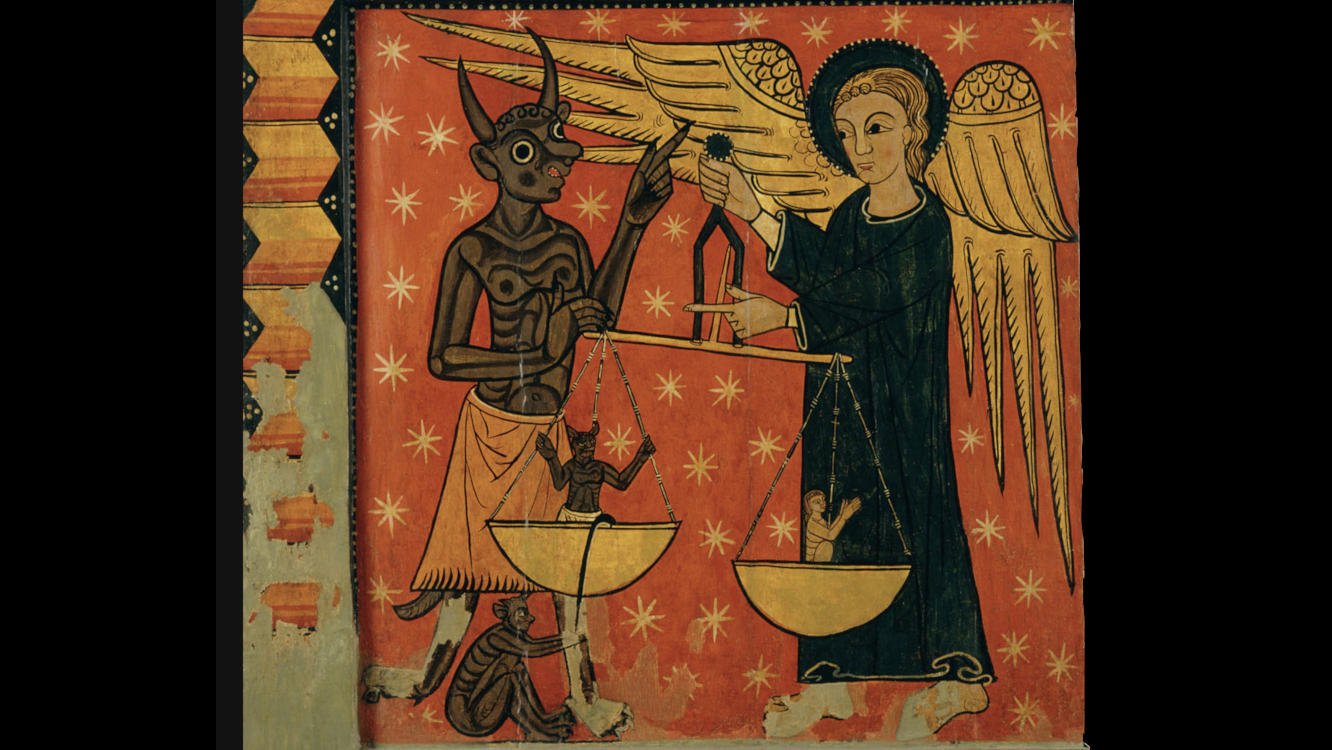
Don’t Let the Noonday Devil Tip the Scales
Anyone who has experienced the grip of depression knows it is a spiritual disease as much as it is mental and physical. Is there a spiritual path out of the dark night?
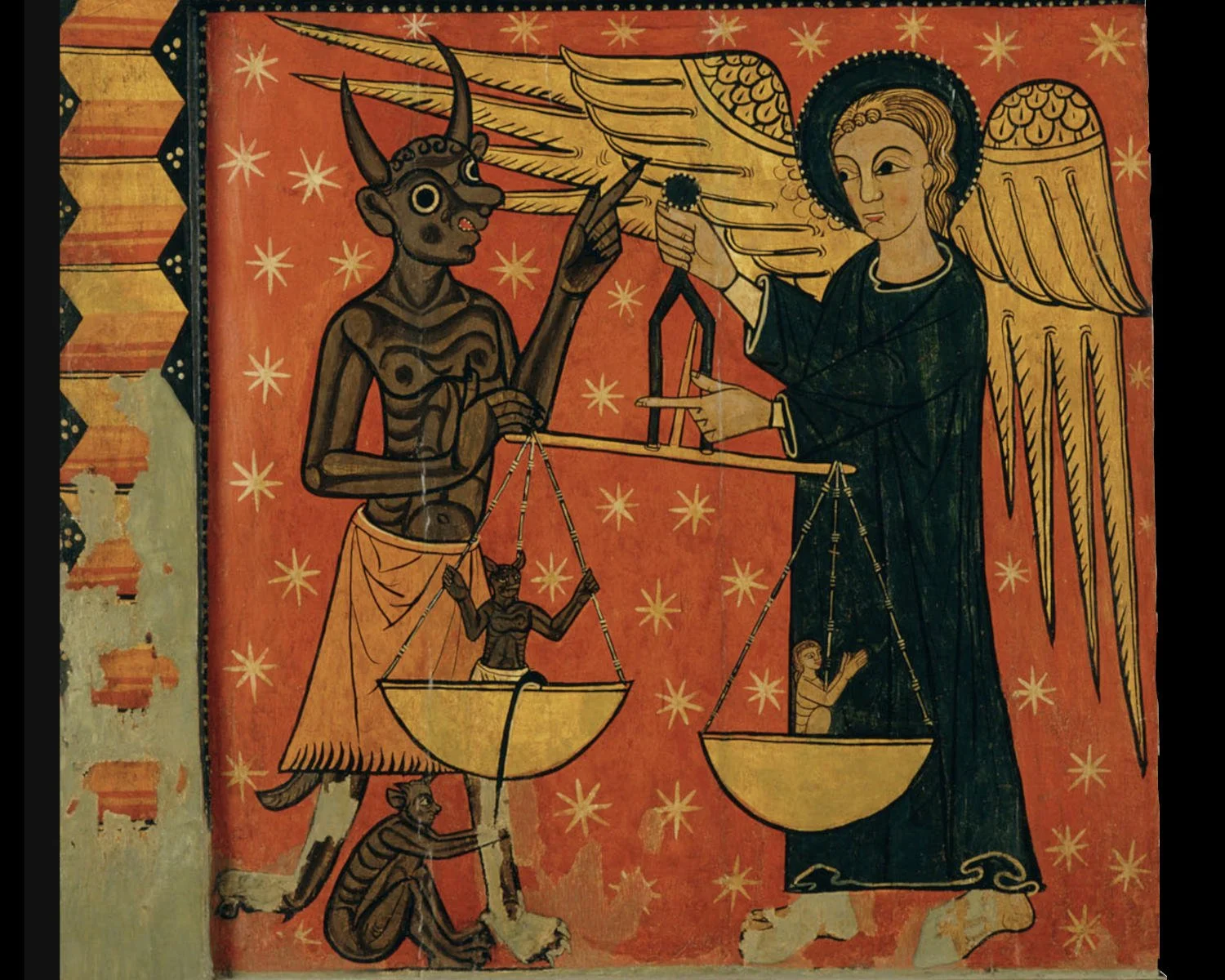
Anyone who has experienced the grip of depression knows it is a spiritual disease as much as it is mental and physical. Is there a spiritual path out of the dark night?
There is an old and wise foreboding in Catholic monastic traditions to “Beware the Noonday Devil.” That was also the title of an excellent 2007 post by Father Paul Scalia at Catholic Exchange. For monks who arose in the night for the Divine Office prayer of Matins, and then arose again early in the morning for Lauds, the noonday period sometimes induced lethargy and sloth that left monks in the grip of depression. Noonday with its exhaustion and malaise was seen as a spiritually vulnerable time. Thus in monastic life depression came to be known as “the noonday devil.”
Support for the monastic concern was also found in Sacred Scripture, notably in the Gospel: “Keep awake, therefore, for you do not know on what day your Lord is coming” (Matthew 24:42). An admonition of Saint Peter warns us to “Stay sober and alert for your opponent the devil is prowling like a roaring lion looking for someone to devour” (1 Peter 5:8). Psalm 91, my favorite of the Psalms, addressed the noonday dread more directly:
“You will not fear the terror of the night, nor the arrow that flies by day, or the pestilence that stalks in darkness, or the destruction that lays waste at noonday.”
— Psalm 91:5-6
For anyone who has ever suffered from chronic depression, Saint Peter’s characterization of “a roaring lion looking for someone to devour” pretty much captures it. So does the Psalmist’s “the destruction that lays waste at noon.” As Holy Week approached this year, I began to look at how I could challenge my own occasional depression. Then I decided to make a post of it, and invite others to join this battle.
First, however, if you are prescribed medication for depression, don’t give that up for Lent! I can offer no medical expertise for treating the insidious disease of depression, but I do have some hard-won experience on depression’s spiritual toll. I can also offer some of the spiritual guidance that, for me, at least, has proven effective in taming this roaring lion for it has devoured me too often. I’ve learned an important truth about coping with depression in my current milieu, but that lesson begins with a painful and depressing story.
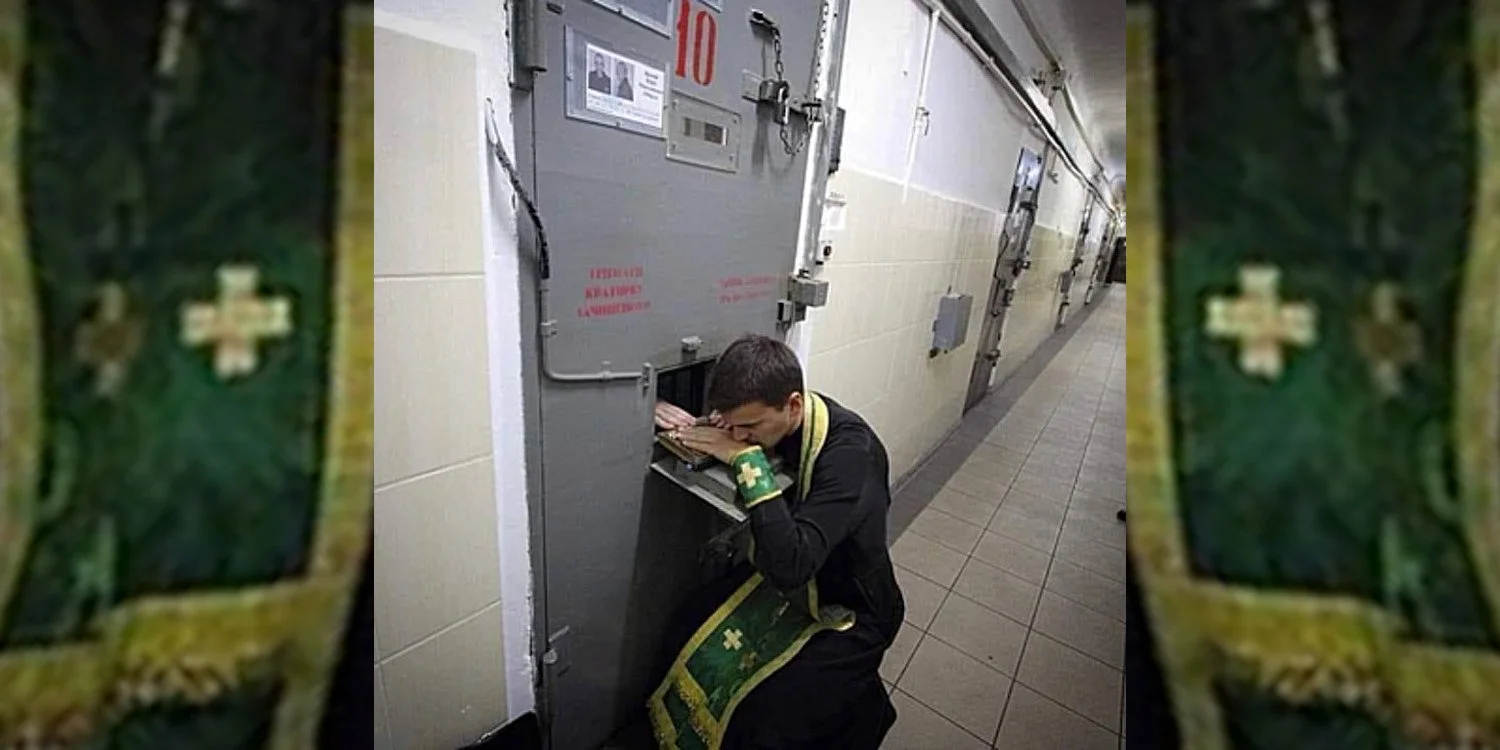
Solitary Confinement
Several years ago, when our friend Pornchai Max Moontri was still here with me, I was lying in my bunk one night at 10:00 PM. My little television was tuned to a PBS station. I was just about to turn it off when an episode of PBS Frontline began. “It’s like being buried alive,” I heard a shaky voice say. “It makes you mean; it makes you violent, it [expletive’s] up your head,” said another. Added a third, “If you don’t have a strong mind, this place can break you quick.”
Then a somber voice introduced Rodney Bouffard, Warden of Maine State Prison’s “supermax” unit who said, “You can have them do their whole time in segregation, but I don’t want him living next to me when you release him.”
I suddenly realized that I was about to see a Frontline production about the solitary confinement“supermax” unit of the Maine State Prison where Pornchai Moontri spent thirteen years before being transferred to the New Hampshire prison where we met and became unlikely friends. As Frontline introduced the story, Pornchai was fast asleep in his bunk just a few feet above me. I pondered for a moment whether to awaken him, and then decided against it.
Each night at 9:00 PM, Pornchai was given medication for a diagnosis of acute anxiety and Post Traumatic Stress Disorder. The meds generally sent him into a deep sleep by 10:00 PM on every night except Sunday when he struggled to remain awake for Mass in our cell. So I decided to brave Frontline’s “Solitary Nation” alone and then tell him about it the next day. By the time it was over, Pornchai remained fast asleep while I spent much of that night in a state of restless horror.
The Frontline cameras spent six months filming in a place rarely seen by the public. I followed the plight of a few Maine prisoners who spent months at a time in and out of solitary confinement, rendered, as the Warden predicted, socially disabled and emotionally broken because of their months in solitary. One prisoner who spent a year there in one stretch was the one quoted above who described how it made him mean, violent, and broken.
As the documentary unfolded, I saw prisoners covered in blood having cut themselves in their solitary madness. I saw fecal matter come flying out the food slots in the cell doors during fits of anger toward guards. I watched the horror of a screaming young man being placed for the first time in one of those bloodstained and horribly smelling tombs. I saw men so broken and mentally ill by the time they moved on that I knew they could not last long out among the living, only to land in solitary again.
Then I recalled that Pornchai spent a total of over thirteen years there, confined in one stretch of solitary confinement for three-and-a-half years in what had to be the longest any prisoner survived in Maine’s supermax. I could conceive of no modern horror more destructive to one’s humanity than what I witnessed on that small screen. The fact that I was seeing for the first time the conditions Pornchai lived in, and still lives with, made me unable to turn away or turn it off.
I remember reading Pornchai’s somber details in “Welcome to Supermax,” a courageous article he wrote years ago published by the prison reform organization, Solitary Watch. I knew Pornchai never exaggerated any of his experiences there, but articles can be easy to intellectualize. Now I had a visual to go along with it, and it woke me up to the bitter reality of what had happened to him.
It was important that I understand this. If you want to understand it as well, I recommend viewing “Solitary Nation” at PBS.org. In the morning when I told Pornchai about this he said simply, “Now you know.”
The human mind tends to store up its traumas. Because we do not know how to cope with them, we just shelve them away where they remain unaddressed, unresolved, and gradually inflated. We relive them again and again to inflict their suppression of all consolation and peace in our psyche.
When I look back over the years since Pornchai was moved from there to here with me, I can see more clearly now that he came back from the brink of total despair. Pornchai himself wrote about this. It was after our entire nation suffered trauma in Uvalde, Texas. In a mirror image version of that story in Thailand, a former police officer off the rails on drugs went into a Thai preschool and murdered 36 people including 24 preschool children. It was one year after Pornchai returned to Thailand after a 36-year absence. Nothing like this had ever happened in Thailand before, and it happened just a few kilometers from the village where Pornchai was born. As the Kingdom of Thailand struggled to find meaning in any of this, Pornchai boldly wrote about it and what he wrote helped to mend many hearts (including mine). His post was “Pornchai Moontri: Elephants and Men and Tragedy in Thailand.”
When Pornchai first arrived here after solitary confinement in the State of Maine, I met him for the first time in the prison dining hall. One of my friends, Jaclan Wawarunto, a young man from Indonesia whom I had helped to prepare for deportation, saw me enter the dining hall and shouted “Hey, G, sit over here with us. This is my new friend Pornchai. He just got here, and he wants to ask you a question.” So I sat across from them. The young man Jaclan wanted me to meet appeared hostile. He glared at me as he said, “I just want to know if you can help me get transferred to a prison in Bangkok.” Ironically, I had just finished reading 4,000 Days, a book about the horror of life in a Bangkok prison. I told him that I would not help him do anything that would only destroy him. He turned to Jaclan angrily and asked, “Who is this jerk?”
That was our first encounter.
When Pornchai and I first became friends in 2006, he had periods in which he sank into deep, hopeless depression. I remember one day that his cellmate at the time came to me and said, “I don’t know what to do. He hasn’t spoken or eaten or even gotten out of bed in days except to use the bathroom.” That was many years ago. I remember going to talk with Pornchai, and feeling very concerned about the lifeless expression and hopelessness in his face. It is a common look in prison, but Pornchai had perfected it. So I told him that I was not leaving his cell “until you get your butt out of that bunk and talk to me.” He obliged, but only to get rid of me. The anger in his eyes masked deep, deep chasms of pain and distrust born of betrayal and abuse.
Over the long run, as you know if you have been reading from Beyond These Stone Walls, friendship found a well of trust, and then a source of hope, and then the courage to have faith, and then the discovery of Divine Mercy and, finally, a radical conversion. All these years later, it seems impossible to reconcile the account above with the face of Pornchai Moontri at his 2012 high school graduation in prison, it radiates hope and promise and redemption.
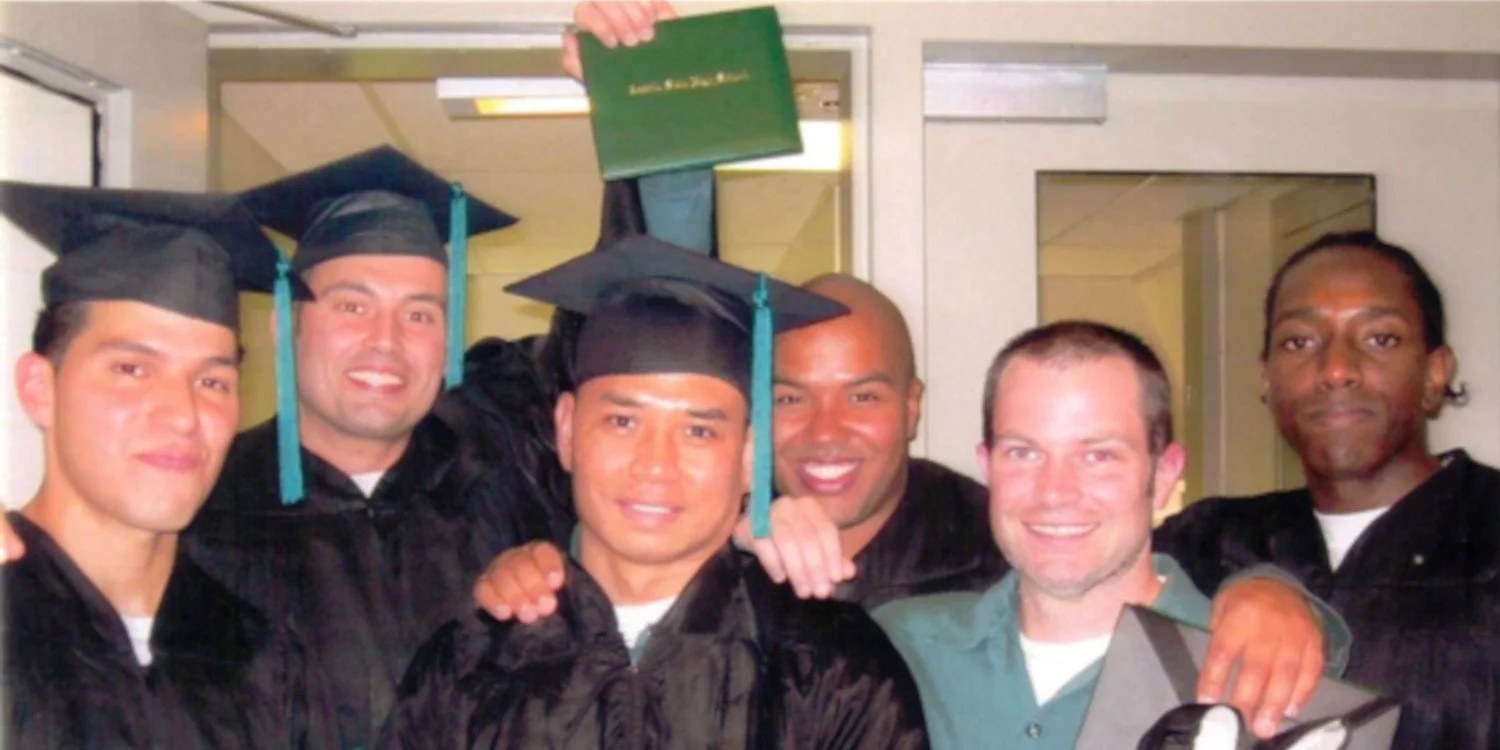
The Destruction That Lays Waste
How does one go from years of abuse, followed by years of brutal solitary confinement in a supermax prison to that? The question becomes ever more mysterious if you watch the Frontline video. As Pornchai himself described that transformation, “I woke up one day with a future when up to then all I ever had was a past.”
Some years ago, as seems inevitable in prison, I sank into a depression of my own. Actually, I have noticed that every time I have become depressed in prison, it was always a result of thinking myself into the depression. Feelings of hopelessness and futility crept in, and as I dwelled on them, I played their messages over and over in my mind, filling up all the empty moments with my inner language of injustice and resentment.
I always ended up on the slippery slope toward a bout of depression. Few of my episodes lasted long, but at some point, the destruction that laid waste came from inside my own mind, and left me unprepared to stand my ground. It was precipitated by a visit from my bishop, the first after many years of silence, and presumably the last.
The visit was far from transcendent. Every attempt I made to speak in my own defense was rebuffed and silenced with the raising of his hand to stop me from speaking. He was clearly not there to listen. It became clear to me that the script had already been written, and Church officials would continue to refuse to allow any defense, any due process. At the same time, an American cardinal assured writer, Ryan A. MacDonald that every accused American Catholic priest is afforded due process and a full canonical defense. The disconnect between rhetoric and reality is… well… depressing!
As I sank into my own depression, I became oblivious — as the noonday devil often demands — to its effect on others. Then one day I witnessed something I had not seen for a long time in the face of my friend, doubt, uncertainty, and grief. Pornchai’s own bouts of suffering from deeply felt discouragement and abandonment had diminished. Now he was suffering from mine. As my spirit slowly descended, I came to see that I could not afford to let it fall any further. I was losing my grip not only on my own cross, but also on someone else’s. Just imagine Simon of Cyrene letting that happen.
Our Editor at the time sent me a message that she had ordered a book for me. I doubted I would ever see it as most books sent to me require that I give one up to receive it, and that is sometimes difficult. Without a hitch, however, the book arrived, and it is a treasure. The book was The Catholic Guide to Depression by Aaron Kheriaty, MD, with Father John Cihak, STD (Sophia Press, 2012). I had a chuckle because our Editor at the time was in Australia from where she ordered the book, while Sophia Press its publisher was but 15 miles away from me in Manchester, New Hampshire. When I first opened the book, I landed immediately on a page I believe I was meant to read.
“The well-known psychiatrist Viktor Frankl observed that hope is essential if one is to go on living under difficult circumstances. Frankl was a Jew imprisoned in Auschwitz who years later wrote his most famous work, Man’s Search for Meaning… . Frankl argued that survival in such circumstances required that a person find some meaning, some noble end or purpose to his life.”
— The Catholic Guide to Depression, p. 210
This blog began in 2009 with that same book, Viktor Frankl’s, Man’s Search for Meaning. In a subsequent post for this blog, I wrote back then of how it led me to this great modern Saint of Auschwitz, how it taught me to cope with the prison of depression and despair by placing the pain of others ahead of my own, and of how Pornchai, moved by Saint Maximilian’s sacrifice, took his name at the time of his Divine Mercy conversion in 2010. I wrote of how finding meaning in his suffering transformed Saint Maximilian Kolbe, and ultimately transformed us in my post, “Saint Maximilian Kolbe and the Gift of Noble Defiance.”
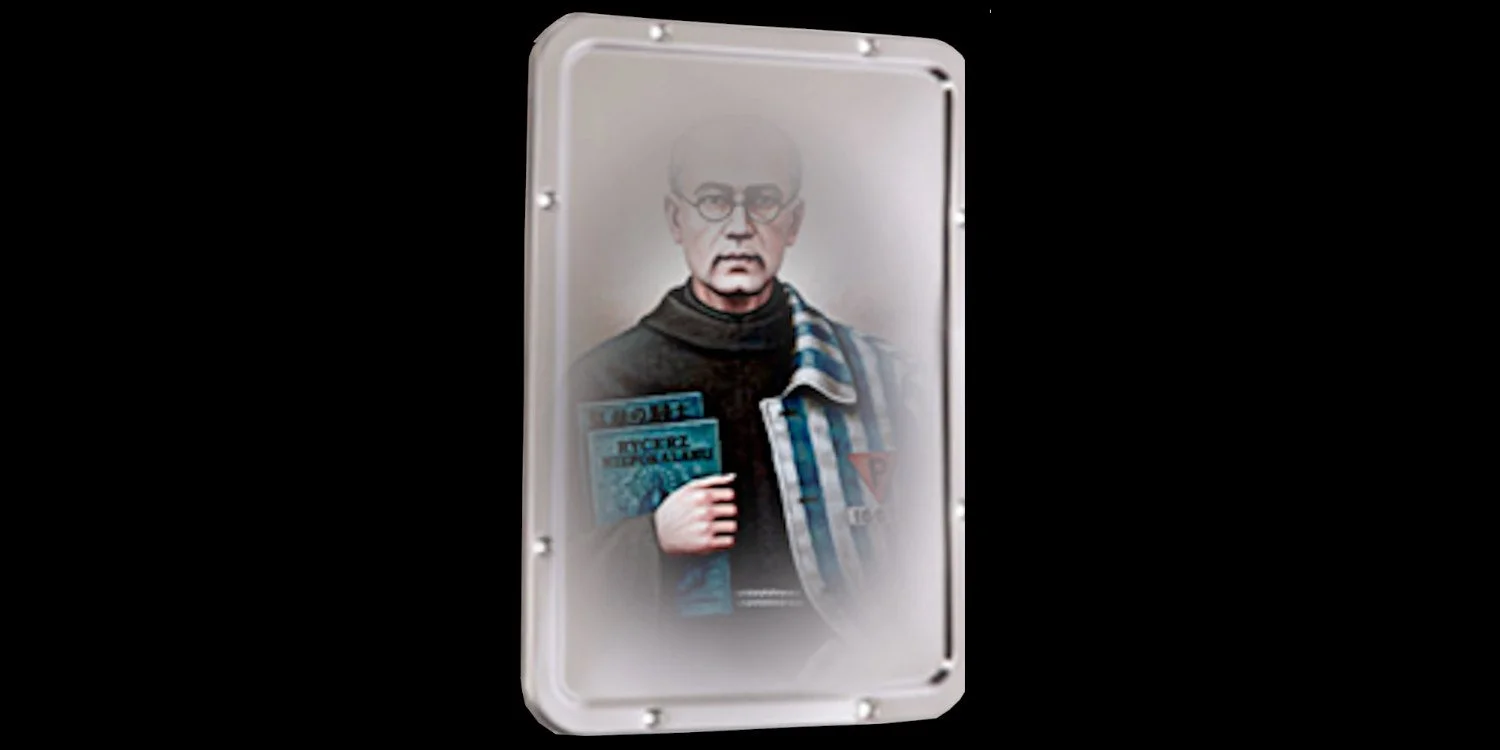
Saved by Hope
I found it astonishing that both Viktor Frankl and Aaron Kheriaty, MD went on in their respective books to cite Saint Maximilian Kolbe as an example of the virtue of hope lived for the good of others. “Hope is a virtue that changes everything,” Dr. Kheriaty wrote. He quoted Pope Benedict XVI in his magisterial encyclical, Spe Salvi, Saved by Hope: “The one who has hope lives differently.”
Around the time I was first encountering Dr. Kheriaty’s book, Pornchai Moontri and I were in the prison’s main dining hall for dinner. It was unusual that we were there at a time when it was especially crowded. We managed to find a table with two empty seats, but quickly other tables all filled up with several prisoners standing and holding their trays while looking for a seat. Suddenly one of the men sitting with us got up and left while one of the waiting inmates quickly moved into his empty seat. We did not know this person, and he did not speak at first. So Pornchai and I just continued our conversation. Suddenly this young man looked very interested. He said, “Excuse me, can I ask you guys a question?” I said, “Sure.” He asked, “Do you write for a blog?” And then to Pornchai he asked, “Are you from Thailand?” Most prisoners would find this very invasive, but we did not. The young man said that he had arrived in the prison only a few weeks earlier, but before his arrival, while being sentenced was still a looming threat, he was visited in a county jail by his grandmother. She told him that she had been reading about two guys in the New Hampshire Prison “who lived differently from everyone else.” The young man said, “You guys are famous! My grandmother won’t believe I met you.”
So Pornchai invited him to the Catholic Mass in the prison chapel. This was sadly in the days before Covid and before any sign of a Catholic Mass was extinguished. But our association with this young man gave him hope, something he expressed to us with gratitude as he was preparing to leave prison two years later.
Only by failing to instill hope in others can the roaring lion of depression ever devour you. Once such a thing takes place, there is no room for depression. It loses its will to feed itself, and ceases its descent. Saint Maximilian gave his life because he found a suffering greater than his own, and that became his cross, willingly borne.
The key to coping with depression is to become Maximilian Kolbe, to bear the cross of another, never putting it down long enough to make room for self-absorption. It gives birth to hope, and “the one who has hope lives differently.” It’s what places you, as Psalm 91 promises, “In the shelter, of the Most High, abiding in the shadow of the Almighty,” a worthy destination for a Lenten journey.
+ + +
Editor’s Note: Dr Aaron Kheriaty has a one-hour video about coping with depression. The setting was an interview at Franciscan University in which he discusses the major points of A Catholic Guide to Depression.
+ + +
Note From Father Gordon MacRae: Thank you for reading and sharing this post. Sharing it on social media may place it before someone who really needs to read it. You may also like these related posts from Beyond These Stone Walls:
Pornchai Moontri: Elephants and Men and Tragedy in Thailand
Saint Maximilian Kolbe and the Gift of Noble Defiance
The Measure By Which You Measure: Prisoners of a Captive Past
The Eucharistic Adoration Chapel established by Saint Maximilian Kolbe was inaugurated at the outbreak of World War II. It was restored as a Chapel of Adoration in September, 2018, the commemoration of the date that the war began. It is now part of the World Center of Prayer for Peace. The live internet feed of the Adoration Chapel at Niepokalanow — sponsored by EWTN — was established just a few weeks before we discovered it and began to include in at Beyond These Stone Walls. Click “Watch on YouTube” in the lower left corner to see how many people around the world are present there with you. The number appears below the symbol for EWTN.
Click or tap here to proceed to the Adoration Chapel.
The following is a translation from the Polish in the image above: “Eighth Star in the Crown of Mary Queen of Peace” “Chapel of Perpetual Adoration of the Blessed Sacrament at Niepokalanow. World Center of Prayer for Peace.” “On September 1, 2018, the World Center of Prayer for Peace in Niepokalanow was opened. It would be difficult to find a more expressive reference to the need for constant prayer for peace than the anniversary of the outbreak of World War II.”
For the Catholic theology behind this image, visit my post, “The Ark of the Covenant and the Mother of God.”
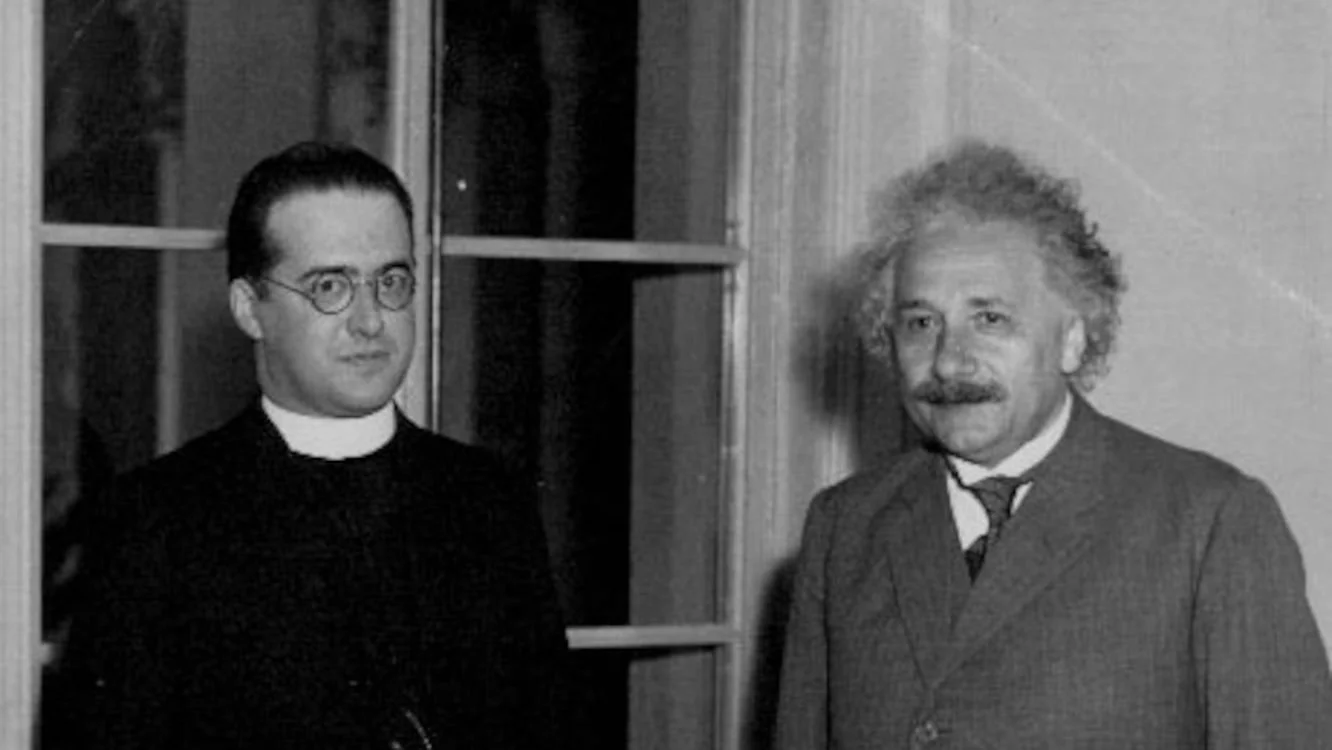
Science and Faith Are Not Mutually Incompatible
Albert Einstein honored Georges Lemaitre, the priest, physicist and mathematician whose Big Bang Theory is now the scientifically accepted origin of the universe.
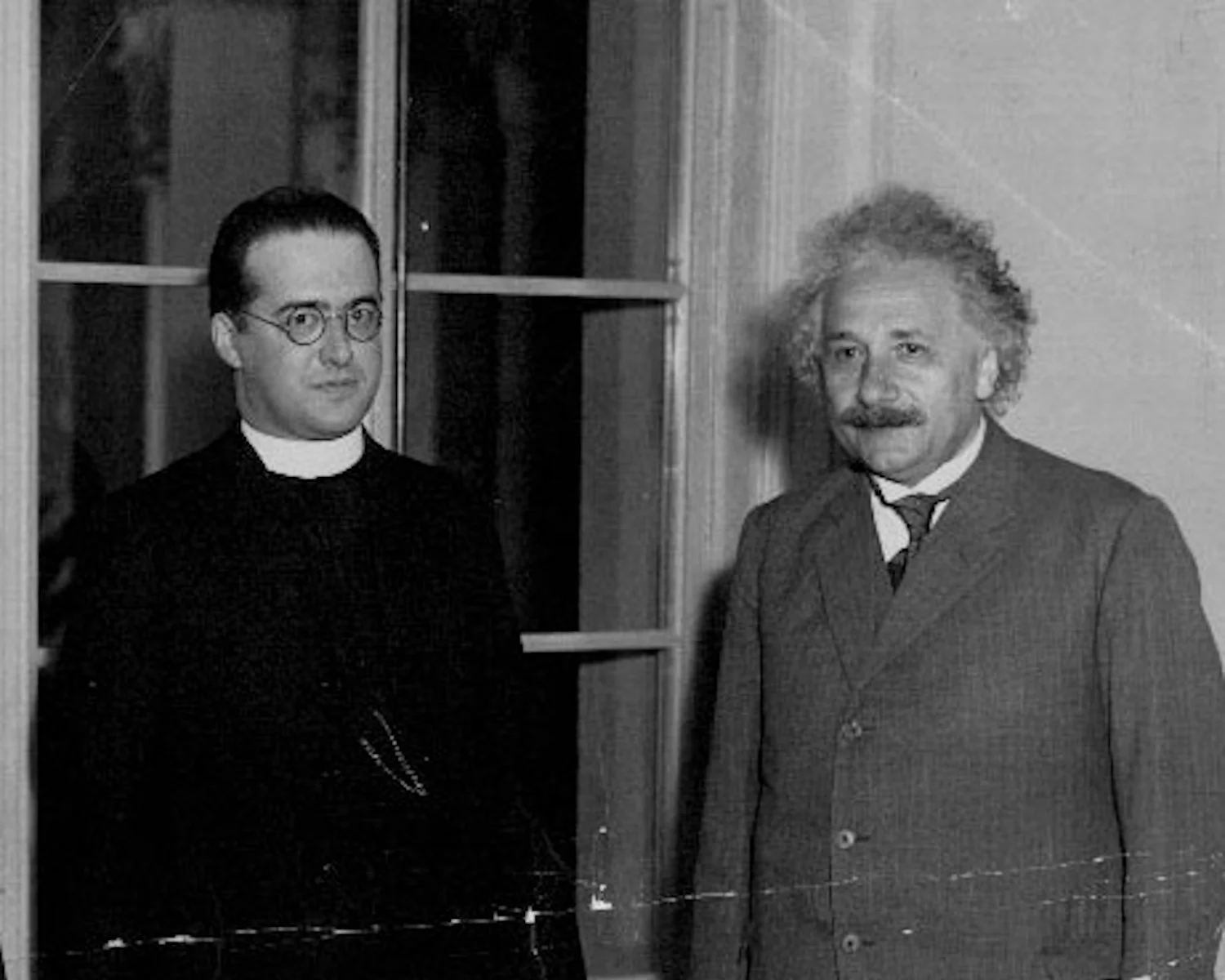
Albert Einstein honored Georges Lemaitre, the priest, physicist and mathematician whose Big Bang Theory is now the scientifically accepted origin of the universe.
March 11, 2026 by Father Gordon MacRae
In 2016, an issue of the former Catholic newspaper Our Sunday Visitor profiled some eye-opening research in an article entitled “Young People Are Leaving the Faith: Here’s Why” (August 27, 2016). It was an analysis of two national studies conducted by The Center for Applied Research in the Apostolate (CARA) to provide insight into the reasons why a third of “millennials” who were raised Catholic reject the faith of their parents as young adults.
In the CARA studies, “Millennials” are defined as those born in 1982 or later. The majority of the young adults who responded with comments on the research indicated that they left their faith for science, concluding that Catholicism cannot be reconciled with science at the high school and university level. They report finding little in the Catholic presentation of faith that challenges that view. The OSV summary included a sampling of the responses behind their decisions:
“As I learn more about the world around me and understand things that I once did not, I find the thought of an all-powerful being to be less and less believable.”
“Catholic beliefs aren’t based on fact… nothing can be disproved, but it certainly shouldn’t be taken seriously.”
“I realized that religion is in complete contradiction with the rational and scientific world, and to continue to subscribe to a religion would be hypocritical.”
“As I started to enjoy math and science more, I realized the discrepancy between religion and science… Catholicism especially did seem to clash fairly well.”
“[Faith] no longer fits into what I understand of the universe.”
These responses reflect a pattern of thought familiar to many parents of young adult Catholics and others concerned about the dismal conclusions of the CARA research. This is also one of the most common pleas I hear on a global scale from parents and grandparents and other readers of this blog.
I must seem to be an enigma to those who have left our faith or are pondering doing so. Judging from my posts of the last ten years, though it was never intended to be so, I seem to devote almost equal time to both faith and science. For example, we have recently collected in one place a number of posts dedicated to the understanding of Sacred Scripture. We called this collection, “The Bible Speaks.” Apparently it speaks quite loudly. There are presently some 43 titles in that collection, and some have broken records among the readership of this blog.
But there is a similar phenomenon that has been taking place in more recent years. I have also written several posts about science and especially the sciences of cosmology, astronomy and particle physics. One of my friends here who comes to the library where I work has asked me for copies of posts over the last few years. He recently complained of feeling a sense of whiplash, bouncing between science and religion, but he said he finds both to be fascinating. To demonstrate this phenomenon one recent post has broken all records in numbers of readers and especially in numbers of readers who come to it again and again, and who share it. That post is “Did Stephen Hawking Sacrifice God on the Altar of Science?” It seems that many people believed that he did, but I have made a case for the opposite. What strikes me most about that post is the unfathomable number of educational institutions of higher learning that are also sharing it and recommending it.
The same has held true for another recent post that blends principles of both science and faith entitled “The Higgs Boson God Particle: All Things Visible and Invisible.” Our Editor has observed and commented on the high number of academic institutions that have also been visiting religious titles on this blog. Some of these institutions are dedicated to scientific research, and yet here they are suddenly delving into the mysteries of Catholic faith. And yet no one is denouncing anything. They seem to come here to observe and to learn, not to refute.
True Believers
I have some firsthand experience with the challenging questions posed by science for the faith of younger Catholics. A decade ago at one university, the son of a reader of this blog, a science major, sent me a letter filled with questions. The previous summer, his mother had emailed him with a link to one of my forays into the science of cosmology entitled, “Science and Faith and the Big Bang Theory of Creation.” In his letter to me the student wrote that he pretty much just dismissed the post as irrelevant without having read it. He read his mother’s email, but didn’t bother clicking on the link until two months later. The student wrote that he grew up in a devout family that accepted Catholic teachings about the world and universe without question. He attended Catholic schools until switching to a public high school, then abandoned his faith in adolescence because his interest in science made faith seem irrelevant.
He believed, or rather was led to believe, that science and religion are mutually incompatible, unable to coexist in a person of science. “The bias fed to me in academia,” he wrote in a much later letter, “was that science is the new source of all faith, and to be taken seriously as a scientist requires setting aside the faith of my parents in this new world order.” And thus ended his identity as a Catholic. It is a troubling story given that for every convert entering the Catholic faith in America in recent years, more than six others left.
The exit of millennials is not at all for the reasons typically put forward by older Catholics who become disenchanted with their Church. In the CARA study, Catholic scandal and the Latin Mass are barely touched upon as influential reasons. And the millennials are not leaving to embrace some other faith. They now constitute the fastest growing expression of religious belief in America — the “Nones,” who self-identify with no religious affiliation at all. A decade ago in “A Crisis of Faith, Not of Worship,” a soul-stirring post at The Catholic Thing, (Aug. 24, 2016) Father Mark A. Pilon made this point well:
“The real underlying problem is simple: it’s a massive loss of faith… About thirty years ago, a reliable survey revealed that only about 30 percent of Catholics believed in the Real Presence of Christ in the Eucharist any longer. Why didn’t the bishops call an emergency meeting to reflect on this loss of faith, as they did in 2002 to deal with sexual abuse? … The highest priority has to be this basic question: What caused this massive loss of faith, and how do we work to resurrect that lost faith?”
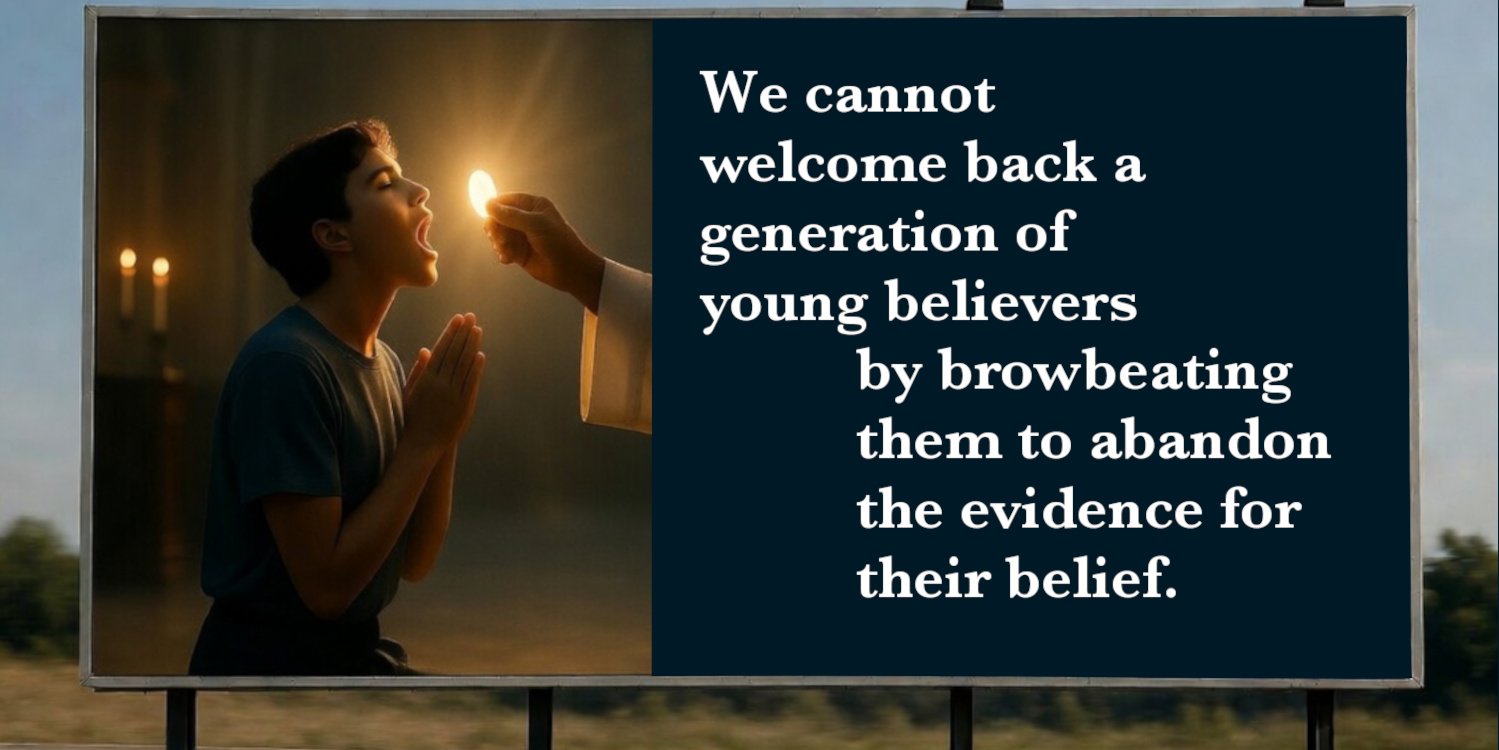
These are very relevant questions, but some have already begun to change. In early 2025 I wrote a post entitled “On the Great Biblical Adventure, the Truth Will Make You Free.” Something happened over the preceding year that signaled a great cultural change toward openness to religion and especially biblical studies. Book publishers have observed that Bible sales greatly increased by double digits toward the end of 2024. A lot of factors were proposed as contributing to this, including the election of 2024, the assassination attempts on the leading U.S. presidential candidate at that time, and later the assassination of Charlie Kirk, founder of Turning Point USA. These were inflection points causing broad swaths of America and elsewhere in the free world to pause and reassess where we are and where we are going. The biblical interest and its resulting growth of interest in faith also has continued to this day. For those who have suggested that Catholic leaders need to take advantage of this trend, a good start would be to moderate “climate change” as an example of our highest priority while abandoning other priorities, such as respect for life. Our hierarchy might also want to reconsider its revulsion for the Traditional Latin Mass and for those who find spiritual comfort in it, many of whom are younger Catholics. And a prohibition against kneeling to receive the True Presence of Christ is simply mind-boggling for true believers. We cannot welcome back a generation of young believers by browbeating them to abandon the evidence for their belief.
The Folly of Leaving Faith Behind for Science
The answer to the suspected disconnect between science and faith is not as simple as seeking relevancy by replacing faith with science. True believers in both find not only “common ground” but windows to the universe that will leave the believer in awe. The student who had been writing to me, for example, is now on his way back. As time wore on, his mother asked him what he thought about the post she sent him. He scurried to find “Science and Faith and the Big Bang Theory of Creation” buried in his inbox, and then he actually read it.
He later wrote that he was “bowled over” by it, and that it turned on its head the entire scientific orthodoxy that had been fed to him claiming that only freedom from religion could legitimately engage him with the world of science. Science with a bias against faith experience prevented him from seeing the bigger picture.
This student had many questions. First and foremost among them was this: “How is it that you, a person obviously well versed in science, could endure such injustice and still also believe in God?” It was a good question, but the answer requires something other than science’s doubts about faith. A better beginning question was the one I posed in return: “How is it that you, a science major in an American university, never before heard or read that the scientist now considered to be the Father of The Big Bang and Modern Cosmology was a Belgian astrophysicist who was also a Catholic priest?”
That question generated several letters over the last two years, suggesting BTSW posts that he has read and reread and shown to other science majors at his school. Before I get into that, however, I want to describe another development that I read some years ago by Beckie Strum in The Wall Street Journal: “U.S. Loses Top School Ranking to U.K.’s Oxford” (WSJ, Sept. 22, 2016).
For the first time, a university outside the United States was ranked the best university in the world, unseating the California Institute of Technology (Caltech) as number one. The U.K.’s Oxford University, the oldest college in the English speaking world, founded in the year 1096, took the top spot in the World University Rankings. Oxford knocked CalTech down to second place, MIT to fifth, and Harvard to sixth bin 2016. At this writing, Oxford has retained that place of primacy for a decade.
Oxford is also host to something missing from more narrowly focused American universities. Oxford is home to a research center called the Ian Ramsey Center for Science & Religion. Its Research Director at the time was Father Andrew Pinsent, a Catholic priest and particle physicist who was formerly on the science team at CERN, the European Council for Nuclear Research.
Father Andrew Pinsent holds a Ph.D. in particle physics from Oxford, a Ph.D. in philosophy from St. Louis University, and advanced degrees in theology from the Pontifical Gregorian University in Rome. He is a member of the United Kingdom Institute of Physics and the Vatican Conference for Scientists, and presently serves on the faculty and formation staff of a major U.S. seminary.
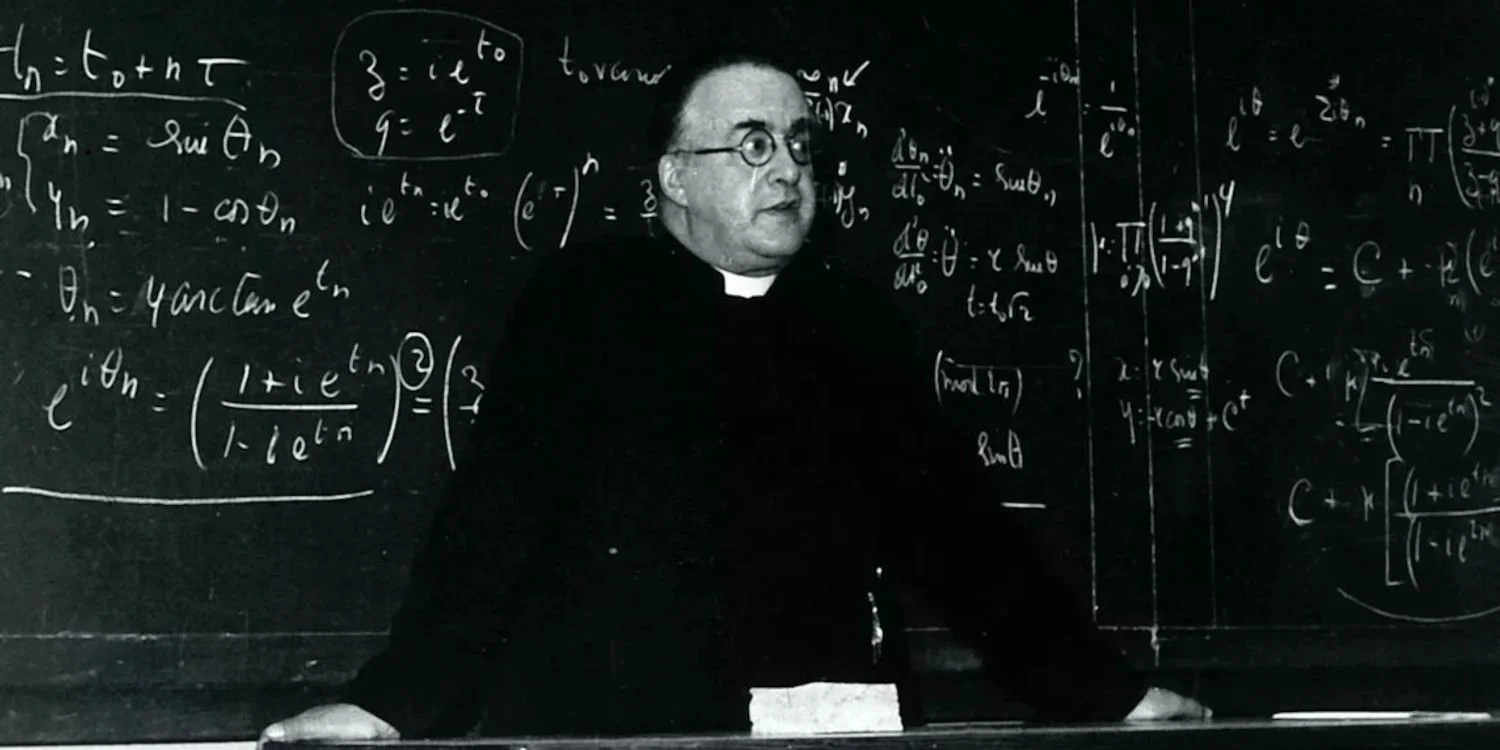
Father Pinsent has also been a guest writer at this blog. His post, “Fr Georges Lemaître, the Priest Who Discovered the Big Bang” was the final leverage that my university friend and correspondent needed to accept the fact that something essential has been missing from his education and exposure in both science and religion. The fact that his science education did not include the story of Georges Lemaitre — the astronomer, mathematician, physicist, and Catholic priest who changed the mind of Albert Einstein on the nature and origin of the universe — told him that it was science, and not faith, that deprived him of a wider world view.
This is a story that has been covered and uncovered at Beyond These Stone Walls in a series of science posts that has run parallel to our collection on Sacred Scripture. Reading these, and especially exploring Father Pinsent’s work, has opened my friend’s eyes as a young Catholic scientist, but it was a part of Father Andrew Pinsent’s guest post that more fully opened my own eyes when he wrote:
“What is to be done to help raise the profile of people like Fr Georges Lemaitre? Among Catholics with some kind of popular outreach, Fr Gordon MacRae, through his widely-read blog Beyond These Stone Walls, has done more than almost anyone I know in recent years to draw attention to Fr Lemaitre. Inspired in part by Fr Gordon’s work, my colleagues and I in England have put together a series of posters called the “Catholic Knowledge Network.”
— Fr Andrew Pinsent, “Fr Georges Lemaître, the Priest Who Discovered the Big Bang”
I think I have come to understand Father Georges Lemaitre’s science whose footprint in the history of modern cosmology is parallel to that of Albert Einstein. They were colleagues who became friends, primarily through Einstein’s great respect for Fr Lemaitre’s gifted mathematical and scientific mind. After a lecture about his theory of relativity at a European university in the 1930s, Einstein was approached by a science writer who asked him whether he thought anyone in the audience really comprehended his work. Einstein’s simple answer was “Lemaitre, certainly. As for the rest…”
The scientific dogma of the age was that the universe was static, eternal, and unchanging. Einstein also embraced this view, but it dismissed the beliefs of established religion that the universe was created from nothing.
However, Georges Lemaitre and Russian mathematician Aleksander Friedmann had more faith in Einstein’s mathematics than other scientists of their time. At first, Einstein payed little attention when they used his own equations to conclude that the universe is not static but expanding, and its rate of expansion is increasing when all established science said the opposite.
It was the American astronomer, Edwin Hubble (in whose honor the Hubble Space Telescope is named) who in 1929 discovered physical evidence that Lemaitre is right, that the universe is in fact expanding. Two years later in 1931, Father Georges Lemaitre concluded that the universe began “On a day without yesterday,” 13.8 billion years ago, with the explosion of a primordial atom from which space, time, and matter were created.
The idea was ridiculed, and “The Big Bang” was a pejorative term some scientists used to taunt the physicist priest. But he was right, and he turned science on its head with this revelation that has since been demonstrated with the discovery of cosmic background radiation emanating from The Big Bang.
Einstein, who first disagreed, ended up applauding the idea as “The most beautiful explanation of creation I have ever heard.” It was a bigger bang for science than even Einstein realized. It took the language of mathematics to comprehend that it points to what faith always told us: a universe arising out of nothing.
I think I finally came to some rudimentary understanding of the science behind this through the language of mathematics. For this I owe thanks to Robyn Arianrhod, and her book, Einstein’s Heroes: Imagining the World Through the Language of Mathematics (Oxford University Press 2005):
“In 1932, Lemaitre sowed the seeds of the Big Bang theory when he suggested that the universe had started as an explosion of a ‘primeval atom’ that… continued expanding from that explosive beginning. Some of the world’s most ancient creation myths have also imagined the world exploding from some sort of cosmic seed…”
“In 1970, English physicists Stephen Hawking and Roger Penrose showed that Einstein’s equations predicted the universe had expanded not from a tiny piece of matter located in an otherwise empty cosmos, but from a single point in four-dimensional spacetime. This meant that the Big Bang was not an ordinary explosion which took place at a specific three-dimensional location at a given time on the cosmic stage, but that Space and time themselves were actually created in the explosion, along with all matter and energy. Before this point … there was no time and no space. No geometry, no matter, nothing. The universe simply appeared out of nowhere. Out of nothing.”
— Einstein’s Heroes, p. 187
“The universe simply appeared out of nowhere. Out of nothing.” Take a moment to ponder that conclusion of science and it will sound a lot like a tenet of faith. Science, mathematics, and faith all open a window to the universe onto the same panoramic vista. And the awe this truth evokes is at one and the same time the comprehension of science and the inspiration of faith.
And as for my student-friend’s first question about the mystery of suffering in the light of faith, I can only gather up some prescientific humility to echo God against the protest of Job:
“Where were you when I laid the foundations of the earth?… Can you bind the chains of the Pleiades, or loose the cords of Orion?”
— Job 38: 4, 31

+ + +
Note from Father Gordon MacRae: Thank you for reading and sharing this post.
You might also like these other posts from Beyond These Stone Walls about the great adventure of science and faith:
On the Great Biblical Adventure, the Truth Will Make You Free
Science and Faith and the Big Bang Theory of Creation
The Higgs Boson God Particle: All Things Visible and Invisible
The Eucharistic Adoration Chapel established by Saint Maximilian Kolbe was inaugurated at the outbreak of World War II. It was restored as a Chapel of Adoration in September, 2018, the commemoration of the date that the war began. It is now part of the World Center of Prayer for Peace. The live internet feed of the Adoration Chapel at Niepokalanow — sponsored by EWTN — was established just a few weeks before we discovered it and began to include in at Beyond These Stone Walls. Click “Watch on YouTube” in the lower left corner to see how many people around the world are present there with you. The number appears below the symbol for EWTN.
Click or tap here to proceed to the Adoration Chapel.
The following is a translation from the Polish in the image above: “Eighth Star in the Crown of Mary Queen of Peace” “Chapel of Perpetual Adoration of the Blessed Sacrament at Niepokalanow. World Center of Prayer for Peace.” “On September 1, 2018, the World Center of Prayer for Peace in Niepokalanow was opened. It would be difficult to find a more expressive reference to the need for constant prayer for peace than the anniversary of the outbreak of World War II.”
For the Catholic theology behind this image, visit my post, “The Ark of the Covenant and the Mother of God.”
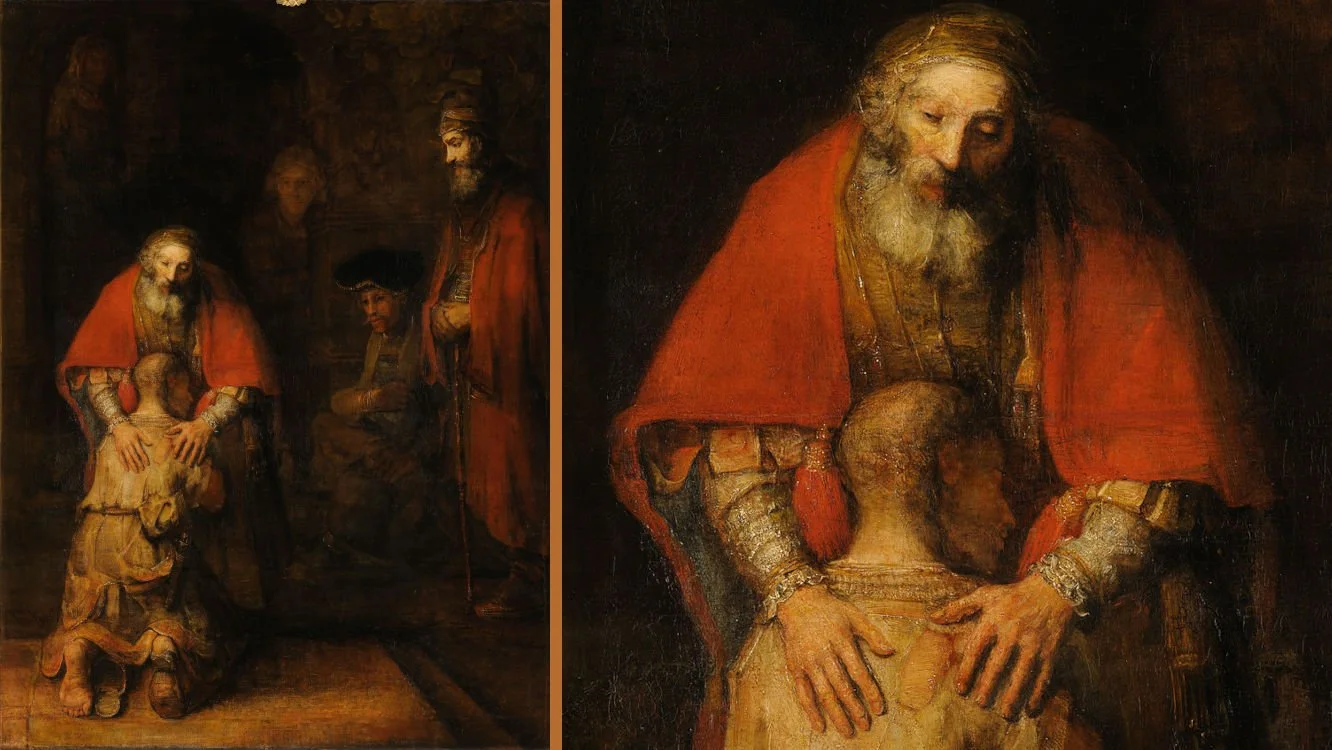
The Compassion of God: The Parable of the Prodigal Son
Saint Luke proclaims the Parable of the Prodigal Son as the Gospel for Saturday of the Second Week of Lent. Is there any sin that is beyond the compassion of God?
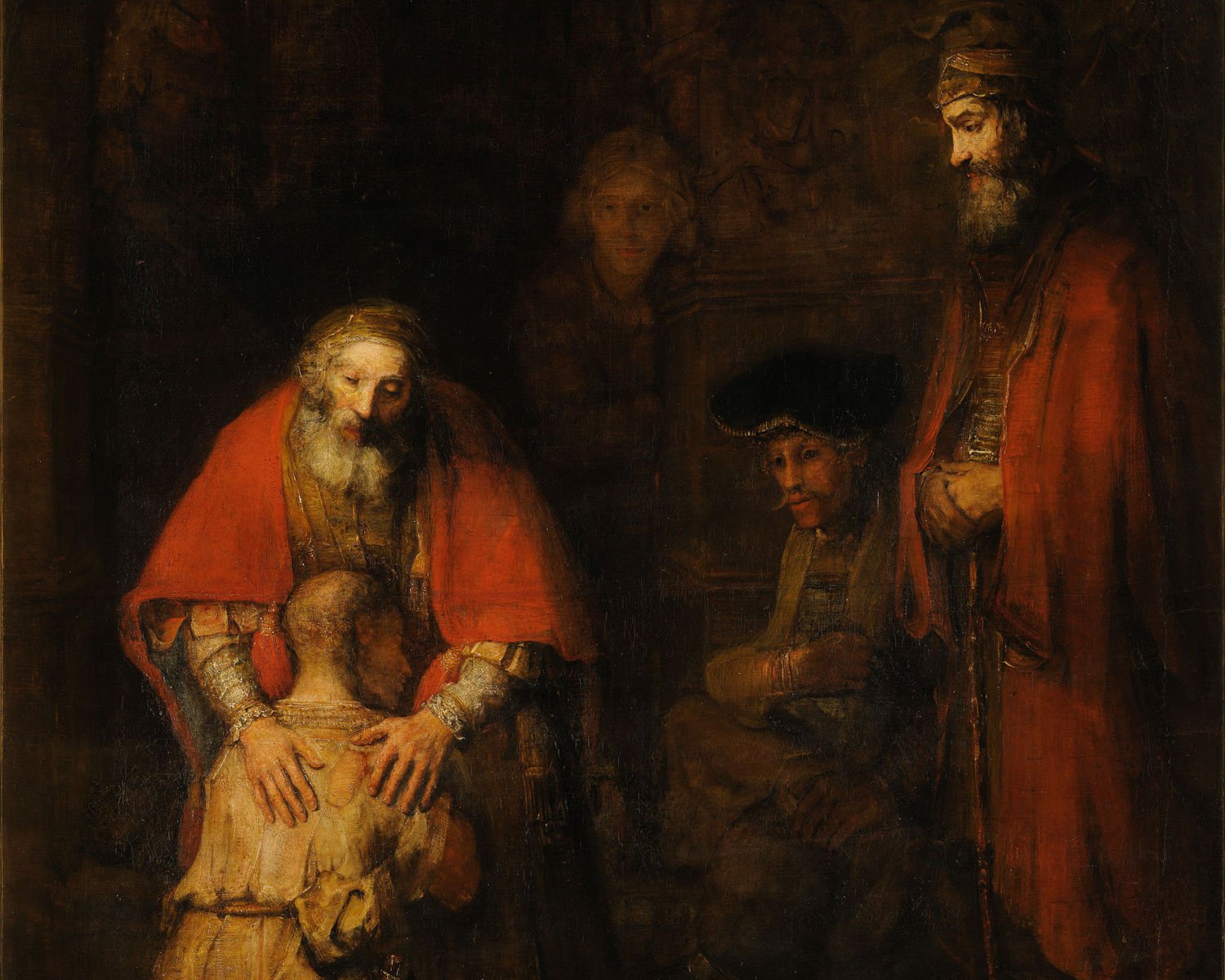
Saint Luke proclaims the Parable of the Prodigal Son as the Gospel for Saturday of the Second Week of Lent. Is there any sin that is beyond the compassion of God?
March 4, 2026 by Father Gordon MacRae
“Ecclesiastes calls you the All-Powerful; Maccabees calls you the Creator; the Epistle to the Ephesians calls you Liberty; Baruch calls you Immensity; the Psalms call you Wisdom and Truth; John calls you Light; the Book of Kings calls you Lord; Exodus calls you Providence; Leviticus, Sanctity; Esdras, Justice; Genesis calls you God; man calls you Father; Solomon calls you Compassion, and that is the most beautiful of all your names.”
— Bishop Bienvenu in Victor Hugo’s Les Misérables, 1887
During Lent a few years back, I wrote “A U.S. Marine Who Showed Me What to Give Up for Lent.” Among the multiple characters appearing in that post was my friend, Martin. At the time I wrote it, I had been living in a hellish environment in this prison. My dismay at living there grew deeper on the day Martin showed up because I knew he was going to be subjected to cruelty and ridicule, and I knew that I would have to intervene somehow.
Martin was well into his eighties when he was sent to prison for the first time in his life. He was missing a leg, a fact which confined him to a wheelchair. Because of prison overcrowding, he was living out in the open in an overflow bunk in a large prison dayroom where nearly a hundred bored and lost young men raised hell day and night. One night shortly after Martin arrived, one or two of those dumbasses thought it would be cool to take his wheelchair while he was asleep and put it in the shower with the water running. Martin’s books, letters, and other papers tucked into pockets in the chair were ruined.
But that was the least of his problems that day. When he awoke that Saturday morning, when his chair was nowhere in sight, Martin sat on the edge of his bunk wondering how he would get to the lavatory. A small group of smirking young prisoners skulked like hyenas from a distance to watch the show. This is a game prisoners play with the weak or vulnerable. They place bets to see how long it would take to get someone like Martin to “check in” to protective custody.
I stepped out of my cell that morning, cup of instant coffee in hand, and spotted Martin from a distance sitting on his bunk looking worried. A quick scan of the room told me what happened. So I went in search of his chair, found it in the shower, and brought it to him. I dried it off and took him to the bathroom.
Then I brought Martin some coffee and sat with him for awhile, something that became a daily event in the months to come. I learned that Martin is a Marine who served in Korea. He long ago had given up giving up and would never cave in to the antics of thugs.
I called a couple of them over one day and introduced them to Martin. Then I put them in charge of guarding his chair at night, not letting on that I knew they were the ones who took it in the first place. Longing for a sense of purpose even more than they sought to entertain themselves, they stepped up admirably. I came back from work a few times to see one or two of them, having now absconded with MY chair, sitting and talking with Martin. His life got a little better. So did theirs. So did mine. Martin is gone now, having been paroled to a nursing home for veterans. But one hard truth remains engraved upon my brain. Prison is no country for old men — not even old Marines.
I had Martin in mind when I again unwittingly became the priest who kicked the hornet’s nest a few years ago. I stumbled upon FOX News on the evening of March 8, 2019 just in time to hear EWTN’s Raymond Arroyo in an angry rant about the thoroughly disgraced former cardinal Theodore McCarrick, then age 90 and the first cardinal in a century to face the penalty of dismissal from the clerical state. “I don’t care if he’s 90” declared Mr. Arroyo. “He ought to be in jail.”
I have long respected Raymond Arroyo, but I was shocked by this and lapsed into a rant of my own. I called a friend and vented, and asked for help to post my own festering rant on social media about what I understood to be a lack of compassion for Theodore McCarrick. “Is mercilessness to be the face of the new Catholic Church?” I asked. The sins at hand were McCarrick’s, but were not his alone. He was known not only for his sins of the flesh, but even more so for his ability to raise money. Lots of money. And the eclessial benefactors of his largesse became complicit in his sin.
Over the next three days, I was roundly beaten up, on LinkedIn especially, by Catholics who agreed entirely with Raymond Arroyo on this. I had grossly underestimated the sense of betrayal and anger that American Catholics felt toward McCarrick, who died before any evident sign of remorse or repentance. But, to quote the late Pope Francis, “Who was I to judge?” I also overerestimated the capacity of some Catholics for compassion. Some of those who argued against me wrote that mercy requires repentance and there hadn’t been any. That is true. For God’s justice to be tempered with God’s mercy requires repentance.
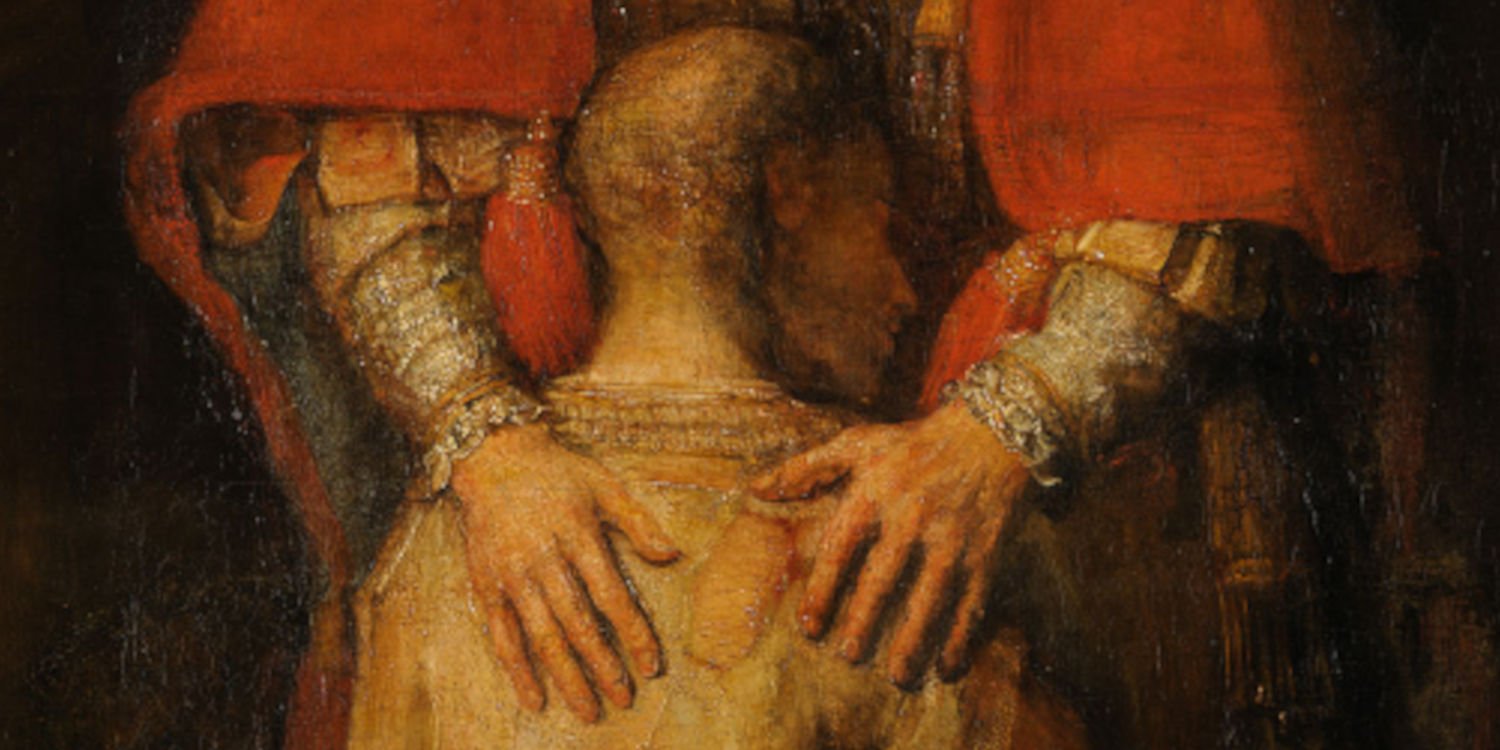
The Parable of the Prodigal Son
But compassion is different from mercy. And as Bishop Charles-François-Bienvenu Myriel points out in the moving quote from Victor Hugo’s Les Misérables atop this post, among all the names of God, “Compassion is the most beautiful.”
Compassion from us does not require repentance from those who trespass against us. It requires only humility, from us. It is the capacity that the Gospel of Luke presents as the most challenging portent of Jesus “The measure with which you measure will be measured out to you” (Luke 6:38).
Like so much of Sacred Scripture, the Parable of the Prodigal Son (Luke 15:11-32) is a story told with multiple levels of meaning. The first and most obvious is the story on its surface. Tax collectors and sinners were gathering around Jesus, and the Pharisees and scribes grumbled. The Pharisees were a loosely knit collection of groups within Judaism that came to prominence at the time of the Maccabean revolt against Hellenist invaders around 167 BC. The Pharisees were only numbered about 6,000 during the Earthly time of Jesus. They wanted Israel to be a theocracy, a religiously oriented society governed by a strict observance of the law.
Some of the scribes were numbered among the other grumblers against Jesus who triggered the Parable of the Prodigal Son and insisted on strict observance of the law. They were antagonistic to Jesus, and in the end these Pharisees and scribes together plotted with the chief priests for his betrayal and arrest.
On its face, the famous parable is a clash between mercy and compassion. The original listeners, the Pharisees and scribes, would have found quite familiar the story of a younger brother triumphing over the goals and objectives of an older brother. The parable has echoes of Esau and Jacob (Genesis 25:27-34) and Joseph and his brothers (Genesis 37:1-4). In the Parable of the Prodigal Son, Jesus cleverly reverses the triumph of the younger brother to portray the younger son as a dismal failure who abandons Judaism to adopt Gentile ways.
The most stinging of his offenses, to the ears of the Pharisees, was the fact that he was reduced to feeding the pigs for a Gentile farmer. Earlier in Luke’s Gospel, pigs take on another symbolism far beyond the ancient Mosaic law that holds them as unclean. In Luke (8:26-39) Jesus restores a demented and possessed Gentile to the human community. By casting the evil spirits out of the man and into a herd of pigs that then drive themselves into the sea, Jesus reveals himself as having authority not only over Judaism but also over pagan religion, demonic forces, and Roman rule, which is symbolized by the pigs. In the parable at hand, the younger son becomes a servant to the pigs, the lowest one could ever descend from the Law of Moses.
In the end of the Parable, the younger son comes to his senses and attempts a return to his Father who welcomes him with full restoration of the sonship he abandoned. The Parable directly confronts a position of the Pharisees: that there are sins that are beyond the capacity of even God to forgive.
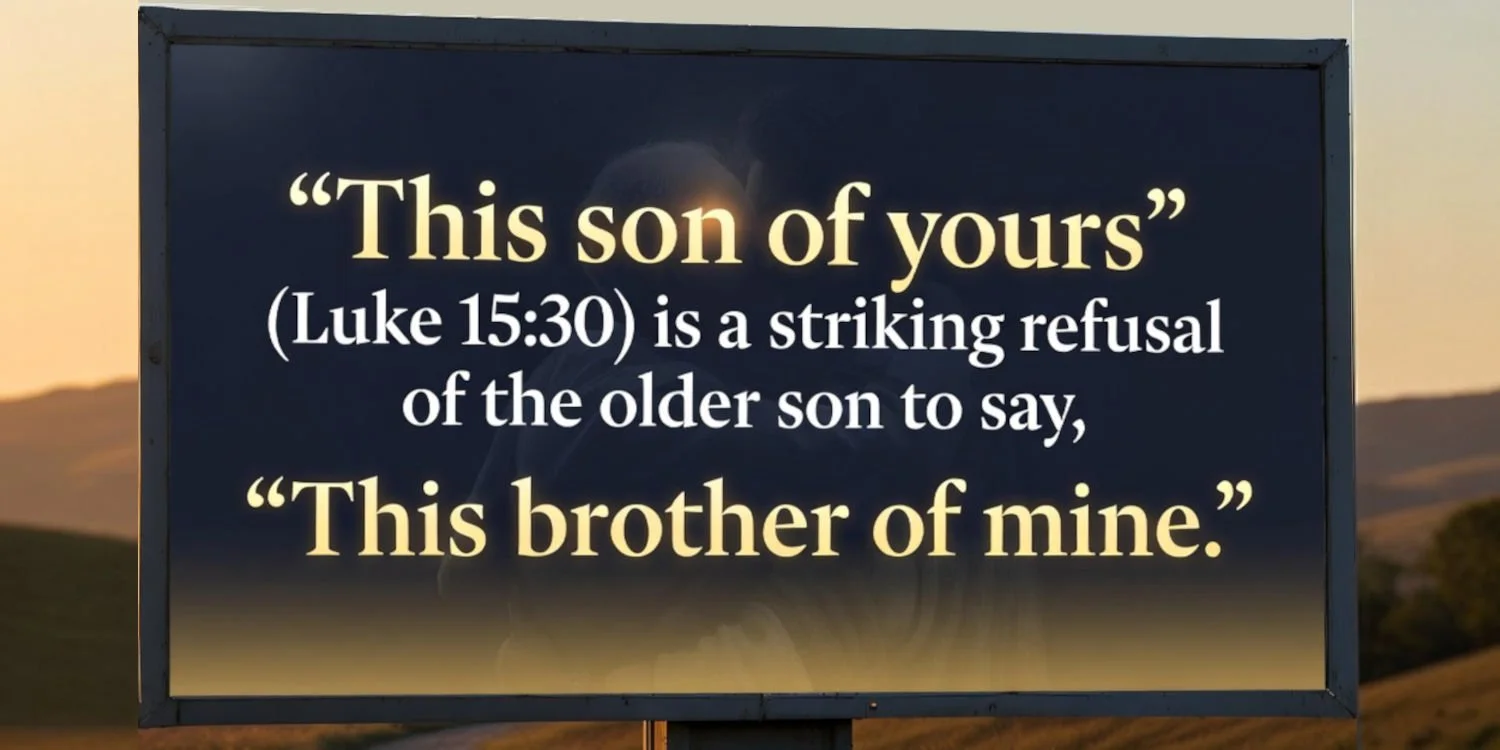
Life After Death
There are signs that the leaders of our Church now dabble in this same distortion that there are sins that God should not forgive, and even if He does, the Church will not. This is heresy, and it is a heresy that I described in “Synodality Blues: Pope Francis in a Time of Heresy.” (But the heresy may not be what you think it is.)
It is expressed in striking clarity in the second part of the Parable in the reaction of the Prodigal Son’s older brother. The triumph of a younger son over his older brother is seen in the Hebrew Scriptures in the stories of Esau and Jacob, and Joseph and his brothers. In the parable at hand it becomes not the triumph of the younger but the failure of the older. Once the Father’s mercy had been fulfilled in the Parable, the older son refused to acknowledge his return as his brother. “This son of yours” (Luke 15:30) is a striking refusal of the older son to say, “This brother of mine.”
Though the Father’s mercy has been fulfilled, the older son’s compassion has failed. The great challenge of this parable is the fact that it is left open-ended and without a resolution. It is left with the older son — the one who according to the law alone has always been faithful — standing outside the Father’s house with the Father trying to convince him to enter the banquet feast. The younger son is made righteous by grace and mercy while the older son is revealed as self-righteous. I wrote of this aspect of the parable in another post, “Pope Francis Had a Challenge for the Prodigal Son’s Older Brother.”
At another level, this Parable narrates to its original listeners — the Pharisees and scribes — the account of Israel’s history that they fear most. It is an allegory about what happened after the reign of King Solomon — the one who called God “Compassion.” Israel divided into Northern and Southern kingdoms, living as two brothers with one in exile. Then in the Eighth Century BC the Assyrians carried the Northern Tribes of Israel into “a far country” — just like the younger son in the parable — where they abandoned God and worshipped idols. It was a sin that the Prophets called “harlotry” (Jeremiah 3:6 and Hosea 4:15).
The Cardinal McCarrick story has made this ever more complicated. Please do not confuse my compassion as excusing him. As Cardinal McCarrick, he was one of the chief proponents of the Dallas Charter that cast priests into the desert as scapegoats, in many cases — and I am one of them — guilty only for being accused. It is not easy to hold onto any sense of compassion for him, but there are a lot of things that my conscience says I must do that are not easy.
I cannot speak to the Church’s application of mercy. There does not appear to be any justice as there does not appear to be much in the way of McCarrick’s public repentance as an acknowledgment of his need for mercy. I can only speak to compassion — my own and that of others. I fear that it is becoming an endangered species in our Church as we circle the wagons to declare who is inside and outside the house.
Let’s face this other scandal head-on. Stop wishing old men into prison. Some of us confuse righteous with self-righteous. If mercy fails, we are doomed in the hereafter. But if compassion fails, we are doomed in the here and now.

+ + +
Note from Father Gordon MacRae: Don’t be like that older brother. Please share this post and follow us on X.
You may also like these related posts from Beyond These Stone Walls
Pope Francis Has a Challenge for the Prodigal Son’s Older Brother
Les Miserables: The Bishop and the Redemption of Jean Valjean
Synodality Blues: Pope Francis in a time of Heresy
Cardinal Theodore McCarrick and the Homosexual Matrix
A Note About the Rembrandt Masterpiece Atop This Post:
One of the most inspiring artistic renderings of the Return of the Prodigal Son from Luke 15 is Rembrandt’s masterful oil painting, created between 1661 and 1669. Housed in the Hermitage Museum in Saint Petersburg, it captures the parable’s profound themes of repentance, forgiveness, and unconditional love through a deeply emotional scene: the ragged son kneeling in humility before his compassionate father, whose tender embrace symbolizes mercy and homecoming. The composition’s use of light and shadow, along with subtle psychological details — like the father’s hands evoking both strength and gentleness — creates a timeless sense of spiritual solace and human sympathy. Art historians praise it as a pinnacle of Baroque art, with some calling it one of the greatest paintings ever, serving as a spiritual testament to redemption that resonates across centuries.
The Eucharistic Adoration Chapel established by Saint Maximilian Kolbe was inaugurated at the outbreak of World War II. It was restored as a Chapel of Adoration in September, 2018, the commemoration of the date that the war began. It is now part of the World Center of Prayer for Peace. The live internet feed of the Adoration Chapel at Niepokalanow — sponsored by EWTN — was established just a few weeks before we discovered it and began to include in at Beyond These Stone Walls. Click “Watch on YouTube” in the lower left corner to see how many people around the world are present there with you. The number appears below the symbol for EWTN.
Click or tap here to proceed to the Adoration Chapel.
The following is a translation from the Polish in the image above: “Eighth Star in the Crown of Mary Queen of Peace” “Chapel of Perpetual Adoration of the Blessed Sacrament at Niepokalanow. World Center of Prayer for Peace.” “On September 1, 2018, the World Center of Prayer for Peace in Niepokalanow was opened. It would be difficult to find a more expressive reference to the need for constant prayer for peace than the anniversary of the outbreak of World War II.”
For the Catholic theology behind this image, visit my post, “The Ark of the Covenant and the Mother of God.”
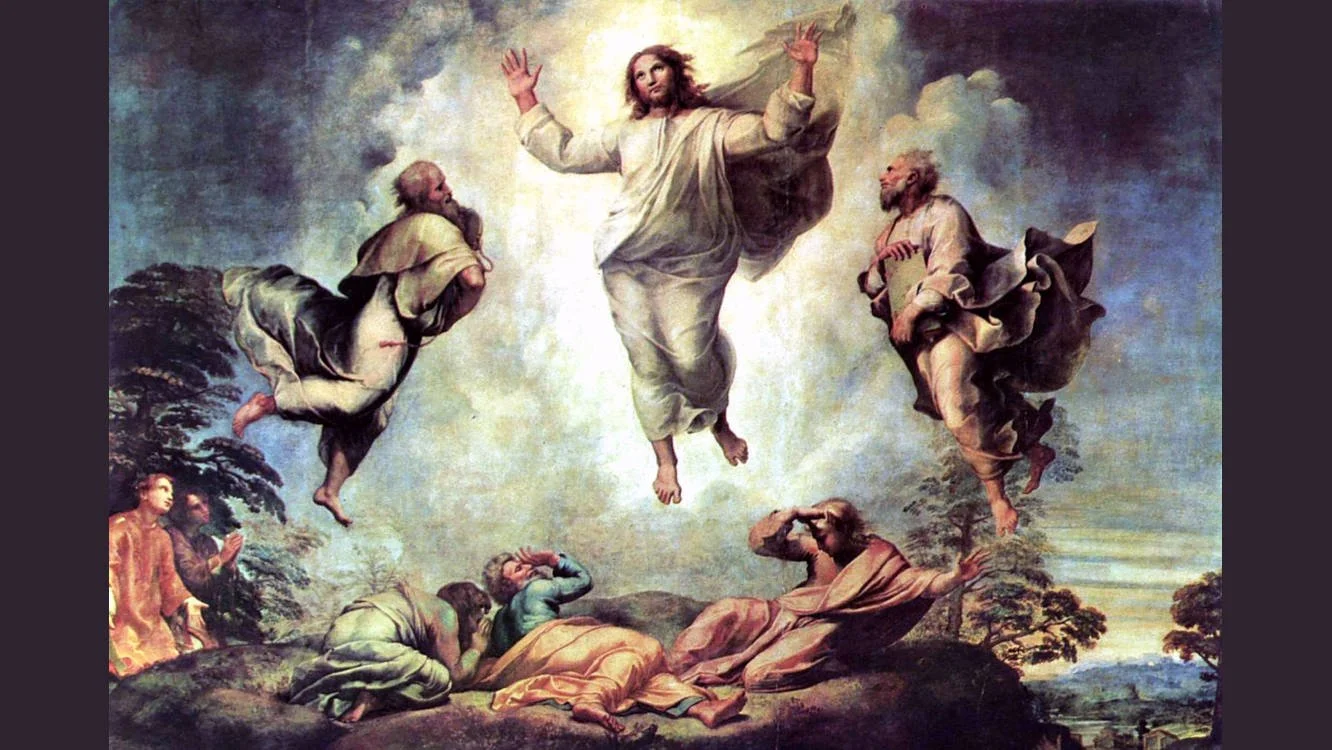
The Law and the Prophets and the Transfiguration of Christ
Moses and the Prophet Elijah are present for the Transfiguration of Christ. They represent the Law and the Prophets, the two pillars of Israel's faith and ours.
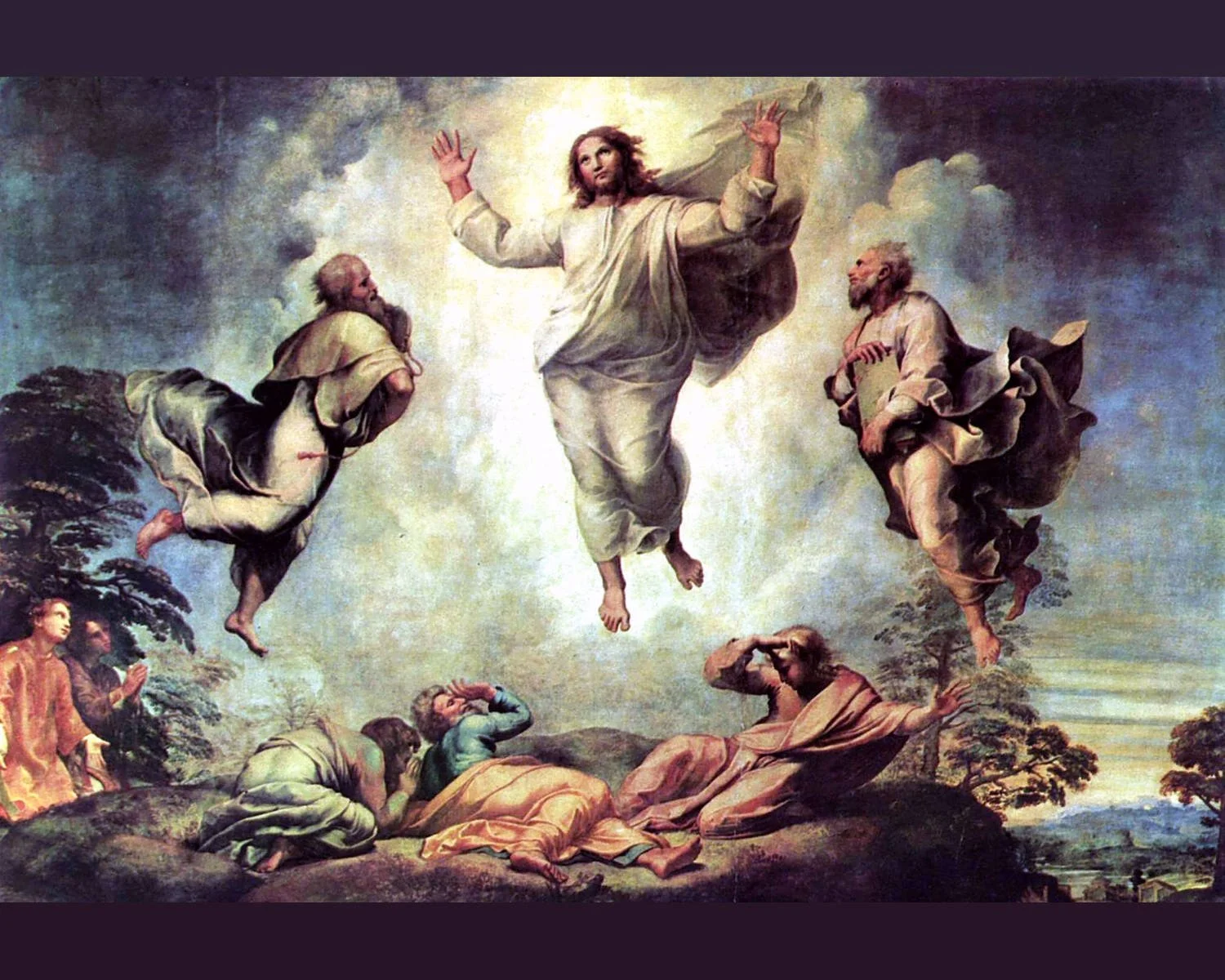
Moses and the Prophet Elijah are present for the Transfiguration of Christ. They represent the Law and the Prophets, the two pillars of Israel's faith and ours.
February 25, 2026 by Father Gordon MacRae
“Nothing new in the Holy See.” I hear these words from our Editor every week as she reviews with me a global traffic report for this blog. Being blind behind these stone walls to everything going on with a post after it leaves my archaic typewriter, this opportunity to know that someone out there is actually reading is vaguely comforting to me. We cannot know who is reading any particular post, but we can see where they are, and how many they are.
Our call always ends with “Nothing new in the Holy See.” It means that no one there has stopped to look from Beyond These Stone Walls. There is a sadness in that. There is a lot of controversy in Rome these days, and because I have a stake in it, I am both anxious about it and anxious to have a voice in it. I look intently at the affairs of Rome even if no one there is ever looking back. Current events there are sometimes manipulated by those with an agenda to reshape the Church in their own image, or to filter the Way, the Truth, and the Light through the age of relativism.
But all this has more to do with our politics than the far more important opportunities to explore, and allow to be shaped within us, the profoundness of our faith. Unlike other Catholic bloggers, I can write only one post per week so the affairs of Rome will have to wait. It is Lent, after all, and the Transfiguration of Christ in the Gospel this week shakes the Earth under my feet while the affairs of Rome only make me tremble a bit.
So no offense to my fellow Catholics embroiled over the dramas of Rome, and the tug-of-war closer to home as struggles over altar rails and Latin in the Mass threaten to replace our struggle to live the Gospel. I am painfully aware that in 2013 Pope Benedict XVI left the Chair of Peter. My entire life as a priest had been overshadowed by the light of two great men who became giants not only in faith but in the world. I will never forget that 1978 knock on my seminary room door and the voice that followed: “The Pope has died!” I shouted back, “That happened a month ago!” The face of the Church in the modern world changed as the first non-Italian in centuries became pontiff in the person of Saint John Paul II. Twenty-six years later in 2005 he was followed in the papacy by the brilliant Joseph Ratzinger, a theologian par excellence who became Benedict XVI. I have always been aware that the two popes who followed them had to fill the shoes of giants, so I have to always remind myself to cut them a little slack. I fend off any tendency to judge or compare them with their predecessors.
These are dark days for priests, and often dark for faithful Catholics as well. But darkness preceded the Transfiguration of Christ at the center of the Gospel for the Second Sunday of Lent, and as usual there is a story on its surface and a far greater one in its depths. Lord, be our Light.
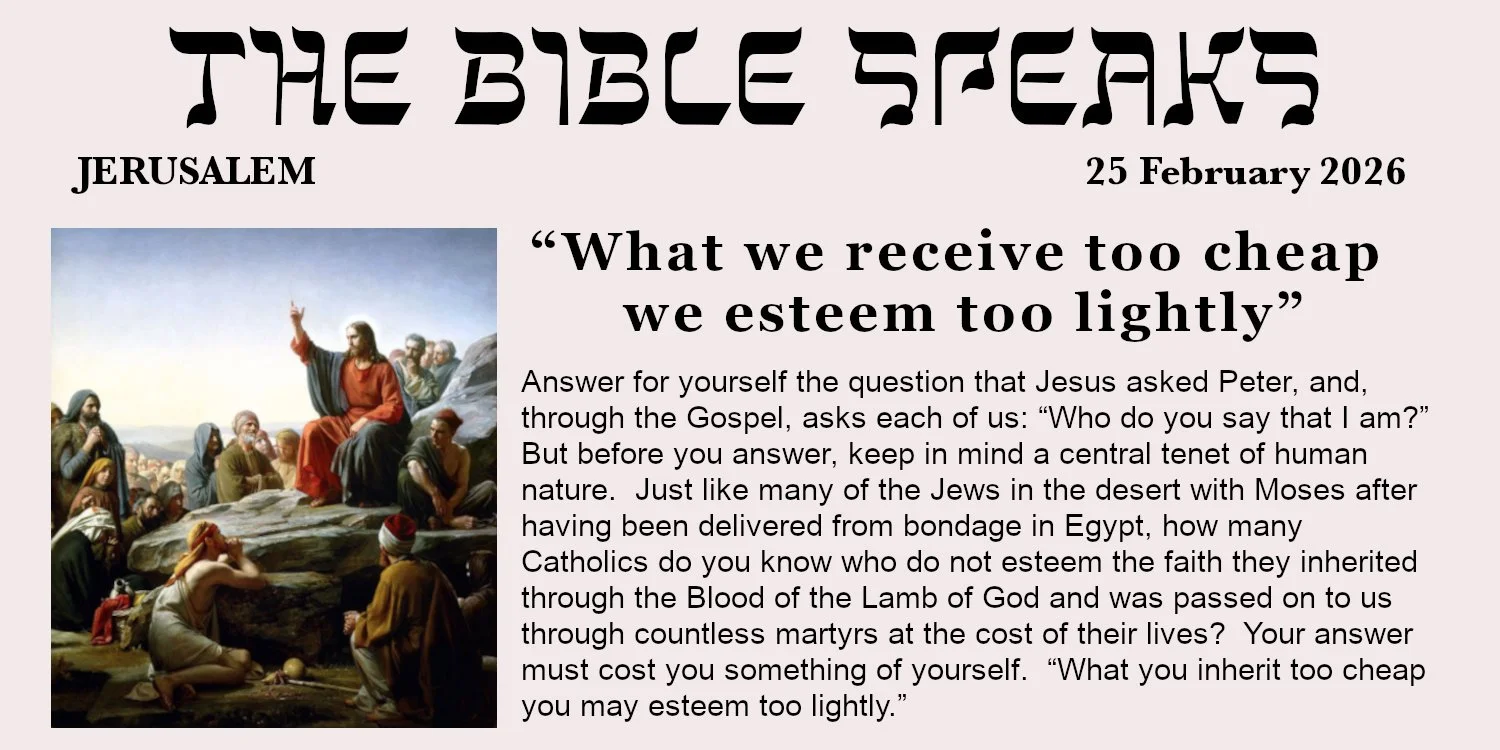
Who Do You Say That I Am?
All three Synoptic Gospels have an account of the Transfiguration of Jesus, and the accounts are remarkably uniform. This week for the Second Sunday of Lent, it is Matthew’s turn, but all the elements he presents in his presentation of the Transfiguration of Christ are also presented by Luke who adds a component. Luke alone presents a reason for the Lord to bring three of His Apostles to the top of Mount Tabor:
“Jesus took Peter, James and John and went up the mountain to pray. While he was praying his face changed in appearance and his clothing became dazzling white. And behold, two men were conversing with him, Moses and Elijah, who appeared in glory and spoke of his exodus that he was going to accomplish in Jerusalem.”
— Luke 9:28-30
I wrote of this same event and its place in Salvation History in my recent post, “Covenants of God.”
Some immediate understanding of this event would have dawned upon any faithful Jew and certainly registered with Peter, James and John. The account is highly reminiscent of an event in the Book of Exodus that took place some 13 centuries earlier:
“When Moses came down from Mount Sinai with the two tablets of the Law in his hands, as he came down from the mountain Moses did not know that the skin of his face shone because he had been talking with God. And when Aaron and all the people of Israel saw Moses, because the skin of his face shown, they were afraid to come near him.”
— Exodus 34:29-30
Though the event of the Transfiguration of Jesus would vividly bring to the Jewish mind that passage from Exodus, it was also very different. It was like the difference between the Sun and the Moon. The Moon only reflects light radiated from the Sun. As brilliant as a full moon can appear in the darkness of night, it produces no light of its own. The face of Moses only reflected the light of grace radiated from God.
The Sun, on the other hand, radiates its own dazzling light, and to look too long would cause blindness. The light of the Transfiguration of Christ was “dazzling,” and it came from within. In those few moments — for Peter, James and John could have stood no more than a few — God lifted a corner of the veil to reveal the nature of the person Peter declared to be the Christ:
“The only begotten Son of God, born of the Father before all ages, God from God, Light from Light, true God from true God, begotten, not made, consubstantial with the Father, through him all things were made. For our salvation he came down from heaven.”
— The Nicene Creed
I wrote of this account a few years ago in “A Transfiguration Before Our Very Eyes.” That post was more about the conversion that this episode can bring within a person who comes to some understanding of its spiritual dimensions. Canadian Catholic blogger Michael Brandon at “Free Through Truth” actually wrote a post about that post — and his was far better than mine — which he entitled, “Transfiguration, You and Me.”
The conversion that Michael Brandon and I both highlighted was that of Pornchai Moontri, and it is a most important story, not just for him, or for me, but for a Church embroiled in scandal. If you think I may beat this drum of Pornchai’s conversion too much, I challenge you to delve into it for I cannot emphasize it enough. Given the story told in “Pornchai Moontri and the Long Road to Freedom,” his conversion — a change not just of heart but of substance — should have been impossible. And he found no light in me, for I radiate none.
In the Gospel, the Transfiguration of Jesus was preceded by two pivotal events. On the command of Jesus, the Apostles fed 5,000 people with a mere five loaves of bread and two fish. When it was over, he asked the Apostles, “Who do the people say that I am?” They answered, “Some say John the Baptist” (for he had already been beheaded by Herod) “while some say Elijah or that one of the prophets of old has arisen.”
But what about you, asked Jesus. “Who do you say that I am?” Peter answered for all: “You are the Christ of God”. Jesus then told them a startling revelation bringing them to an inner darkness:
“You are to tell this to no one. The Son of Man, must suffer many things, be rejected by the elders and chief priests and scribes, and be killed, and on the third day be raised. If any man would come after me, let him deny himself and take up his cross daily and follow me. For whoever would save his life will lose it; and whoever will lose his life for my sake, will save it.”
So answer for yourself the question that Jesus asked Peter, and, through the Gospel, asks each of us: “Who do you say that I am?” But before you answer, keep in mind a central tenet of human nature. Just like many of the Jews in the desert with Moses after having been delivered from bondage in Egypt, how many Catholics do you know who do not esteem the faith they inherited through the Blood of the Lamb of God and was passed on to us through countless martyrs at the cost of their lives? Your answer must cost you something of yourself. “What you inherit too cheap you may esteem too lightly.”
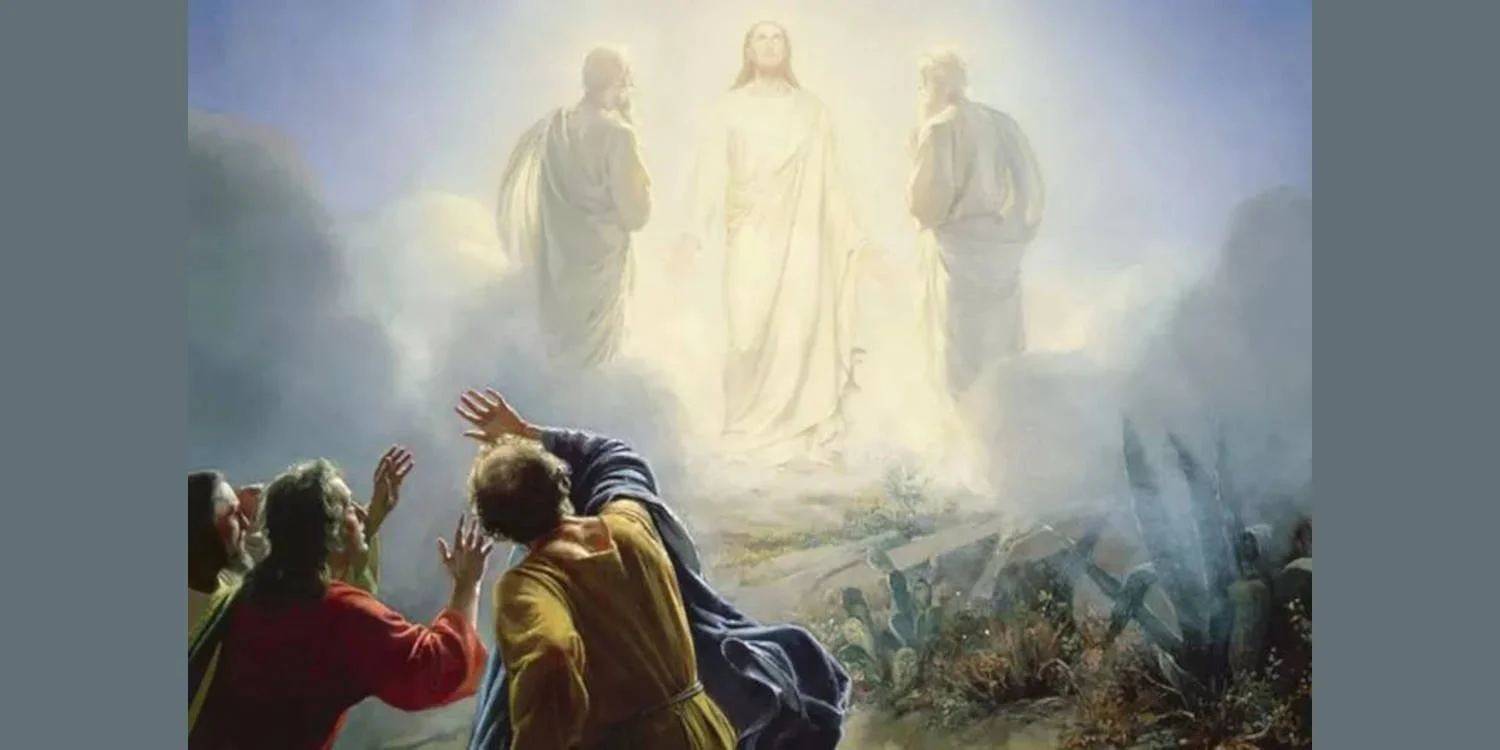
A Conversation with Moses and Elijah
I would like to delve deeper into the theological significance of the Transfiguration account and into its spiritual resonance. First, the very important story behind the story. The account is filled with great spiritual meaning. First, why do Moses and Elijah appear?
A lot in Sacred Scripture happens on mountaintops. In the Book of Exodus, Moses received the Covenant from God on Mount Sinai. In the First Book of Kings, the Prophet Elijah encountered God on Mount Horeb. On Mount Tabor — the place where long-held tradition places the Transfiguration — Moses and Elijah represent the Law and the Prophets, the two central pillars of faith in Judaism, and the foundations of God’s Covenant with Israel.
But how can they be present in heaven before the Resurrection of Jesus and the Exodus from sin and death? The greatness of Elijah is attested to by the sheer number of allusions to him in both the Old and New Testaments. In the Hebrew mind, it was Elijah who affirmed the supremacy of Yahweh over nature and human history, and was seen as the principal defender of traditional Hebrew morality.
Elijah can be present at the Transfiguration because he was taken on a chariot into heaven (2 Kings 2:1-18). It was an ingrained belief of Hebrew tradition that God would return Elijah to Israel even before this prophecy was set forth by the Prophet Malachi: “Behold, I will send you Elijah the prophet before the great and terrible Day of the Lord comes” (Malachi 4:5). Knowing the Scriptures, the presence of Elijah must have struck both hope and terror into the hearts of Peter, James and John.
But how is it that Moses was there with Jesus on Mount Tabor? This is where the Hebrew Scriptures and the legends of faith intersect. The Canon of Sacred Scripture reveals the story of Salvation History from Abraham to Jesus, but Israel also had a collection of oral and written traditions accepted by Rabbinical teaching as “Deuterocanonical” meaning, “Secondary Canon.” Some of these are also called “Apocryphal” texts from the Greek, “apokryphos” which means “hidden.” Some of what is in these texts intersects with the Bible, but remains a matter of pious traditional belief instead of historical verification. I once wrote of these discoveries in “Qumran: The Dead Sea Scrolls and the Coming Apocalypse.” There are others perhaps not yet discovered. The Book of Daniel (12:9) speaks of “words that are shut up until the end of time.”
An example of how one such text contributed to popular belief is the “Protoevangelium of James.” It circulated in the Early Church and was cited by one of the Church Fathers. It is the only source for a tradition that the parents of Mary were Joachim and Anna.
There were several texts outside of Scripture from which legends and traditions circulated regarding Moses. These include the Books of Enoch, the Book of Jubilees, and the Assumption of Moses. They influenced early Rabbinic beliefs and teachings about angels, for example, and the lives of Moses and other Biblical figures.
The Assumption of Moses reveals a tradition, now lost from the fragments of the text that have survived, about the death of Moses in the Sinai desert. In that legend, Satan tried to claim the body of Moses, but Michael the Archangel contended with Satan and won. Michael then escorted Moses into heaven, like Elijah, body and soul. That this legend became engraved into the beliefs of Israel, and passed to the Early Christian Church, is evident in the New Testament Letter of Jude who is writing to an audience that obviously already knows of the account:
“But when the Archangel Michael, contending with the devil, disputed about the body of Moses, he did not presume to pronounce a reviling judgment upon him, but said, ‘The Lord Rebuke you.’ ”
— Jude 1:9
It may be from this legendary story that, from the earliest time in the Christian Church, Saint Michael the Archangel has the role of escorting the souls of the dead to salvation. This is how Moses could thus be present with Elijah at the Transfiguration where they are reported to have discussed with Jesus the Cross, the Second Exodus. The road upon which Jesus is embarked is connected to the Law and the Prophets. It is to be an Exodus from the bondage of sin and death in which God will Himself pay the price for release that he once exacted from Pharaoh: The sacrificial death of his own Son.
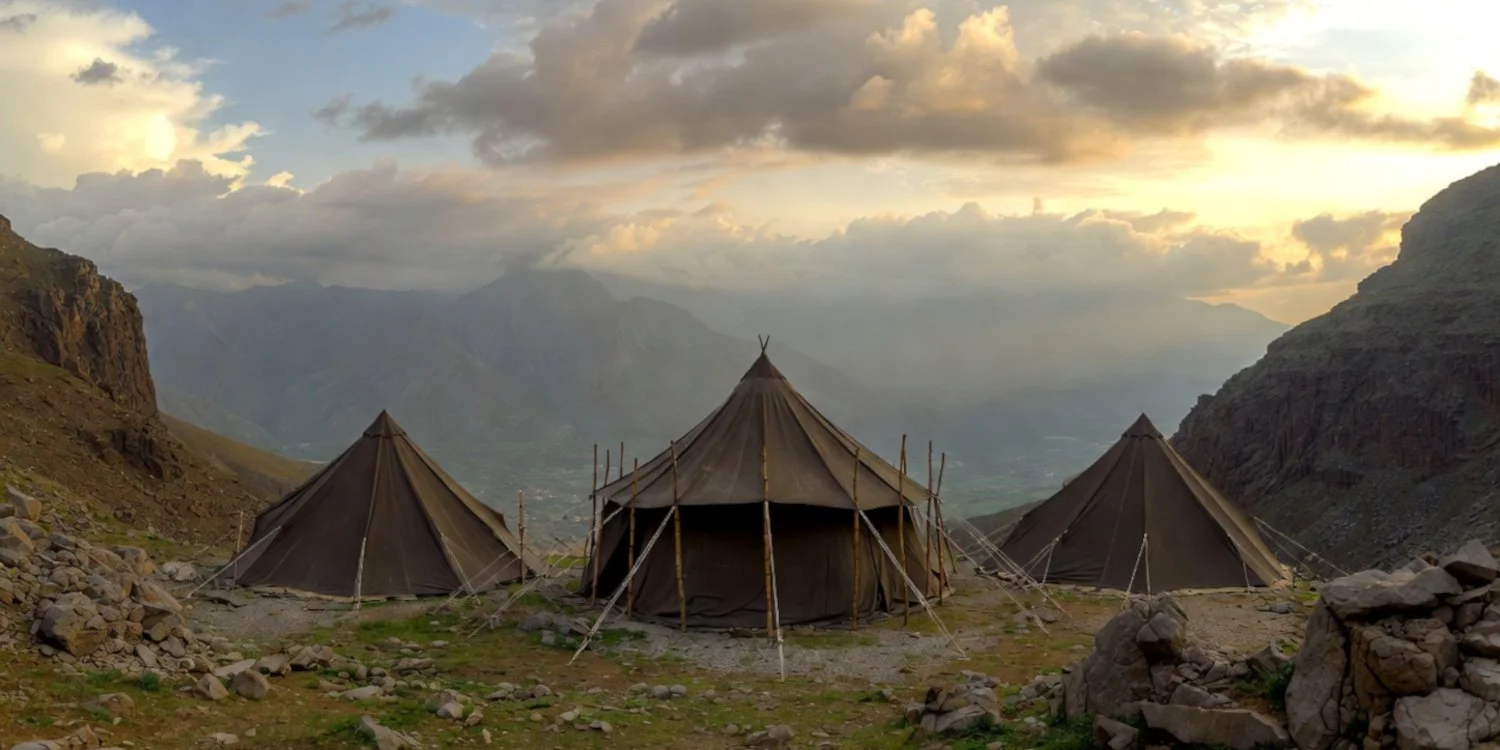
The Feast of Tabernacles
The entire Gospel account of Transfiguration takes place against the backdrop of the Feast of Tabernacles. This is why, in his dreamlike ecstatic state, Peter wants to delay the parting of Moses and Elijah from Jesus by saying,
“Master, it is good that we are here. Let us make three tents, one for you, one for Moses, and one for Elijah.”
Peter misinterprets the reason why they are all present in that place as being the annual Harvest Feast of Tabernacles (or tents), called in Hebrew, “Sukkot.” It is one of three Pilgrimage Feasts in the Hebrew calendar. It was originally a harvest feast, something like the American Thanksgiving, and called the “Feast of Ingathering” in the earliest Hebrew traditions. It lasts for seven days.
As I researched the connection between the Feast of Tabernacles, with its origin in Exodus 23:16, and the Transfiguration of Christ some thirteen centuries later, I came upon a long and detailed article about its history. As I studied the article, I was shocked to see at the end that it was written by my uncle, the late Father George W. MacRae, a renowned Scripture scholar who became rector of the École biblique et archéologique française de Jérusalem and Stillman Professor of Catholic Studies at Harvard University. It was an article he wrote for Catholic Biblical Quarterly in 1960, much of which became included in the New Jerome Biblical Commentary.
The Feast of Sukkot — variously interpreted as Tabernacles, Tents, Huts or Booths — had its roots in early Palestine as little huts were built in the fields, orchards and vineyards during the harvest. Much later, the Pilgrimage Feast was given a deeper religious meaning when it became connected to the events of the Exodus as a memorial to how the Israelites lived during their forty years of wandering in the desert after following Moses through the Red Sea.
It is an irony of Biblical proportions that this formed the scene for the revelation of Jesus as the Son of God about to enter Jerusalem for the New Exodus, the Exodus through the Red Sea of sin and death. It is the Exodus of the Cross through which Jesus will lead us to the New Jerusalem, the Promised Land, if we pick up our Cross and follow Him.
“This is my Son, my Chosen. Listen to him.”
— Luke 9:35
+ + +
Note from Father Gordon MacRae: Thank you for reading and sharing this post. You may also like these related posts from Beyond These Stone Walls:
Qumran: The Dead Sea Scrolls and the Coming Apocalypse
He Has His Mother’s Eyes: The Vision of Our Lady of Guadalupe
“What Shall I Do to Inherit Eternal Life?” (Luke 10:25)
On Good Authority, “Salvation Is from the Jews”
Readers have told us that our Sacred Scripture collection, The Bible Speaks, is a treasure trove of meaningful biblical literature and fine reading for Lent.
Don’t be a stranger. Follow Father Gordon MacRae on X.
The Eucharistic Adoration Chapel established by Saint Maximilian Kolbe was inaugurated at the outbreak of World War II. It was restored as a Chapel of Adoration in September, 2018, the commemoration of the date that the war began. It is now part of the World Center of Prayer for Peace. The live internet feed of the Adoration Chapel at Niepokalanow — sponsored by EWTN — was established just a few weeks before we discovered it and began to include in at Beyond These Stone Walls. Click “Watch on YouTube” in the lower left corner to see how many people around the world are present there with you. The number appears below the symbol for EWTN.
Click or tap here to proceed to the Adoration Chapel.
The following is a translation from the Polish in the image above: “Eighth Star in the Crown of Mary Queen of Peace” “Chapel of Perpetual Adoration of the Blessed Sacrament at Niepokalanow. World Center of Prayer for Peace.” “On September 1, 2018, the World Center of Prayer for Peace in Niepokalanow was opened. It would be difficult to find a more expressive reference to the need for constant prayer for peace than the anniversary of the outbreak of World War II.”
For the Catholic theology behind this image, visit my post, “The Ark of the Covenant and the Mother of God.”
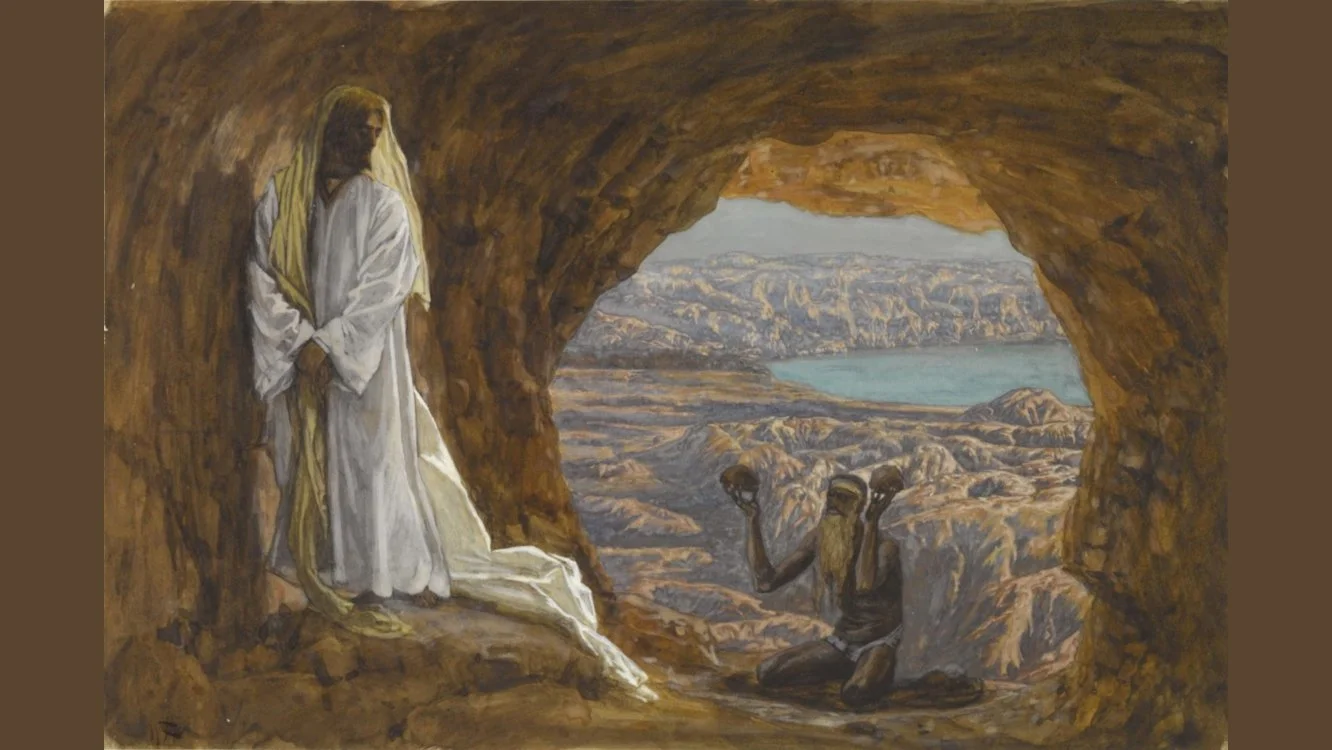
Christ in the Desert: A Devil of a Time
The Gospel according to St Luke tells the story of Jesus, revealed to be Son of God, led into the desert to be tested by the devil who does not give up easily.
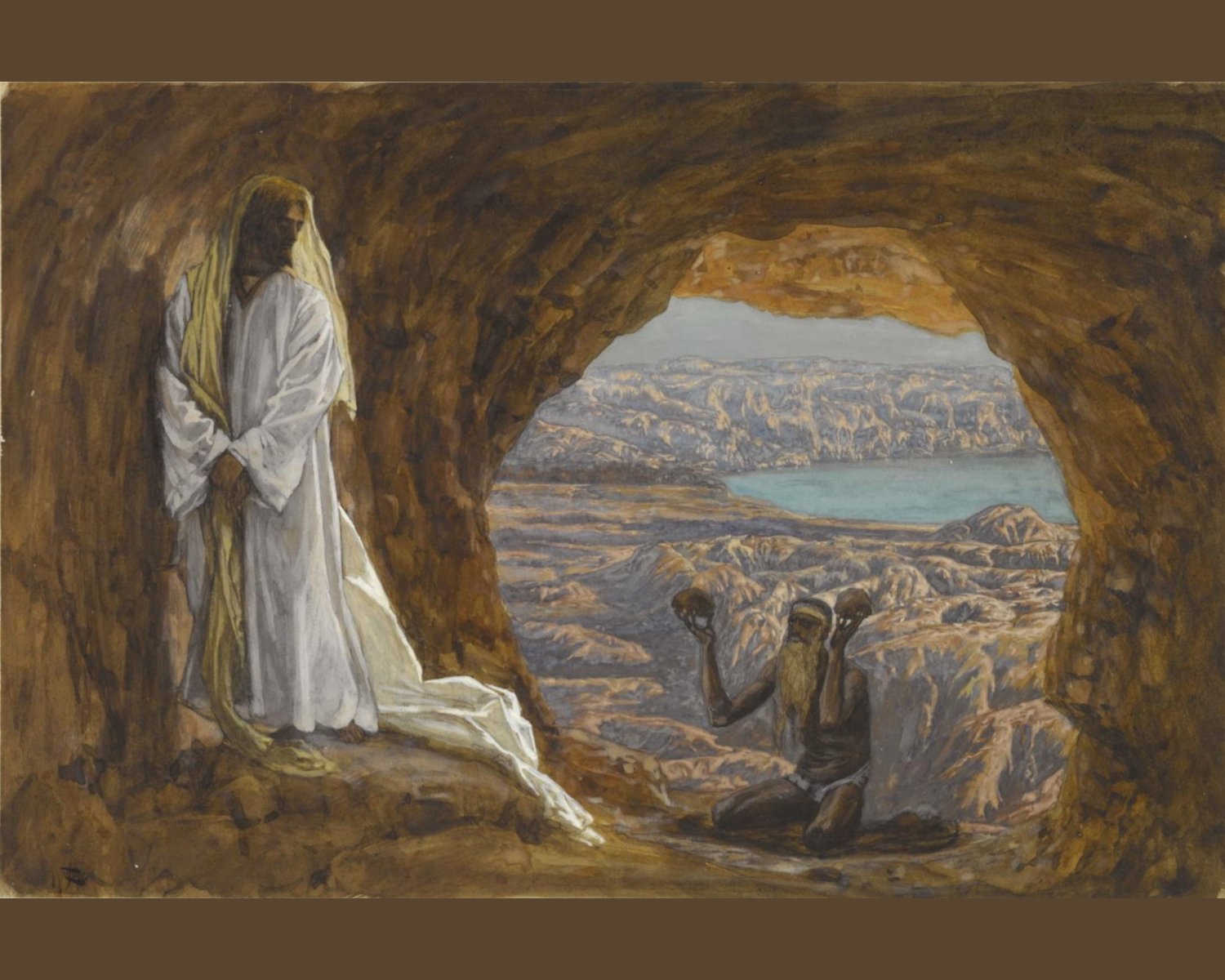
The Gospel according to St Luke tells the story of Jesus, revealed to be Son of God, led into the desert to be tested by the devil who does not give up easily.
Ash Wednesday, 2026 by Father Gordon MacRae
Many of our readers are aware that the Church follows a three-year cycle for Sunday Scripture Readings. As Ordinary Time now gives way to the Season of Lent, I explore the Gospel for the First Sunday of Lent. Being in the “A Cycle,” the Gospel from Saint Matthew (4:1-11) seemed very familiar. Like much of Scripture, I knew that I had read about this passage, but I also felt certain that I had written about it. It is the story of Jesus following the revelation that he is the Son of God revealed at his Baptism in the Jordan. In Matthew’s Gospel, Jesus is led into the desert by the Spirit to face Satan and a series of temptations for which, if he failed, his redemptive mission would end before it even began. All three of the Synoptic Evangelists, Matthew, Mark and Luke, tell the same story but from different perspectives and traditions. Saint Mark’s version appears in Year B in just three lines of Scriptural text (Mark 1:12-15). The Gospel According to Saint Luke is the most theologically nuanced of the three. So even though in our current cycle, the version from Saint Matthew is used on the First Sunday of Lent, it is very similar to that of Saint Luke. So I have chosen the latter to present in exegesis form for our post this week.
+ + +
In my estimation, one of the best movies about Catholic life in America taking a wrong turn has been deemed by some to be a bit rough around the edges. Robert DeNiro portrays Los Angeles Monsignor Desmond Spellacy, and Robert Duvall is cast as his brother, LAPD homicide detective Tom Spellacy in the 1981 film, True Confessions. The film is from a novel of the same name by John Gregory Dunne based on the famous Los Angeles “Black Dahlia” murder case of 1947.
DeNiro’s character, Monsignor Desmond Spellacy is a priest of some prominence in the Archdiocese of Los Angeles in the late 1940s at the epicenter of the power politics of a Church beginning to succumb to the world in which it thrives. Amid corruption while being groomed to become the next Archbishop, the Monsignor nonetheless clings to an honest spiritual life just starting its inevitable fraying at the edges as he is drawn ever deeper into a tangled web of deceit.
Robert Duvall portrays his older brother, Tom Spellacy, an honest and dedicated — if somewhat cynical — L.A. homicide detective whose investigation of the murder of a prostitute brings him ever closer to the perimeter of an archdiocese circling the wagons of self preservation. The Church in America would see a lot more of this in the generation to come. Actor Charles Durning portrays the thoroughly corrupt owner of a large construction firm bidding for church building projects. About to be awarded Catholic Layman of the Year by the Archbishop of Los Angeles, he is also a person of interest in the murder investigation that a lot of powerful people want quietly covered up.
Those wanting to influence and sideline Tom’s investigation come up with evidence — a photograph. It depicts the murdered woman in a social scene with a few prominent people, one of whom, standing next to her, is Monsignor Desmond Spellacy, heir apparent of the archdiocesan throne.
The photograph is entirely bening, but it becomes for Tom Spellacy, as it was intended to be, evidence that the Monsignor knew the murdered woman. Many readers would be reminded by this today of the frenzied media fiasco that has been playing out to much fanfare, recriminations, and disgust about the Jeffrey Epstein files and the many lives, some innocent and some not-so-much, who are entangled by a mere photograph in Epstein’s posthumous web of corruption and deceit. In the hands of politicians on the eve of battle in the midtern national elections, such photographs have been honed as weapons of war in our bitter partisan politics. The film ends with the case solved, but Monsignor Spellacy banished to a small parish in the California desert, his hopes for political advancement in the Church destroyed.
Nonetheless, in the hands of media and various other entities, the photograph remains evidence and a legal and political quagmire for Detective Tom Spellacy tasked with an open and public investigation of a murder scene leading to political corruption. Tom knows that any pursuit of the case that involves this photograph will inevitably destroy the career and good name of his innocent brother. Tom struggles about what to do, but in the end he does the right thing. He pursues the truth of the matter wherever it leads.
The case is eventually solved and of course Monsignor Spellacy had nothing to do with the matter at hand. Someone is convicted (You have to watch the film to find out who). But in the moral sensitivies of the time, which was very much like our time, the photo with the murdered prostitute and the Monsignor becomes more enticing for the press than the murder itself. The photo ends up on the Front Page of the LA Times, and Monsignor Spellacy ends up where our Gospel passage begins: in the desert where he is exiled to a tiny parish in obscurity.
Being exiled in the desert is highly symbolic in Sacred Scripture. It has ancient roots in the Book of Leviticus. This book is composed of liturgical laws for the Levitical priesthood reaching back to 1300 BC as Moses led his people through a forty-year period of exile in the Sinai desert. Some of the ritual accounts it contains are far more ancient.
In a recent Christmas post, “Silent Night and the Shepherds Who Quaked at the Sight,” I wrote that the troubles of our time are the manifestation of spiritual warfare that has been waged in the world since God’s first covenant bonds with us. Before this covenant relationship, we were doomed. Since the covenants of God there is hope for us. We remain oblivious to spiritual warfare to our own spiritual peril. As I have written many times, we now live in a vulnerable time in God’s covenant relationship with us. The Birth of the Messiah and his walking among us are equidistant in time between our existence now in the 21st Century AD and Abraham’s first encounter with God in the 21st Century BC.
Our Day of Atonement Begins
The Gospel according to St Luke (4:1-13) is also set in the desert as the Day of Atonement begins for all humankind. Revealed in Baptism as the Son of God …
“Filled with the Holy Spirit, Jesus returned from the Jordan and was led by the Spirit into the desert for forty days to be tempted by the devil.”
— Luke 4:1
The scene has roots in an ancient ritual for the Day of Atonement described in Leviticus 16:5-10. Aaron, the high priest …
“Shall take from the congregation of the people of Israel two male goats for a sin offering .... Then he shall take the two goats and set them before the Lord at the tent of meeting; and Aaron shall cast lots upon the two goats, one for the Lord and the other lot for Azazel. And Aaron shall present the goat upon which the lot fell for the Lord, and offer it as a sin offering, but the goat upon which the lot fell for Azazel shall be presented alive before the Lord to make atonement over it, that it may be sent away into the desert wilderness to Azazel …”
— Leviticus 16:5,7-10
This describes the ritual for purification known in Hebrew as Yom Kippur, or the Day of Atonement, from Leviticus Chapter 16. The ritual reaches far beyond Moses into the time of God’s covenant with Abraham some 2000 years before the Birth of the Messiah.
There are two goats mentioned in the ritual: One for sacrifice, to Yahweh, and the other — the one bearing the sins of Israel — is “for Azazel.” This name appears only in Leviticus 16 and nowhere else in Scripture except here in the Gospel of Luke and in some of the apocryphal writings found in the Dead Sea Scrolls. One of them is the Apocryphal Book of Enoch, the name of a figure in Genesis who “walked with God” and “was taken up from the Earth.” As such, Enoch is presented in the genealogy of Jesus in Luke (3:37), and thus was spared the deluge of Noah and the destruction intended for all mankind.
The name Azazel is believed by most scholars to be the name of a fallen angel and follower of Satan. Azazel haunts the desert wilderness. Some scholars believe Azazel to be the being referred to as “the night hag” in Isaiah 34:14.
The Latin Vulgate translation of the Bible called the second goat “caper emissarius,” (“the goat sent out”). An English translation rendered it “escape goat” from which the term “scapegoat” has been derived. A scapegoat is one who is held to bear the wrongs of others, or of all. The symbolism in the Gospel of Jesus being led by the Spirit into the desert to face the devil is striking because Jesus is to become, by God’s own design, the scapegoat for the sins of all humanity.
In the Gospel for the First Sunday of Lent, Jesus is described as “filled with the Holy Spirit.” This term appears in only three other places in Scripture, all three also written by Saint Luke. In the Book of Acts of the Apostles (6:5) Stephen, “filled with the Holy Spirit” was the first to be chosen to care for widows and orphans in the daily distribution of food. Later in Acts (7:55) Stephen, “filled with the Holy Spirit gazed into heaven and saw the glory of God” as he became the first Martyr of the Church.
The witnesses who approved of the stoning of Stephen “laid their cloaks at the feet of a young man named Saul” (Acts 7:58) whose radical conversion to become Saint Paul would build the global Church.
Also in Acts (11:24) Barnabas is filled with the Holy Spirit as he founded the first Church beyond Jerusalem for the Gentiles of Antioch. The sense of the term “filled with the Holy Spirit” in Saint Luke’s passages alludes to the hand of God in our living history.
In our first Sunday Gospel for Lent, Jesus, filled with the Spirit, “having returned from the Jordan,” is led by the Spirit for forty days in the desert wilderness. The Gospel links this account to his Baptism at the Jordan at which he is revealed as “Son of God.” This revelation becomes, in the desert scene, a diabolical taunt, and knowing that Jesus has fasted becomes the devil’s first temptation: “If you are the Son of God, turn this stone into bread.” Jesus thwarts the temptation and the taunt with a quote from the Hebrew Scriptures (Deuteronomy 8:3), “Man does not live by bread alone but by every word that proceeds from the mouth of God.”
The symbolism is wonderful here. Like the Father in the Parable of the Prodigal Son — also from Luke (15:11-32) — God had two sons. In the Book of Exodus (4:21-22) Israel is called God’s “first-born son”:
“The Lord said to Moses, ‘When you go back to Egypt, see that you do before Pharaoh all the miracles which I have put in your power, but I will harden his heart so that he will not let the people go. And you shall say to Pharaoh, ‘Thus says the Lord, Israel is my first-born son, and I say to you, let my son go that he may serve me. If you refuse to let my son go, I will slay your first-born son’.”
It was the fulfillment of this command of God that finally broke the yoke of slavery and caused Pharaoh to release Israel from bondage. But, as the Parable of the Prodigal Son implies of the Prodigal Son’s older brother, Israel was not faithful to the Word of God, and spent forty years wandering in the desert as a result of its infidelity.
In the Gospel of Luke, the Second Person of the Most Holy Trinity assumed the humanity of the first son, and was led by the Spirit into the desert to save us in the Second Exodus, our release, through the Death and Resurrection of the Son of God, from the eternal bondage of sin and death.

Clerical Scandal and the Scandal of Clericalism
The second temptation is the lure of political power. In a single instant, the devil showed Jesus all the kingdoms of the world and said, “I shall give you all this power and glory for it has been handed over to me… all this will be yours if you worship me.” This has been the downfall of many, including many in our Church. Jesus again quotes from Scripture, “It is written, you shall worship the Lord your God and serve him alone” (Deuteronomy 6:13). This Gospel revisits the lure of political power immediately after the Institution of the Eucharist:
“A dispute arose among them, which of them was to be regarded as the greatest. And he said to them, ‘The kings of the Gentiles exercise lordship over them, and those in authority over them are called benefactors. But not so with you. Rather let the greatest among you become as the youngest, and the leader as one who serves… I am among you as one who serves.”
— Luke 22:24-26
The Greek in which this Gospel was written used for the word “leader” the term “hēgoumenos.” Its implication refers especially to a religious leader. The Letter to the Hebrews (13:7) uses the same Greek term for “leaders,” and it is not their Earthly power which is to be emulated, but their faith to the extent to which they reflect Christ:
“Remember your leaders, those who spoke to you the word of God, consider the outcome of their life, and imitate their faith. Jesus Christ is the same yesterday and today and forever.”
— Hebrews 13:7-8
Though it doesn’t generate the media’s obsession with sexual scandals, hubris and self-centered aggrandizement have been a far greater problem in our Church, and are the underlying catalyst for almost all other scandals, sexual, financial, and reputational. This culture has led Church leaders into the temptation of Earthly Powers, and too many have been eager participants. Some refer to this as “clericalism,” and in my opinion the best commentary on it was a brief article by the late Father Richard John Neuhaus in First Things entitled, “Clerical Scandal and the Scandal of Clericalism.”
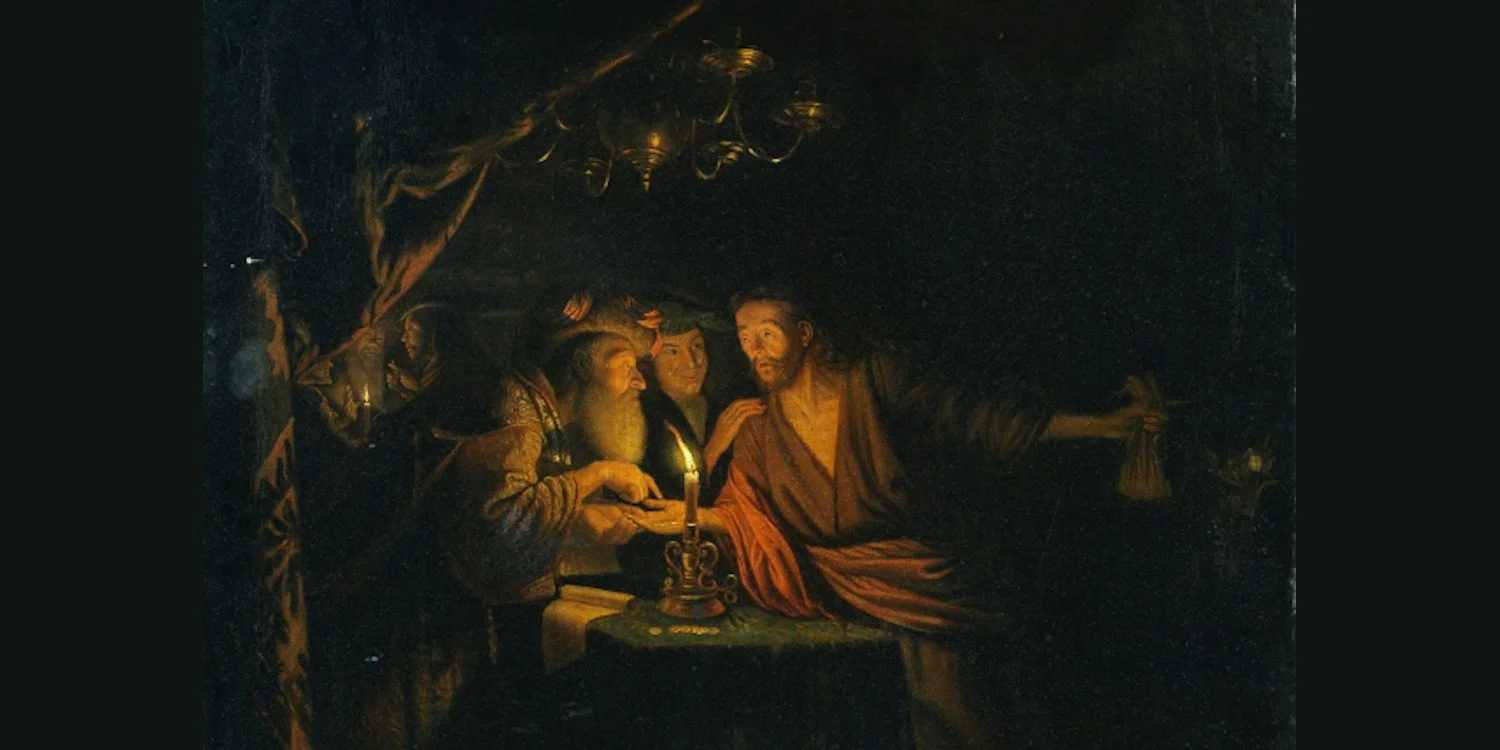
The Payment of Judas Iscariot
Catholicism in America thrived when it had to earn its dignity. Once it became politically accepted, it went on in this culture to become comfortable, and its leaders (“hēgoumenos”) perhaps a bit too comfortable. Religious authority and the sheer masses of believers spelled political power. The pedestals upon which we stood grew in height with every clerical advance, and our bishops stood upon the highest pedestals of all with palatial trappings more akin to the courts of Herod and Caesar than the Cross of Christ the King, the same yesterday, today, and forever.
It is no mystery why, as the height of our pedestals grew, so did our scandals. This is perhaps why Jesus offered to us the way to pray “Lead us not into temptation, but deliver us from evil.” It is because he alone could be led by the Spirit into the desert of temptation and emerge without dragging along behind Him the evil He encountered there.
As the last temptation of Christ unfolded in the Gospel for the First Sunday of Lent, it is now the devil, in a final effort, who dares to quote and distort the Word of God. He led Jesus to Jerusalem, and to the parapet, the highest point of the highest place, the Temple of Sacrifice. And now comes his final taunt:
“If you are the Son of God, throw yourself down from here, for it is written, ‘He will give his angels charge of you, to guard you,’ and ‘On their hands they will bear you up, lest you strike your foot against a stone’.”
— Luke 4:9-11, quoting Psalm 91
This devil of the desert takes up the argument of Jesus, the Word of God, quoting Psalm 91 (11-12). The taunt to test God and “go your own way” is far deeper than the mere words convey. In Jerusalem, the devil will take hold of Judas Iscariot (Luke 22:3) leading to the trial before Pilate and the Way of the Cross. In Jerusalem, the powers of darkness, first encountered here in the desert, are mightily at work: “This is your hour, and the power of darkness.” (Luke 22:53)
The Church in the Western world has entered a time of persecution but thus far the institutional response — having traded the Gospel for “zero tolerance” in a quest for scapegoats to cast out into the desert to Azazel — does not bode well for the faith of a Church built upon the blood of the martyrs.
Perhaps, as the Spirit leads us into this desert, it is our vocation, and not that of our leaders, that is essential. Perhaps it is not clerical reform that is needed so much as a revolution — a revolution of fidelity that can only be lived and not just talked about. We will not find the Holy Spirit in a revolution that manifests itself in blessing sin or in any politically correct acquiescence to same-sex unions that some now call the Sacrament of Holy Matrimony, and other moral distortions of our time. Those who abandon their faith in a time in the desert were leaving anyway, just waiting for the right excuse. To use the behavior of leaders to diminish and then abandon the Sacrament of Salvation is to cave to the true goal of Azazel. He could not lure Christ from us, but he can lure us from Christ and he is giving it a go.
The devil finally gives up in the desert scene of the Last Temptation of Christ in Luke Chapter 4. But the devil is not quite done. Luke’s Gospel tells that he will return “at a more opportune time.” Satan finds that time not in an effort to test Jesus, but rather to test his followers. He targets Judas Iscariot in the last place we would ever expect to find the devil: “Satan at The Last Supper: Hours of Darkness and Light.”
+ + +
Note from Father Gordon MacRae: Thank you for reading and sharing this Ash Wednesday post. You may also like these other posts from Beyond These Stone Walls as we proceed through Lent:
Pope Francis Had a Challenge for the Prodigal Son’s Older Brother
A U.S. Marine Who Showed Me What to Give Up for Lent
Satan at The Last Supper: Hours of Darkness and Light
Behold the Lamb of God Upon the Altar of Mount Moriah
We presently have 39 titles in our collection of Scriptural posts, The Bible Speaks.
The Eucharistic Adoration Chapel established by Saint Maximilian Kolbe was inaugurated at the outbreak of World War II. It was restored as a Chapel of Adoration in September, 2018, the commemoration of the date that the war began. It is now part of the World Center of Prayer for Peace. The live internet feed of the Adoration Chapel at Niepokalanow — sponsored by EWTN — was established just a few weeks before we discovered it and began to include in at Beyond These Stone Walls. Click “Watch on YouTube” in the lower left corner to see how many people around the world are present there with you. The number appears below the symbol for EWTN.
Click or tap here to proceed to the Adoration Chapel.
The following is a translation from the Polish in the image above: “Eighth Star in the Crown of Mary Queen of Peace” “Chapel of Perpetual Adoration of the Blessed Sacrament at Niepokalanow. World Center of Prayer for Peace.” “On September 1, 2018, the World Center of Prayer for Peace in Niepokalanow was opened. It would be difficult to find a more expressive reference to the need for constant prayer for peace than the anniversary of the outbreak of World War II.”
For the Catholic theology behind this image, visit my post, “The Ark of the Covenant and the Mother of God.”
Latin Mass and Altar Rails Are Under Siege in North Carolina
Citing unity, the Bishop of Charlotte, North Carolina imposed a ban on altar rails and kneeling and severely further restricted access to the Traditional Latin Mass.
Citing unity, the Bishop of Charlotte, North Carolina imposed a ban on altar rails and kneeling and severely further restricted access to the Traditional Latin Mass.
February 11, 2026 by Father Gordon MacRae
In its “Year in Review” feature dated December 28, 2025, the National Catholic Register published “The Top 25 Register Stories of 2025.” AI tools were used to generate summaries and rank the stories based upon online page views, which were then reviewed by an editor. The result was a visually striking account of Catholic interests over the previous year. Two of the entries were perplexing, however.
Item #17 on the list featured a photo of Charlotte, North Carolina, Bishop Michael Martin with the headline, “Charlotte Liturgy Controversy Heats Up After Bishop’s Proposed Ban of Latin, Altar Rails Leaked.” The segment was written by Register Columnist Jonathan Liedl who added, “The Charlotte Diocese ignites a firestorm in 2025 as Bishop Michael Martin’s leaked proposal to ban Latin and altar rails stirs international debate. Critics argue the norms contradict Vatican II’s teachings, while supporters claim they aim for liturgical unity. This controversy marks the first major liturgical clash under Pope Leo XIV, positioning Charlotte, North Carolina, as a litmus test for the future Catholic worship.”
In another Register column appearing adjacent to the above story was Item #20, which presented a polar opposite view: “Communion Rails Return as Churches Embrace Beauty and Reverence,” presented by Register Columnist Joseph Pronechen who added, “In 2025, Catholic parishes across the U.S. embrace a revival of altar rails, transforming the reception of Communion into a more reverent experience. Joseph Pronechen highlights how this return fosters a sacred atmosphere, encouraging congregants to kneel and reflect on the significance of the Eucharist. As communities rediscover this liturgical beauty, they deepen their connection to faith and tradition marking a profound shift in worship practices.”
I could not help but notice further context in a mid-September, 2025 Catholic News Agency report on new regulations on Catholic practice in China. This time, the ban came from the Chinese Communist Government’s State Administration for Religious Affairs. It imposes a ban on any form of online evangelization. It is imposed on all Catholic priests in China, both foreign and domestic. The ban also requires that all clergy express their “love for the Motherland,” and their support for Chinese Communist Party leadership and its socialist system.
Faith leaders in China are also banned from “preaching and performing religious rituals to live broadcasts, videos, or online meetings,” and are specifically banned from evangelizing or educating minors on the Internet, and from raising funds in support of their ministries.
Lest Catholics take any of this personally, the Chinese Communist government has also taken upon itself the absolute right to select the next Dalai Lama supplanting centuries-old traditions.
I do not in any way equate what is happening under State authority in China with what is happening under religious authority in North Carolina or elsewhere in America, but the timing of these endeavors is striking. In the matter of the oppression of faithful Catholics in China, it seems that the motive of the Chinese Communist Party in issuing their agenda at this time came in response to a September 18, 2025 interview with Pope Leo XIV.
Pope Leo has reportedly stated that he had been listening to a significant group of Chinese Catholics who faced difficulty in living their faith freely. In the interview, he reportedly signaled that he may be open to future changes in the Vatican’s controversial agreement with China, according to the Catholic News Agency.
Cardinal Pell’s Concern About Schismatic Agendas
Catholics have come to expect suppression of legitimate faith experience from Communist regimes, but suppression by Church hierarchy of previously sanctioned forms of worship seems entirely new. For the Sensus Fidelium, the lived experience of the faithful across generations, it can also be deeply troubling and spiritually wounding.
I have come to appreciate the candor and spiritual integrity of prison writing from the ranks of Dietrich Bonhoeffer, Father Walter Ciszek, Father Alfred Delp, and most recently, the late Cardinal George Pell. Writing from prison with very limited opportunities for dialogue and in-depth research means writing almost exclusively from one’s own mind, heart and soul. The three-volume Prison Journal of George Cardinal Pell is a treasure trove of unfiltered candor and spiritual integrity.
While reading his Prison Journal, Volume 2 (in which, for full disclosure, my own writing occupied several pages) Cardinal Pell wrote candidly of his concern for the modern direction of the Church. Among his deepest concerns was the growing possibility of a progressive-driven schism. He cited a September 17, 2019 Catholic Culture entry by Philip Lawler, “Who benefits from all this talk of schism?”
Lawler argued that the prospect of a schism was remote, but became less so during the papacy of Pope Francis and the Synod on Synodality. Francis had spoken calmly about such a prospect saying that he is not frightened by it, something that both Lawler and Pell found to be concerning in and of itself. Cardinal Pell added that The New York Times had been writing about the prospect of a progressive German Catholic schism by “the John Paul and Benedict followers in the United States, the Gospel Catholics.” He observed that Lawler’s diagnosis was correct and pointed out that, “the most aggressive online defenders of Pope Francis realized they cannot engineer radical changes they want without precipitating a split in the Church. So they want orthodox Catholics to break away first, leaving progressives free to enact their own revolutionary agenta.” (Prison Journal Vol. 2, pp 214-215 — emphasis added)
In light of this, it comes as no surprise that progressive bishops are pushing for divisive restrictions on the Traditional Latin Mass and other traditional expressions of the faith, such as kneeling and altar rails. These efforts should come as no surprise to faithful Catholics. Embracing and promoting fidelity with respect for tradition has never been more urgent. Faithful Catholics must never accede to the desired end that progressives seek. Handing the Church over to that agenda would leave “Satan at the Last Supper” while Jesus is removed from the room.
+ + +
Note from Father Gordon MacRae: We hope you will take time to read and share this important post, and along with it a companion post at our Voices from Beyond feature by Aloonsri Paokumhang. Aloonsri is a first-generation American citizen and the daughter of immigrants from the Kingdom of Thailand. She is a convert to our faith, and a most articulate writer about current matters facing the Church. It is Aloonsri whom I had in mind when I wrote that suppression of the Sensus Fidelium, the lived experience of faithful Catholics, can be deeply troubling and spiritually wounding.
You may also like these related posts from Beyond These Stone Walls:
Priests in Crisis: The Catholic University of America Study
My Father’s House Has Many Rooms. Is There a Room for Latin Mass?
Pell Contra Mundum: Cardinal Truth on the Synod
The Once and Future Catholic Church
+ + +
One More Note: Diane Montagna is an American journalist acccredited to the Holy See. She has written for Aleteia, LifeSite News, and L’ Osservatore Romano. Ms. Montagna has compiled a well informed critique published in July 2025 entitled:
EXCLUSIVE: Official Vatican Report Exposes Major Cracks in Foundation of Traditionis Custodes
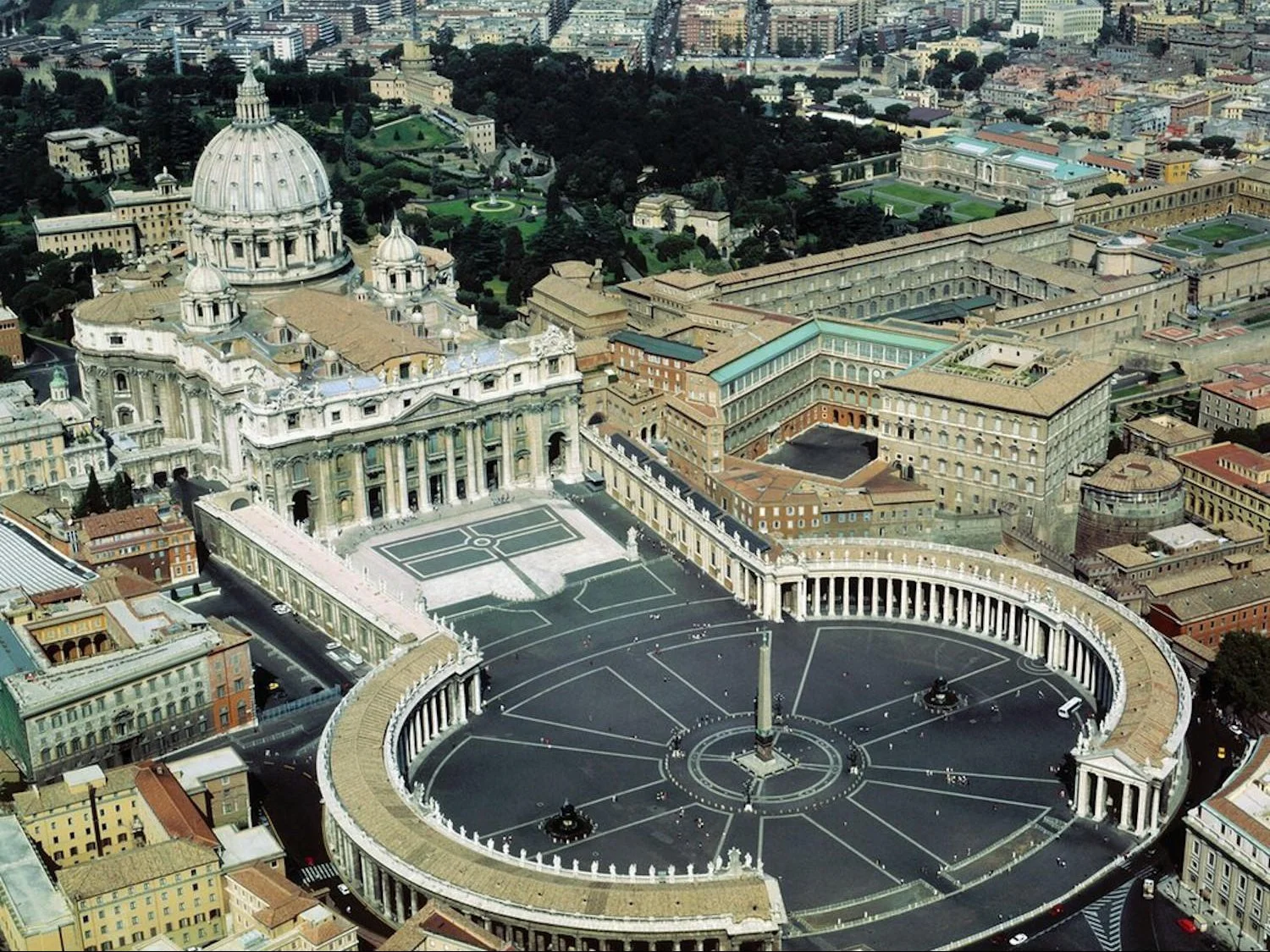
The Eucharistic Adoration Chapel established by Saint Maximilian Kolbe was inaugurated at the outbreak of World War II. It was restored as a Chapel of Adoration in September, 2018, the commemoration of the date that the war began. It is now part of the World Center of Prayer for Peace. The live internet feed of the Adoration Chapel at Niepokalanow — sponsored by EWTN — was established just a few weeks before we discovered it and began to include in at Beyond These Stone Walls. Click “Watch on YouTube” in the lower left corner to see how many people around the world are present there with you. The number appears below the symbol for EWTN.
Click or tap here to proceed to the Adoration Chapel.
The following is a translation from the Polish in the image above: “Eighth Star in the Crown of Mary Queen of Peace” “Chapel of Perpetual Adoration of the Blessed Sacrament at Niepokalanow. World Center of Prayer for Peace.” “On September 1, 2018, the World Center of Prayer for Peace in Niepokalanow was opened. It would be difficult to find a more expressive reference to the need for constant prayer for peace than the anniversary of the outbreak of World War II.”
For the Catholic theology behind this image, visit my post, “The Ark of the Covenant and the Mother of God.”
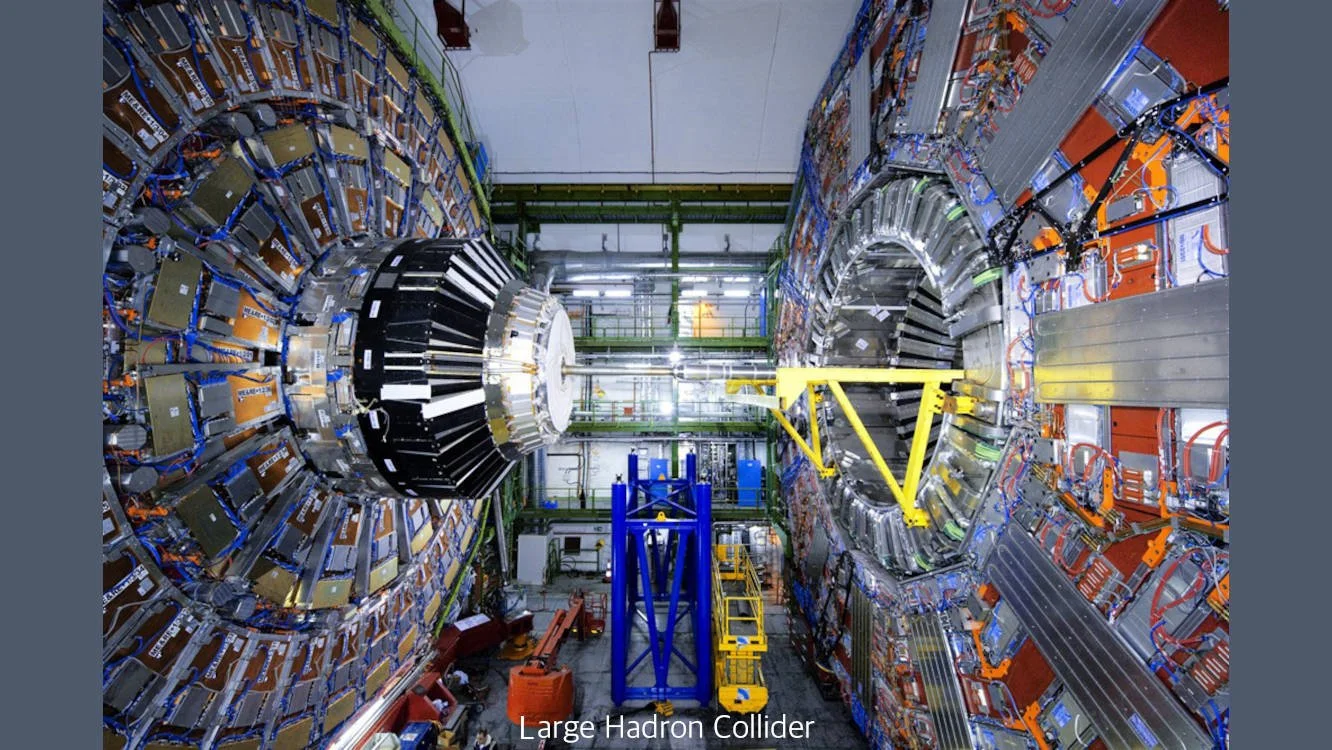
The Higgs Boson God Particle: All Things Visible and Invisible
In 2012, scientists at the Large Hadron Collider detected the elusive Higgs boson, a subatomic particle dubbed the “God Particle” explaining the origin of matter.

In 2012, scientists at the Large Hadron Collider detected the elusive Higgs boson, a subatomic particle dubbed the “God Particle” explaining the origin of matter.
February 4, 2026 by Father Gordon MacRae
“Two Higgs boson particles walked into a bar. Over drinks one said, ‘I hear Stephen Hawking bet $100 that we don’t exist. What if he’s right?’ The other replied, ‘No matter!’ ”
Get it? No matter? Get it? Well, hopefully you will in a few minutes. I didn’t get it either until I did some heavy-duty reading.
If this post is creating a touch of déjà vu, a sense that you have seen it before, it’s because you probably have. Something quite unusual happened here at this blog in recent weeks. In the earliest days of this blog in 2010, I was contacted by a reader in Australia about a new book by physicists Stephen Hawking and Leonard Mlodinow entitled The Grand Design (Bantam Books, 2010). The letter writer was concerned that media outlets in Australia and around the world were citing aspects of the book out of context in an attempt to demonstrate that Stephen Hawking declared that God does not exist. That was a faulty interpretation and the reader wanted me to set the record straight. It was a tall order, but I had time on my side to ponder and present a contrary point of view. So on October 6, 2010, we published “Did Stephen Hawking Sacrifice God on the Altar of Science?”
A lot of work went into that post, but to my chagrin it was met by most of our readers with a yawn the size of a giant black hole. Fifteen years later, someone (not me) submitted that post to an advanced artificial intelligence model requesting an analysis of it. The results were then read to me by our Editor. AI scoured the Internet and then referred to me as “a Catholic priest with a background in science” while singling out that post as “a significant example of bridging the gap between science and faith.”
So of course, I thought that was the nicest thing any AI had ever said about me (There was very little to compare it to.). Given this new interest in a bridge between science and faith, I decided to haul out this 15-year-old post and rehabilitate it for a new audience. On July 30, 2025, we republished “Did Stephen Hawking Sacrifice God on the Altar of Science?” The result was mind boggling, but it was not immediate. A few months later that post started showing up in our stats and then it began a viral spread. By January it was outpacing my regular weekly posts in popularity. And then by mid-January it spread all over the world in unprecedented numbers for this blog.
I cannot pretend to know why this happened. I do not understand the global attention to this one post on the space-time continuum. Perhaps my only conclusion is that when I post a bomb, just wait 15 years and post it again.
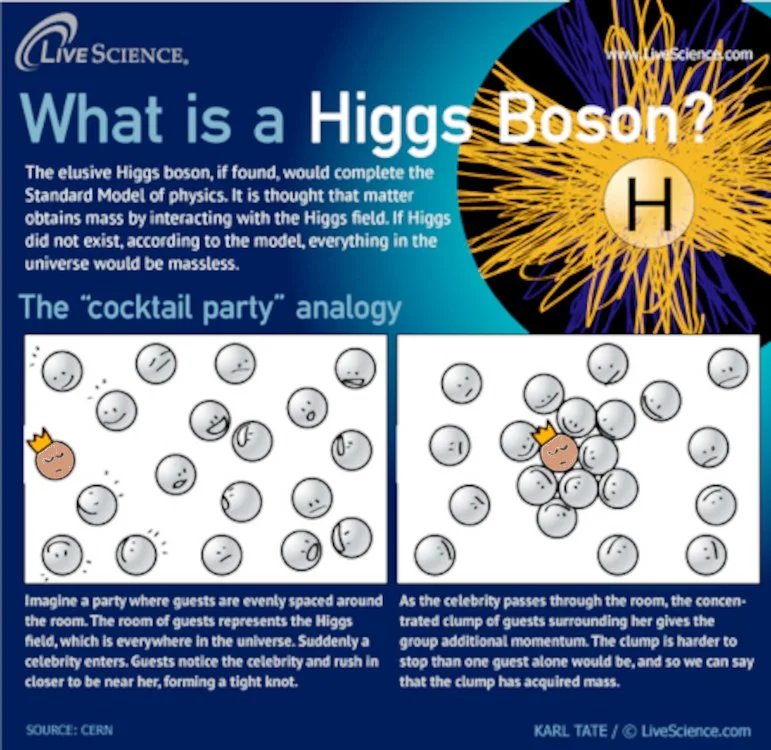
The Discovery
There is another post of mine that also bridges the gap between science and faith. I do not have an explanation for why or how, but another of my posts, this one from 2012, also began to show up in unusually large numbers with that other post. I have long wanted to repost this one with some updated information so that those who are currently reading and spreading it can see the updated version. It is “The Higgs Boson God Particle: All Things Visible and Invisible.”
I first wrote it in September 2012. It, too, was met with a rather extended yawn, but today it shows up often and everywhere. It profiles the work of the late physicist Peter Higgs who rose to prominence in the scientific community in 1964 when he theorized that the Higgs boson exists as a necessary subatomic particle which explains the existence of matter. After my post was first published, the Higgs boson was experimentally demonstrated again and Peter Higgs was awarded the Nobel Prize in Physics. He died on April 8, 2024 at the age of 94 knowing that his life’s work was a major addition to the scientific understanding of the Universe.
A boson in physics is a component of subatomic particles such as protons and photons, which exist in every atom of matter. As a class of particle, a boson is so-called in honor of Indian physicist, Satyenda Nath Bose, who collaborated with Albert Einstein. The existence of a then-theoretical Higgs boson resolved a puzzle in the Standard Model of physics, a widely accepted model for how particles interact. The thinking in the Standard Model was that particles such as photons — particles of light — have no mass. They should move throughout the Universe unhindered. The mathematics of the Standard Model explained successfully the existence of particles, but not mass or matter. The Higgs boson proposed by Peter Higgs in 1964 was an explanation for how particles could attain mass, and thus bring into being a Universe filled with matter that we can see or otherwise detect.
CERN, the European agency for nuclear research, operates and oversees the Large Hadron Collider. It is a donut-shaped laboratory 27-miles in circumference on the French-Swiss border. Two beams of protons were set on a collision course moving at close to the speed of light. Their collision resulted in an explosion that recreated the conditions of The Big Bang, the scientifically accepted origin of our Universe. During the collision, a supercomputer detected the presence of the Higgs boson particle and a Higgs field for a trillionth of a second. It was the first time its existence had ever been established in a laboratory
On July fourth in 2012, physicists announced that they had a momentary glimpse of the elusive Higgs boson, the subatomic particle long theorized to exist, and without which matter itself would not exist. The physicists who reported that they only found “evidence” of the Higgs boson were just being careful scientists. The discovery had a 99.9999% rate of certainty. There is no doubt left. The Higgs boson does indeed exist and that experiment has since been ratified.
So what exactly does this mean? Many scientists grimaced every time someone in the news media referred to this discovery as “the God particle.” Using science out of context to debunk religious faith is a favorite pastime of some in the media, but the reverse should also not happen.
I took a hard look at the interaction between faith and science in “Did Stephen Hawking Sacrifice God on the Altar of Science?” After publication of The Grand Design, some in the news media speculated that Hawking’s book demonstrated that gravity — and not God — is responsible for the creation of the Universe. My conclusion was simply that Stephen Hawking has thrown in with the wrong “G,” and the pundits misreading his book have confused the tools of God with God. I cited in that post a vivid example. If you were an archeologist digging in ruins in Florence, Italy and you discovered a worn chisel that was used by Michelangelo to create the Pietà, one of the most celebrated examples of sculptured marble in art history, would you then conclude that Michelangelo did not create the Pietà, his chisel did?
What I find most interesting about the recent discovery is that the Higgs boson appears nowhere in Stephen Hawking’s The Grand Design. His analysis of the science of cosmology omitted it entirely. In fact, two decades ago Stephen Hawking wagered $100 that the Higgs boson would never be detected. He lost the bet.
The discovery of the Higgs boson is a big deal in science because it presents a purely scientific explanation for how matter exists, but not why. The model for creation it implies is that a primordial atom exploded in what we call The Big Bang 13.7 billion years ago. As the explosion cooled, a force known as a “Higgs field” — which contained the Higgs boson — was formed and permeates the Universe. As other particles interacted with this field, they acquired mass allowing gravity to bring particles together. It acted sort of like a dam slowing particles so that they would mass together. The result was matter as we know and see it — everything from stars to us. It’s sort of the yeast with which God bakes bread.
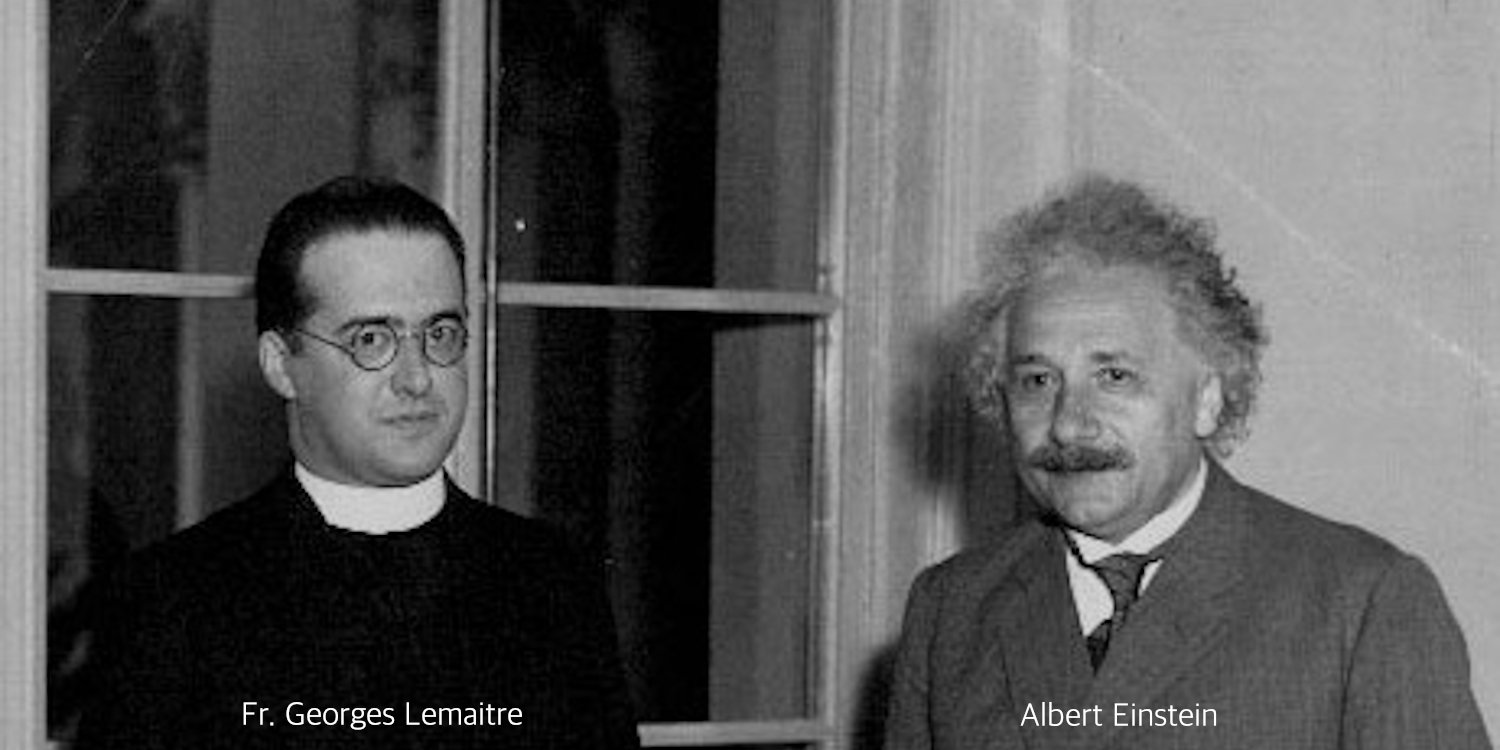
A Day Without Yesterday
The Higgs boson was detected by the Large Hadron Collider’s super computers in July 2012 for a fraction of a trillionth of a second. The tiny collision sent particles in every direction producing the energy equivalent to 14 trillion electron volts and blistering temperatures. The collision recreated a tiny model of the instance of The Big Bang. Some theorize that it was the presence of the Higgs boson particle within the primordial atom that caused The Big Bang itself, and the explosion of all matter in the Universe.
I find this all fascinating, but what is most fascinating is that the entire model was first mathematically predicted, and then demonstrated to even Albert Einstein’s satisfaction, by a Catholic priest. I wrote of the Belgian priest and physicist, Father Georges Lemaitre, in “A Day Without Yesterday:” Father Georges Lemaitre and the Big Bang. As a result of that post and others related to it, I began a correspondence with Father Andrew Pinsent, who prior to priesthood had been a physicist at CERN. We collaborated on a very special post, “Fr Georges Lemaître, the Priest Who Discovered the Big Bang.”
If ever you bristle about the typical anti-Catholic mythology that religion attempts to hold back science, remember that the originator of all the science behind this model of creation was a Catholic priest, and many of the great scientists of his time did everything they could to suppress his ideas. They failed because they could not successfully refute either his faith or his science. In the end, even Einstein bowed to Father Lemaitre, declaring that his model was “the most satisfactory explanation of creation I have ever heard.”
Pope Pius XII applauded Father Lemaitre’s discovery of The Big Bang because it challenged the acceptable science of the time which claimed that the Universe was not created, but always existed and is eternal. Einstein later acknowledged that his “Cosmological Constant” was his greatest error.
Perhaps the greatest miracle of all for me was receiving the photo below of Pornchai Moontri’s Godfather, the late Pierre Matthews, whose mother was a close friend of Father Lemaitre, who became Pierre’s Godfather. The odds that my roommate in Concord, New Hampshire would turn out to be the Godson of a man whose own Godfather discovered the Big Bang are as great as the odds of the Big Bang itself.
Michio Kaku, a professor of theoretical physics at City University of New York, wrote a brilliant and (unlike this post) brief commentary about the Higgs boson for The Wall Street Journal (“The Spark That Caused the Big Bang,” July 6, 2012). Professor Kaku wrote:
“The press has dubbed the Higgs boson the ‘God particle,’ a nickname that makes many physicists cringe. But there is some logic to it. According to the Bible, God set the Universe in motion as He proclaimed ‘Let there be light.’”
“So why did the Higgs boson particles hurry to church?
Because Mass could not start without them.”
+ + +
Note from Fr. Gordon MacRae: For open minds and enlightened souls bridges are taking shape between the realms of science and faith. You may also like these related posts from Beyond These Stone Walls:
Did Stephen Hawking Sacrifice God on the Altar of Science?
Fr Georges Lemaître, the Priest Who Discovered the Big Bang (a must-read by Father Andrew Pinsent)
The James Webb Space Telescope and an Encore from Hubble
For Those Who Look at the Stars and See Only Stars
+ + +
And then there was this: xAI Grok on Higgs Boson, God Particle, Science and Faith.
The Eucharistic Adoration Chapel established by Saint Maximilian Kolbe was inaugurated at the outbreak of World War II. It was restored as a Chapel of Adoration in September, 2018, the commemoration of the date that the war began. It is now part of the World Center of Prayer for Peace. The live internet feed of the Adoration Chapel at Niepokalanow — sponsored by EWTN — was established just a few weeks before we discovered it and began to include in at Beyond These Stone Walls. Click “Watch on YouTube” in the lower left corner to see how many people around the world are present there with you. The number appears below the symbol for EWTN.
Click or tap here to proceed to the Adoration Chapel.
The following is a translation from the Polish in the image above: “Eighth Star in the Crown of Mary Queen of Peace” “Chapel of Perpetual Adoration of the Blessed Sacrament at Niepokalanow. World Center of Prayer for Peace.” “On September 1, 2018, the World Center of Prayer for Peace in Niepokalanow was opened. It would be difficult to find a more expressive reference to the need for constant prayer for peace than the anniversary of the outbreak of World War II.”
For the Catholic theology behind this image, visit my post, “The Ark of the Covenant and the Mother of God.”